MED · Hacienda El Medio

One living catalogue for birds, flora and fauna.

This is not only a beautiful estate. It is part of a rare dry-forest relict system in the Cauca River valley, where fragmentation, dispersal limits and conservation value must shape every visit.

One board for all species — search and toggle chips below.
357 species in catalogue 65 voucher-anchored (UNI) 89 at the property (MED) 203 regional (REG) 📷 33 camera-trapped at El Medio
How to read the codes & chips.

The historical codes MED, MEO, MEP in the Ramos & Silverstone 2018 Catalogue are all his own expeditions to sectors of Hacienda El Medio (La Paila, Zarzal).

Species board (357)

✨ What makes El Medio unique

Of the 357 species in the board, these are the rare ones: with a published DOI voucher anchored to El Medio, caught by the property cameras, endemic to the Cauca valley, or indicator species that prove the ecosystem is intact.

65DOI
33📷
3Endemic
12Indicator
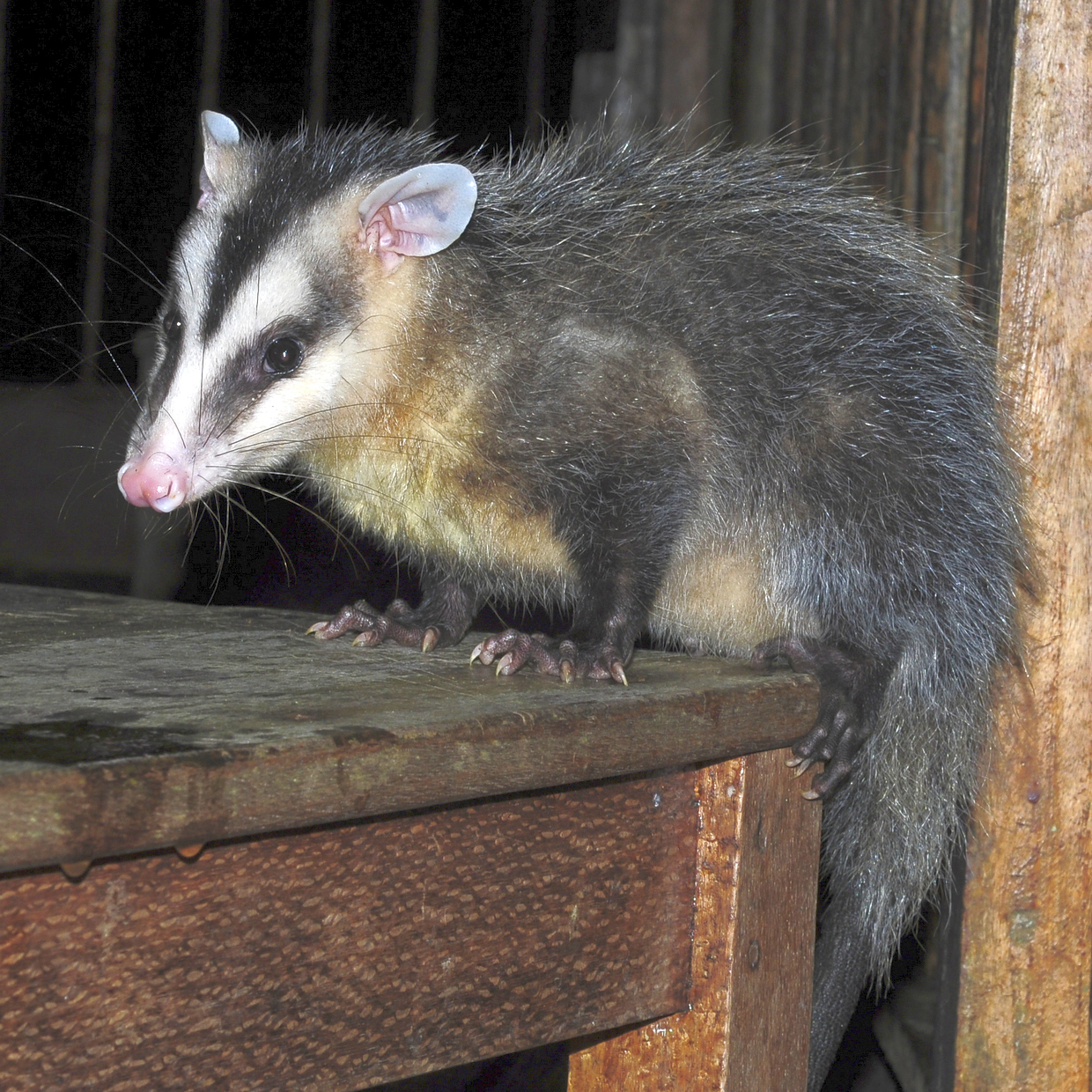
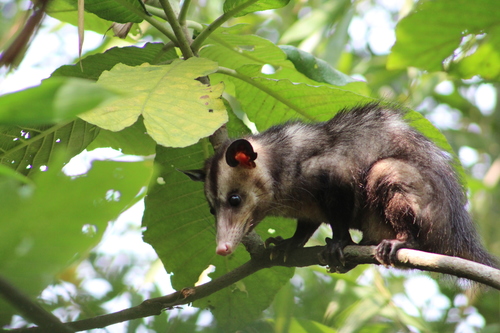
Zarigüeya común
fauna UNI · Voucher El Medio Seen by El Medio cam 2026 mamífero — marsupial

Common opossum

Also known as: Zarigüeya común · Chucha común · Fara · Rabipelao
Didelphis marsupialis Linnaeus, 1758 · Didelphidae

The common opossum, also called the northern black-eared opossum, is a species of marsupial living from the northeast of Mexico to Bolivia, including Trinidad and Tobago as well as the Windward Islands in the Caribbean, where it is referred to as the manicou. The common opossum prefers forests, but can also be found in fields and cities.

Thermal belt927–986 m s.n.m.
HabitatTropical dry forest, edges and paddocks of Hacienda El Medio (La Paila, Zarzal).
Use / careResponsible observation. Keep a safe distance. Do not feed. Report sightings.
Records at El Medio60
Cited source → Species on GBIF → Wikipedia → iNaturalist → Report on iNaturalist →
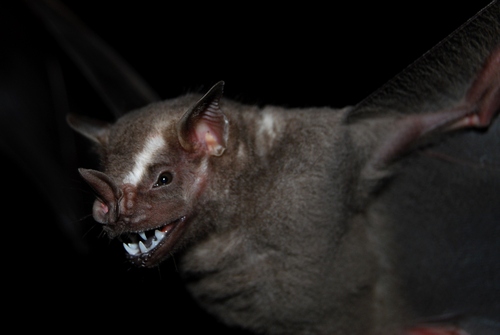
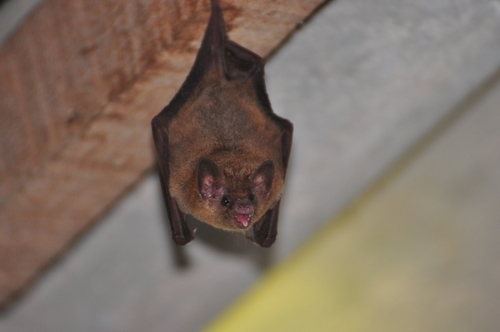
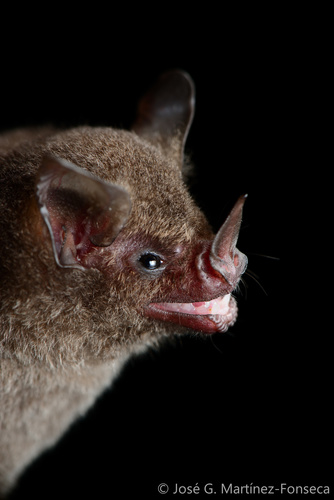
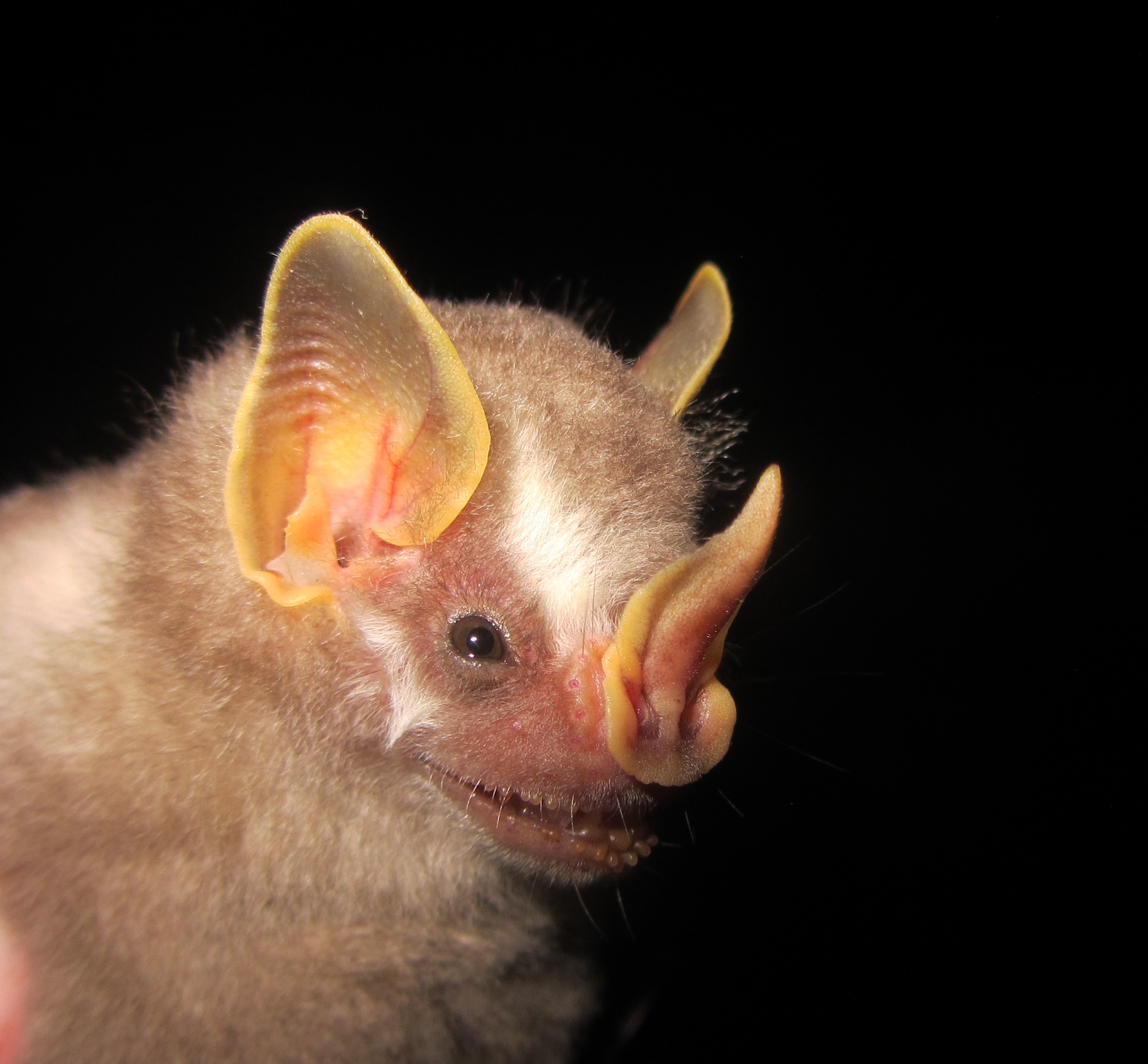
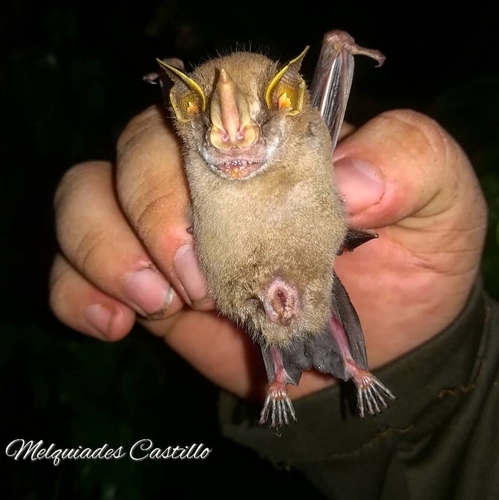
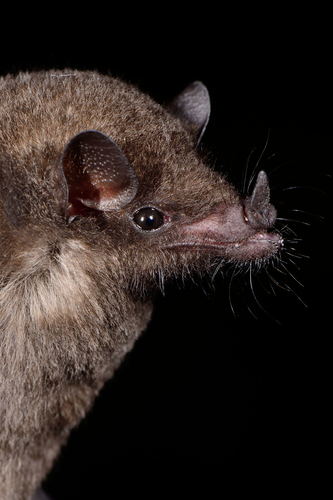
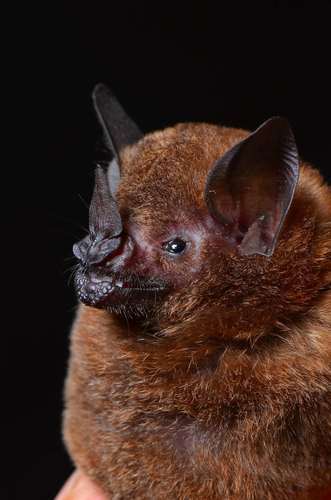
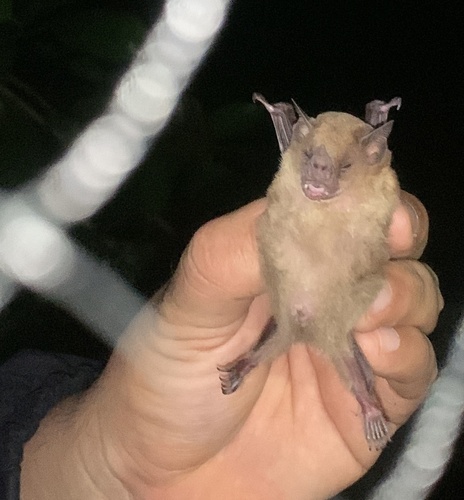
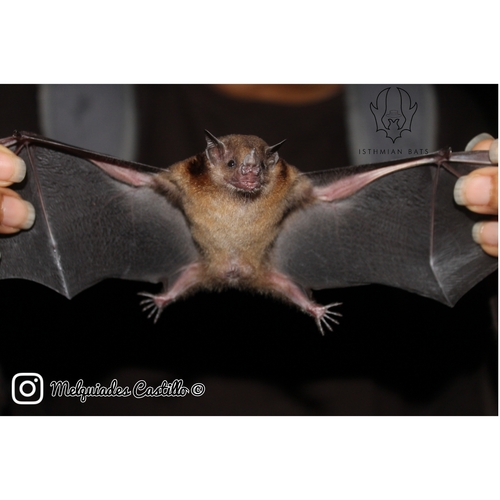
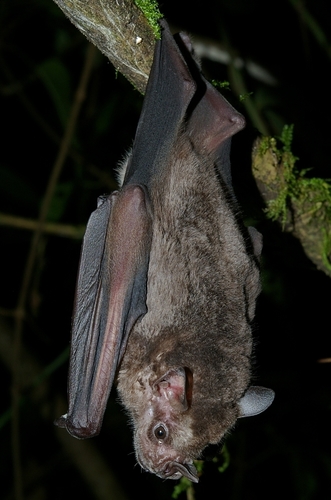
Murciélago frugívoro ecuatoriano
fauna UNI · Voucher El Medio Seen by El Medio cam 2026 mamífero — murciélago

Artibeus aequatorialis

Also known as: Murciélago frugívoro ecuatoriano · Murciélago frutero
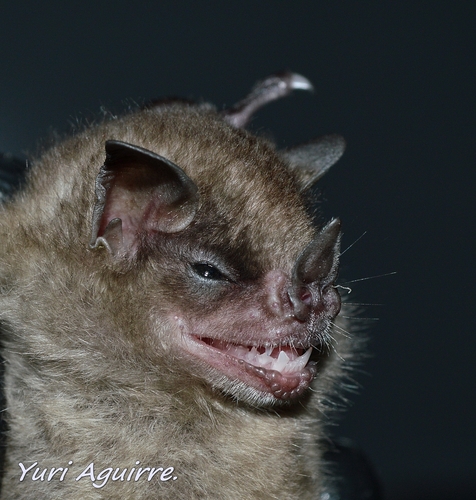
Artibeus aequatorialis K.Andersen, 1906 · Phyllostomidae

Artibeus aequatorialis, also known as Anderson's fruit-eating bat or the Ecuadorian fruit-eating bat, is a species of bat in the family Phyllostomidae. The bat is endemic to northwestern South America west of the Andes mountain range.

Thermal belt927–986 m s.n.m.
HabitatTropical dry forest, edges and paddocks of Hacienda El Medio (La Paila, Zarzal).
Use / careResponsible observation. Keep a safe distance. Do not feed. Report sightings.
Records at El Medio20
Cited source → Species on GBIF → iNaturalist → Report on iNaturalist →
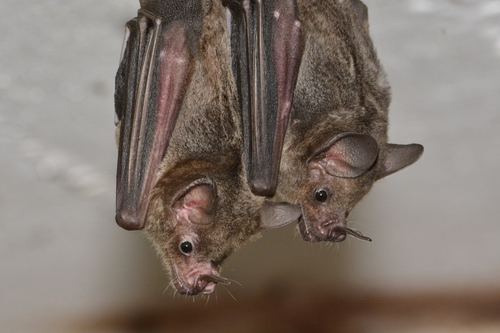
Murciélago frugívoro grande
fauna UNI · Voucher El Medio Seen by El Medio cam 2026 mamífero — murciélago

Great fruit-eating bat

Also known as: Murciélago frugívoro grande · Murciélago de hocico ancho grande
Artibeus lituratus (Olfers, 1818) · Phyllostomidae

The great fruit-eating bat is a bat species found from Mexico to Brazil and Argentina, as well as in Antigua and Barbuda, Barbados, Grenada, Martinique, Saint Lucia, Saint Vincent and the Grenadines and Trinidad and Tobago.

Thermal belt927–986 m s.n.m.
HabitatTropical dry forest, edges and paddocks of Hacienda El Medio (La Paila, Zarzal).
Use / careResponsible observation. Keep a safe distance. Do not feed. Report sightings.
Records at El Medio17
Cited source → Species on GBIF → Wikipedia → iNaturalist → Report on iNaturalist →
Murciélago de cola corta de Seba
fauna UNI · Voucher El Medio Seen by El Medio cam 2026 mamífero — murciélago

Seba's short-tailed bat

Also known as: Murciélago de cola corta de Seba · Murciélago piperalero
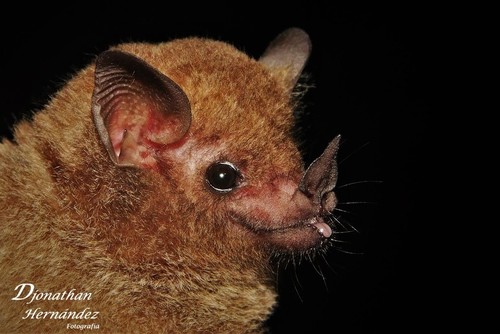
Carollia perspicillata (Linnaeus, 1758) · Phyllostomidae

Seba's short-tailed bat is a common and widespread bat species in the family Phyllostomidae. They are found in Central America, the northern parts of South America, and in the Antilles islands.

Thermal belt927–986 m s.n.m.
HabitatTropical dry forest, edges and paddocks of Hacienda El Medio (La Paila, Zarzal).
Use / careResponsible observation. Keep a safe distance. Do not feed. Report sightings.
Records at El Medio16
Cited source → Species on GBIF → Wikipedia → iNaturalist → Report on iNaturalist →
Murciélago frugívoro de cara plana
fauna UNI · Voucher El Medio Seen by El Medio cam 2026 mamífero — murciélago

Flat-faced fruit-eating bat

Also known as: Murciélago frugívoro de cara plana · Murciélago frutero
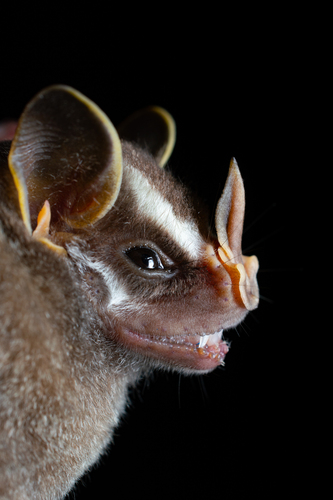
Artibeus planirostris (Spix, 1823) · Phyllostomidae

The flat-faced fruit-eating bat is a South American species of bat in the family Phyllostomidae. It is sometimes considered a subspecies of the Jamaican fruit bat, but can be distinguished by its larger size, the presence of faint stripes on the face, and of a third molar tooth on each side of the upper jaw. Genetic analysis has also shown that the two species may not be closely related.

Thermal belt927–986 m s.n.m.
HabitatTropical dry forest, edges and paddocks of Hacienda El Medio (La Paila, Zarzal).
Use / careResponsible observation. Keep a safe distance. Do not feed. Report sightings.
Records at El Medio14
Cited source → Species on GBIF → Wikipedia → iNaturalist → Report on iNaturalist →
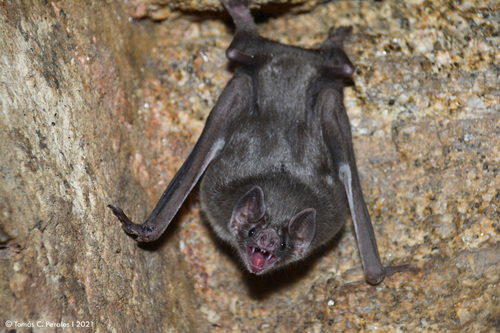
Murciélago vampiro
fauna UNI · Voucher El Medio Seen by El Medio cam 2026 mamífero — murciélago

Common vampire bat

Also known as: Murciélago vampiro común · Vampiro · Mordedor de ganado
Desmodus rotundus (E.Geoffroy, 1810) · Phyllostomidae

The common vampire bat is a small, leaf-nosed bat native to the Americas. It is one of three extant species of vampire bats, the other two being the hairy-legged and the white-winged vampire bats.

Thermal belt927–986 m s.n.m.
HabitatTropical dry forest, edges and paddocks of Hacienda El Medio (La Paila, Zarzal).
Use / careResponsible observation. Keep a safe distance. Do not feed. Report sightings.
Records at El Medio11
Cited source → Species on GBIF → Wikipedia → iNaturalist → Report on iNaturalist →
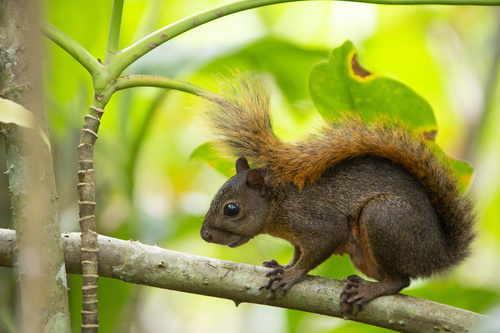
Ardilla de cola roja
fauna UNI · Voucher El Medio Seen by El Medio cam 2026 mamífero — roedor

Red-tailed squirrel

Also known as: Ardilla de cola roja · Ardilla colorada · Ardita
Sciurus granatensis Humboldt, 1811 · Sciuridae

The red-tailed squirrel is a species of tree squirrel distributed from southern Central America to northern South America.

Thermal belt927–986 m s.n.m.
HabitatTropical dry forest, edges and paddocks of Hacienda El Medio (La Paila, Zarzal).
Use / careResponsible observation. Keep a safe distance. Do not feed. Report sightings.
Records at El Medio10
Cited source → Species on GBIF → Wikipedia → iNaturalist → Report on iNaturalist →
Murciélago de lengua larga de Pallas
fauna UNI · Voucher El Medio Seen by El Medio cam 2026 mamífero — murciélago

Pallas's long-tongued bat

Also known as: Murciélago de lengua larga de Pallas · Murciélago nectario
Glossophaga soricina (Pallas, 1766) · Phyllostomidae

Pallas's long-tongued bat is a South and Central American bat with a fast metabolism that feeds on nectar.

Thermal belt927–986 m s.n.m.
HabitatTropical dry forest, edges and paddocks of Hacienda El Medio (La Paila, Zarzal).
Use / careResponsible observation. Keep a safe distance. Do not feed. Report sightings.
Records at El Medio10
Cited source → Species on GBIF → Wikipedia → iNaturalist → Report on iNaturalist →
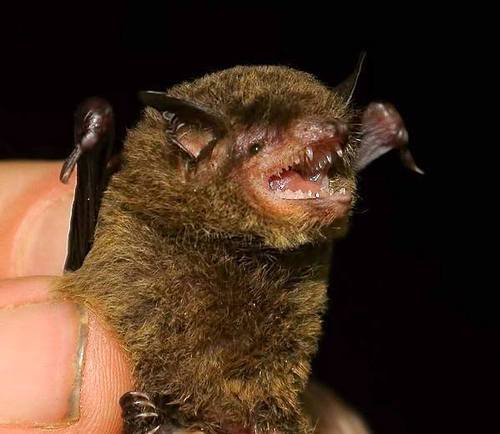
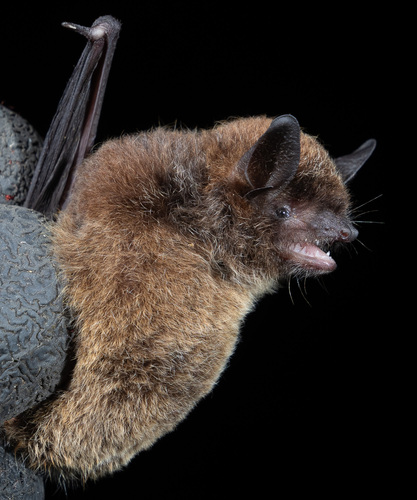
Myotis ripario
fauna UNI · Voucher El Medio Seen by El Medio cam 2026 mamífero — murciélago

Riparian myotis

Also known as: Myotis ripario · Murcielaguito de río
Myotis riparius Handley, 1960 · Vespertilionidae

The riparian myotis is a vespertilionid bat species from South and Central America. It is a medium-sized bat compared to other South American myotis.

Thermal belt927–986 m s.n.m.
HabitatTropical dry forest, edges and paddocks of Hacienda El Medio (La Paila, Zarzal).
Use / careResponsible observation. Keep a safe distance. Do not feed. Report sightings.
Records at El Medio9
Cited source → Species on GBIF → Wikipedia → iNaturalist → Report on iNaturalist →
Murciélago frugívoro Pigmeo
fauna UNI · Voucher El Medio Seen by El Medio cam 2026 mamífero — murciélago

Pygmy fruit-eating bat

Also known as: Murciélago frugívoro pigmeo · Murcielaguito frutero
Dermanura phaeotis Miller, 1902 · Phyllostomidae

The pygmy fruit-eating bat is a bat of the family Phyllostomidae. The specific name phaeotis is of Greek derivation, coming from the word phaios meaning dusky, referring to their dusky gray coloration.

Thermal belt927–986 m s.n.m.
HabitatTropical dry forest, edges and paddocks of Hacienda El Medio (La Paila, Zarzal).
Use / careResponsible observation. Keep a safe distance. Do not feed. Report sightings.
Records at El Medio7
Cited source → Species on GBIF → Wikipedia → iNaturalist → Report on iNaturalist →
Myotis del Cauca
fauna UNI · Voucher El Medio Seen by El Medio cam 2026 Cauca Valley endemic mamífero — murciélago

Myotis del Cauca

Also known as: Myotis del Cauca · Murcielaguito del Cauca
Myotis caucensis J.A.Allen, 1914 · Vespertilionidae

Murciélago insectívoro asociado al valle del río Cauca. Distribución restringida.

Thermal belt927–986 m s.n.m.
HabitatTropical dry forest, edges and paddocks of Hacienda El Medio (La Paila, Zarzal).
Use / careResponsible observation. Keep a safe distance. Do not feed. Report sightings.
Records at El Medio6
Cited source → Species on GBIF → iNaturalist → Report on iNaturalist →
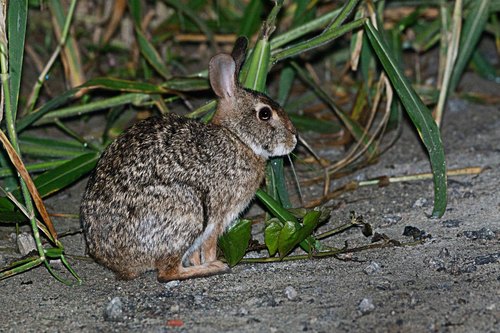
Conejo del bosque
fauna UNI · Voucher El Medio Seen by El Medio cam 2026 mamífero — lagomorfo

Common tapeti

Also known as: Conejo de monte · Conejo silvestre · Tapetí
Sylvilagus brasiliensis (Linnaeus, 1758) · Leporidae

The common tapeti, also known as the Brazilian cottontail, forest cottontail, or (formerly) simply tapeti is a species of cottontail rabbit. It is small to medium-sized with a small, dark tail, short hind feet, and short ears. As traditionally defined, its range extends from southern Mexico to northern Argentina, but this includes several distinctive population that have since been split into separate species. Under this narrower definition, the true common tapeti only occurs in the Atlantic Rai

Thermal belt927–986 m s.n.m.
HabitatTropical dry forest, edges and paddocks of Hacienda El Medio (La Paila, Zarzal).
Use / careResponsible observation. Keep a safe distance. Do not feed. Report sightings.
Records at El Medio5
Cited source → Species on GBIF → Wikipedia → iNaturalist → Report on iNaturalist →
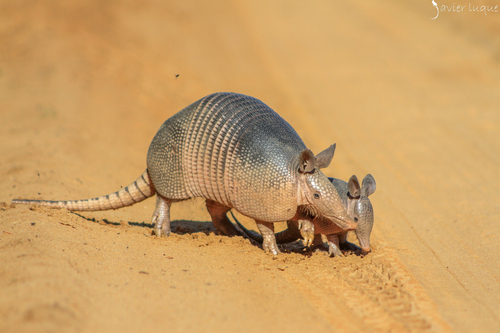
Armadillo de nueve bandas
fauna UNI · Voucher El Medio Seen by El Medio cam 2026 mamífero — armadillo

Nine-banded armadillo

Also known as: Armadillo de nueve bandas · Gurre · Cachicamo · Mulita
Dasypus novemcinctus Linnaeus, 1758 · Dasypodidae

The nine-banded armadillo, also called the nine-banded long-nosed armadillo or common armadillo, is a species of armadillo native to South America. The Mexican long-nosed armadillo of North America was formerly treated as a subspecies of the nine-banded armadillo.

Thermal belt927–986 m s.n.m.
HabitatTropical dry forest, edges and paddocks of Hacienda El Medio (La Paila, Zarzal).
Use / careResponsible observation. Keep a safe distance. Do not feed. Report sightings.
Records at El Medio4
Cited source → Species on GBIF → Wikipedia → iNaturalist → Report on iNaturalist →
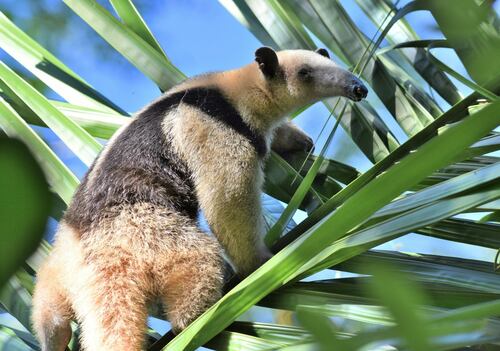
Oso hormiguero de occidente
fauna UNI · Voucher El Medio Seen by El Medio cam 2026 Indicator / rare mamífero — oso hormiguero

Northern tamandua

Also known as: Oso hormiguero de occidente · Tamandua · Oso melero · Oso colmenero
Tamandua mexicana (Saussure, 1860) · Myrmecophagidae

The northern tamandua is a species of tamandua, an anteater in the family Myrmecophagidae. They live in tropical and subtropical forests from southern Mexico, through Central America, and to the edge of the northern Andes.

Thermal belt927–986 m s.n.m.
HabitatTropical dry forest, edges and paddocks of Hacienda El Medio (La Paila, Zarzal).
Use / careResponsible observation. Keep a safe distance. Do not feed. Report sightings.
Records at El Medio4
Cited source → Species on GBIF → Wikipedia → iNaturalist → Report on iNaturalist →
Murciélago Toldero del Pacífico
fauna UNI · Voucher El Medio Seen by El Medio cam 2026 mamífero — murciélago

Murciélago Toldero del Pacífico

Also known as: Murciélago toldero del Pacífico · Murciélago constructor de toldos
Uroderma convexum Lyon, 1902 · Phyllostomidae

Murciélago que construye 'toldos' cortando hojas grandes.

Thermal belt927–986 m s.n.m.
HabitatTropical dry forest, edges and paddocks of Hacienda El Medio (La Paila, Zarzal).
Use / careResponsible observation. Keep a safe distance. Do not feed. Report sightings.
Records at El Medio1
Cited source → Species on GBIF → iNaturalist → Report on iNaturalist →
Murciélago de hombros amarillos de tierras altas
fauna UNI · Voucher El Medio Seen by El Medio cam 2026 mamífero — murciélago

Highland yellow-shouldered bat

Also known as: Murciélago de hombros amarillos de tierras altas
Sturnira ludovici Anthony, 1924 · Phyllostomidae

The highland yellow-shouldered bat is a species of bat in the family Phyllostomidae. It is found in Colombia, Costa Rica, Ecuador, El Salvador, Guatemala, Guyana, Honduras, Mexico, Nicaragua, Panama, and Venezuela.

Thermal belt927–986 m s.n.m.
HabitatTropical dry forest, edges and paddocks of Hacienda El Medio (La Paila, Zarzal).
Use / careResponsible observation. Keep a safe distance. Do not feed. Report sightings.
Records at El Medio1
Cited source → Species on GBIF → Wikipedia → iNaturalist → Report on iNaturalist →
Murciélago de lengua larga de Commissaris
fauna UNI · Voucher El Medio Seen by El Medio cam 2026 mamífero — murciélago

Commissaris's long-tongued bat

Also known as: Murciélago de lengua larga de Commissaris
Glossophaga commissarisi Gardner, 1962 · Phyllostomidae

Commissaris's long-tongued bat is a bat species from South and Central America.

Thermal belt927–986 m s.n.m.
HabitatTropical dry forest, edges and paddocks of Hacienda El Medio (La Paila, Zarzal).
Use / careResponsible observation. Keep a safe distance. Do not feed. Report sightings.
Records at El Medio1
Cited source → Species on GBIF → Wikipedia → iNaturalist → Report on iNaturalist →
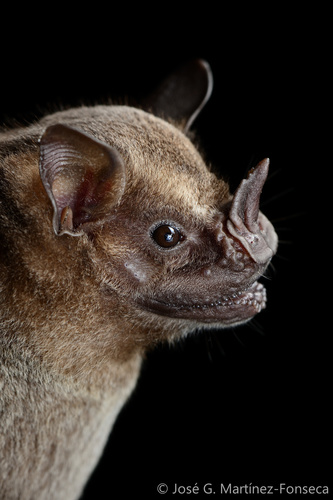
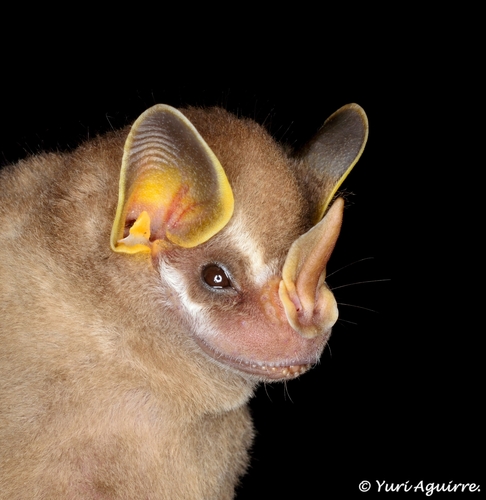
Murciélago rayado de nariz peluda
fauna UNI · Voucher El Medio Seen by El Medio cam 2026 mamífero — murciélago

Striped hairy-nosed bat

Also known as: Murciélago rayado de nariz peluda · Murcielaguito rayado
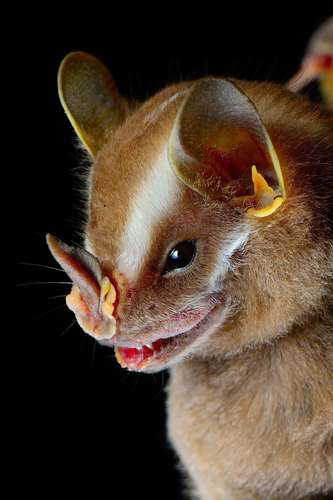
Gardnerycteris crenulatum (E.Geoffroy, 1803) · Phyllostomidae

The striped hairy-nosed bat is a bat species found in Brazil, Colombia, Ecuador, French Guiana, Guyana, Suriname and Venezuela. A feature unique to its species, its nose-leaf is elongated, spear-shaped, and covered in hair. Its dense fur is variable in color, with a blackish face and brown body that includes some yellow or orange tones. There are usually pale patches behind the ears, and a pale stripe along the length of the back. This species occurs in south Mexico and the Caribbean side of Cen

Thermal belt927–986 m s.n.m.
HabitatTropical dry forest, edges and paddocks of Hacienda El Medio (La Paila, Zarzal).
Use / careResponsible observation. Keep a safe distance. Do not feed. Report sightings.
Records at El Medio1
Cited source → Species on GBIF → Wikipedia → Report on iNaturalist →
Platyrrhinus helleri
fauna UNI · Voucher El Medio Seen by El Medio cam 2026 mamífero — murciélago

Heller's broad-nosed bat

Also known as: Murciélago de listas de Heller · Murciélago de líneas blancas
Platyrrhinus helleri (Peters, 1866) · Phyllostomidae

Heller's broad-nosed bat is a bat species from South and Central America.

Thermal belt927–986 m s.n.m.
HabitatTropical dry forest, edges and paddocks of Hacienda El Medio (La Paila, Zarzal).
Use / careResponsible observation. Keep a safe distance. Do not feed. Report sightings.
Records at El Medio1
Cited source → Species on GBIF → Wikipedia → iNaturalist → Report on iNaturalist →
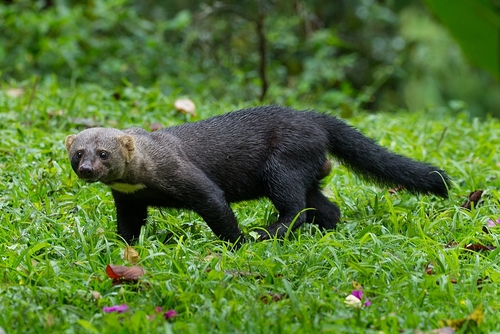
Tayra
fauna UNI · Voucher El Medio Seen by El Medio cam 2026 Indicator / rare mamífero — carnívoro

Tayra

Also known as: Tayra · Ulamá · Perico ligero · Gato eira · Cabeza de viejo
Eira barbara (Linnaeus, 1758) · Mustelidae

The tayra is an omnivorous animal from the mustelid family, native to the Americas. It is the only species in the genus Eira.

Thermal belt927–986 m s.n.m.
HabitatTropical dry forest, edges and paddocks of Hacienda El Medio (La Paila, Zarzal).
Use / careResponsible observation. Keep a safe distance. Do not feed. Report sightings.
Records at El Medio1
Cited source → Species on GBIF → Wikipedia → iNaturalist → Report on iNaturalist →
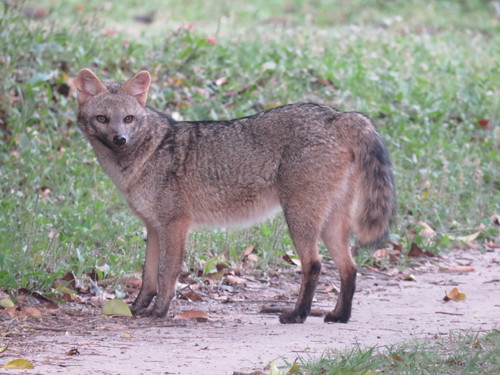
Zorro cangrejero
fauna UNI · Voucher El Medio Seen by El Medio cam 2026 Indicator / rare mamífero — carnívoro

Crab-eating fox

Also known as: Zorro perruno · Zorro cangrejero · Zorro de monte
Cerdocyon thous (Linnaeus, 1766) · Canidae

The crab-eating fox, also known as the forest dog, wood fox, bushfox or maikong, is an extant species of medium-sized canid endemic to the central part of South America since at least the Pleistocene epoch. Like South American foxes, which are in the genus Lycalopex, it is not closely related to true foxes. Cerdocyon comes from the Greek words kerdo and kyon (dog) referring to the dog- and fox-like characteristics of this animal.

Thermal belt927–986 m s.n.m.
HabitatTropical dry forest, edges and paddocks of Hacienda El Medio (La Paila, Zarzal).
Use / careResponsible observation. Keep a safe distance. Do not feed. Report sightings.
Records at El Medio1
Cited source → Species on GBIF → Wikipedia → iNaturalist → Report on iNaturalist →
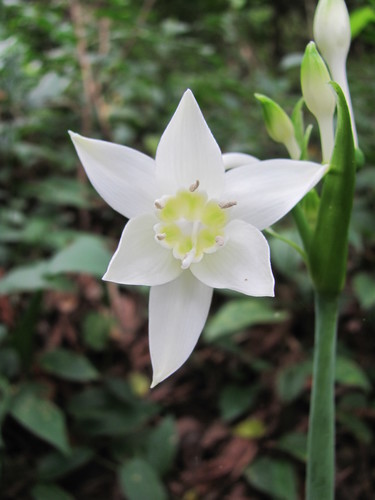
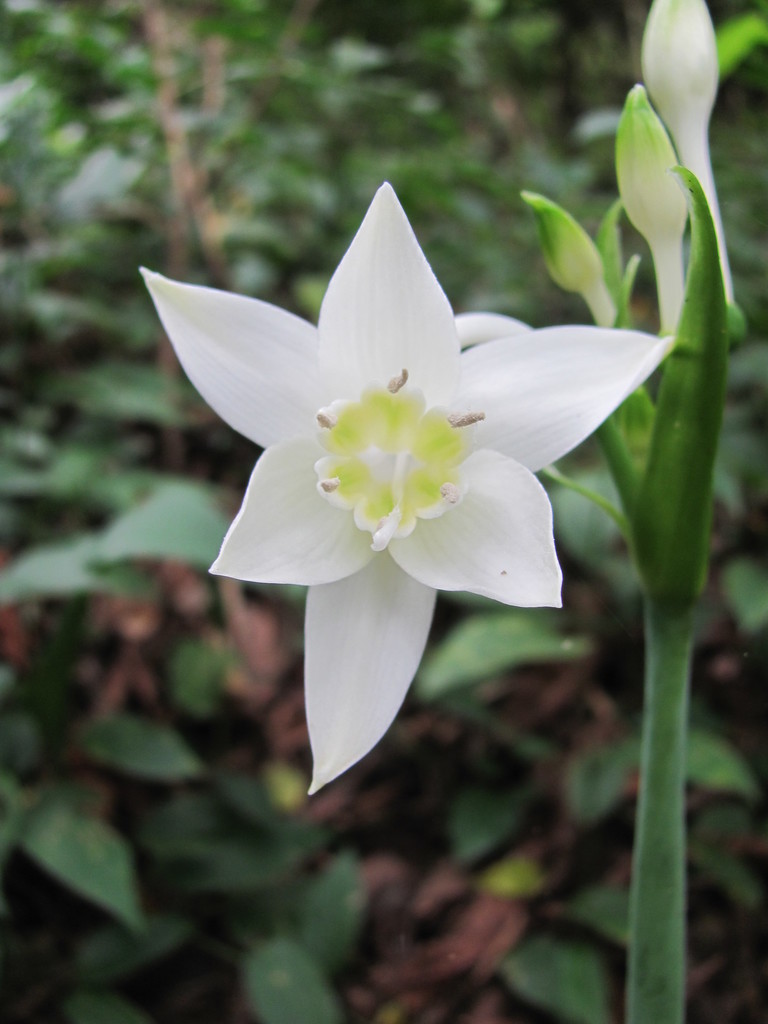
Lirio del Valle
flora UNI · Voucher El Medio Cauca Valley endemic planta vascular — bulbosa

Cauca Valley lily

Also known as: Lirio del Valle · Lirio del Cauca · Eucharis del Cauca
Urceolina caucana (Meerow) Christenh. & Byng · Amaryllidaceae

Lily endemic to the geographical Cauca River valley, discovered in Zarzal in 1987. Verified at Hacienda El Medio by IAvH (Feb-2023, vouchers FMB-130134/5/6). Family within Silverstone-Sopkin's specialty group.

Thermal belt927–986 m s.n.m.
HabitatTropical dry-forest relict, edges, paddocks and wetlands of Hacienda El Medio.
Use / careConservation botany; potential ornamental. No documented medicinal use — endemic relict species. Key botanical anchor of the catalog.
Records at El Medio3
Cited source → Species on GBIF → iNaturalist → Report on iNaturalist →
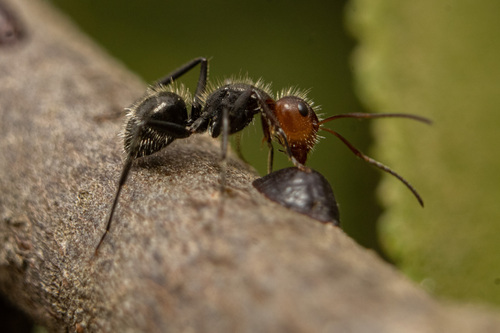
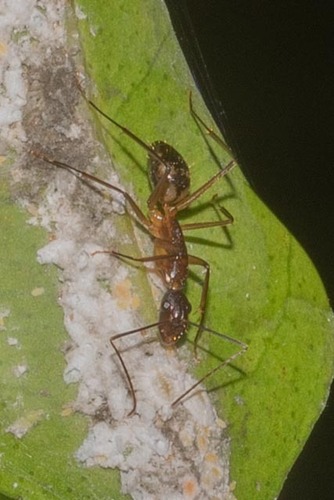
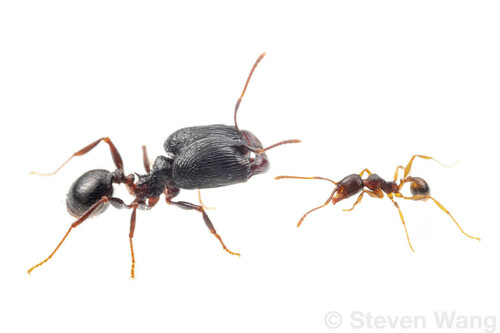
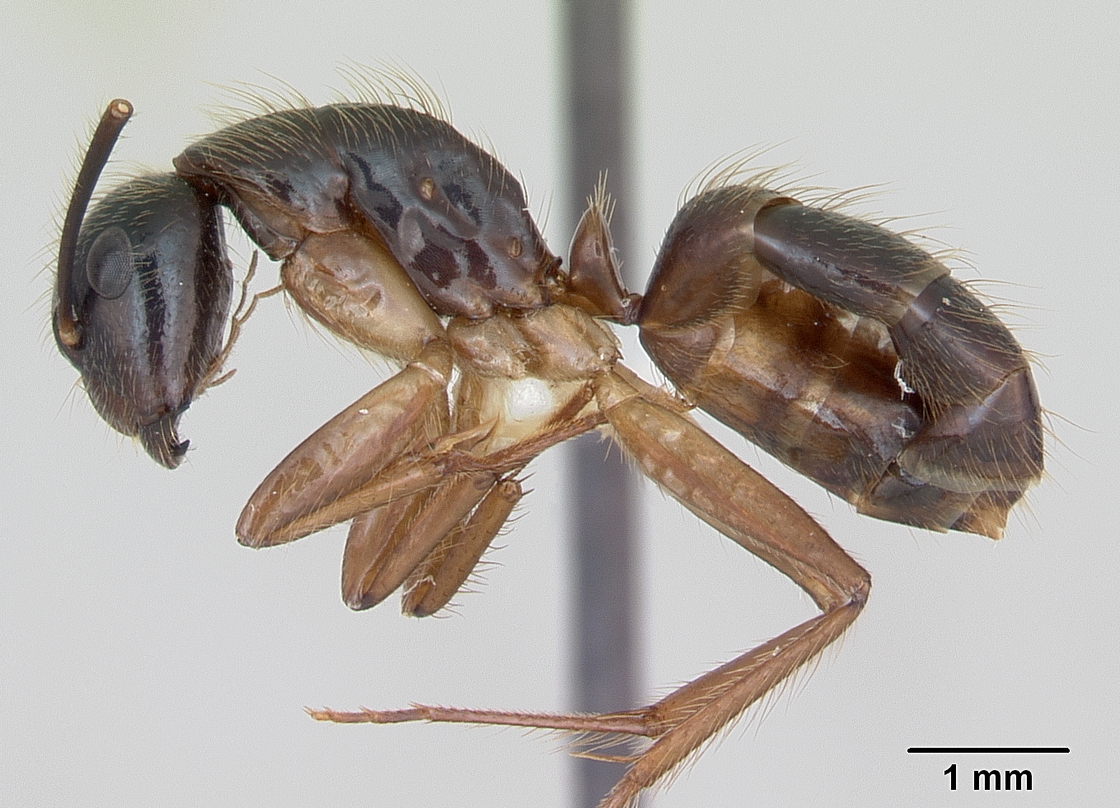
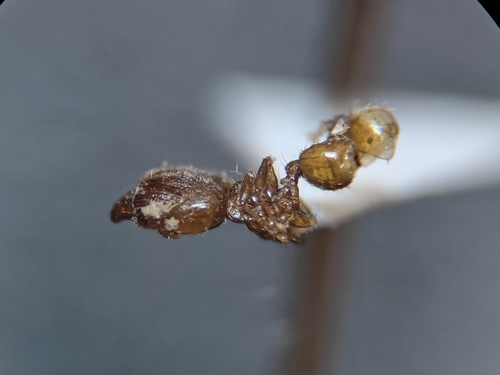
Camponotus lindigi
fauna UNI · Voucher El Medio hormiga carpintera

Camponotus lindigi

Also known as: Hormiga carpintera de Lindig
Camponotus lindigi Mayr, 1870 · Formicidae
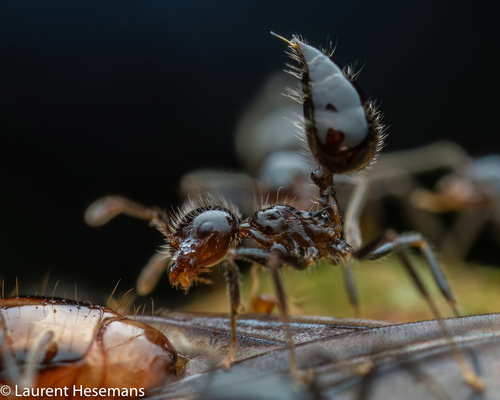
Camponotus lindigi — 30 registro(s) directos en Hacienda El Medio (Bautista Giraldo et al 2025, depósito CBUMAG, DOI 10.15472/eajbmi). El Medio aporta 40 especies de un total de 47 entre los 6 sitios del estudio.

Thermal belt927–986 m s.n.m.
HabitatTropical dry forest, edges and paddocks of Hacienda El Medio (La Paila, Zarzal).
Use / careResponsible observation. Keep a safe distance. Do not feed. Report sightings.
Records at El Medio30
Cited source → Species on GBIF → iNaturalist → Report on iNaturalist →
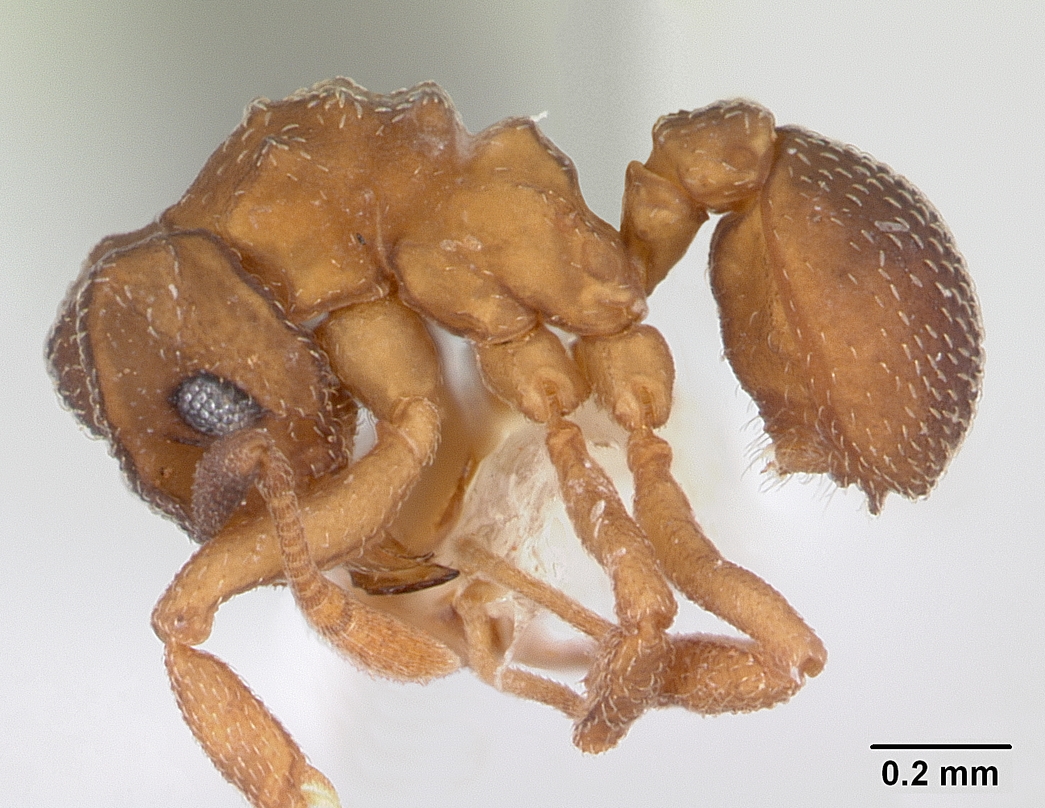
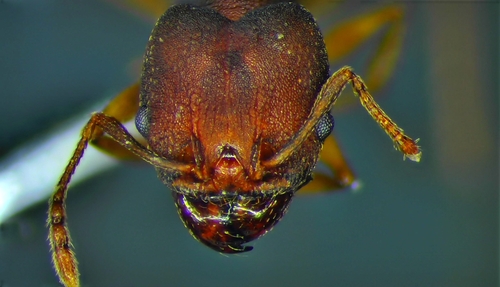
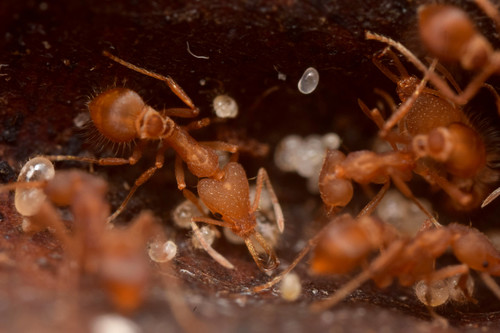
Cyphomyrmex rimosus
fauna UNI · Voucher El Medio hormiga — cultivadora de hongo (Attini)

Cyphomyrmex rimosus

Cyphomyrmex rimosus (Spinola, 1851) · Formicidae

Cyphomyrmex rimosus is a species of higher myrmicine in the family Formicidae. It is part of the tribe Attini, or fungus-growing ants.

Thermal belt927–986 m s.n.m.
HabitatTropical dry forest, edges and paddocks of Hacienda El Medio (La Paila, Zarzal).
Use / careResponsible observation. Keep a safe distance. Do not feed. Report sightings.
Records at El Medio27
Cited source → Species on GBIF → Wikipedia → Report on iNaturalist →
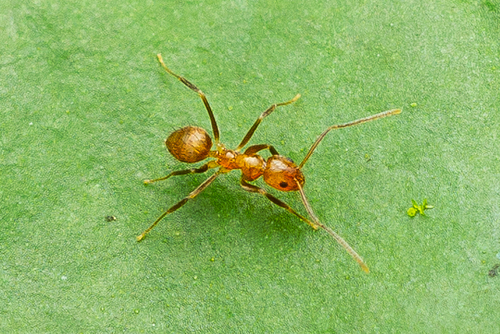
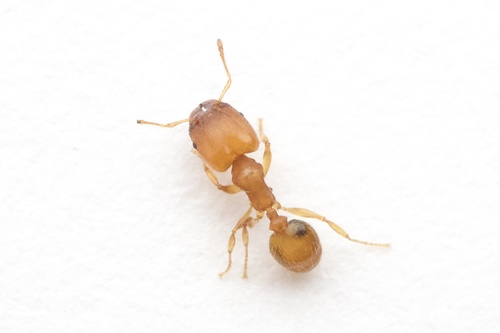
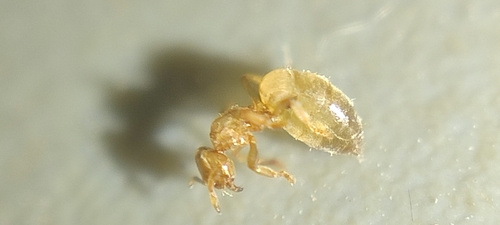
Wasmannia auropunctata
fauna UNI · Voucher El Medio hormiga pequeña

Electric ant

Also known as: Hormiga electric · Pequeña hormiga de fuego · Hormiga roja diminuta
Wasmannia auropunctata (Roger, 1863) · Formicidae

The little fire ant, also known as the electric ant, is a small, light to golden brown (ginger) social ant native to Central and South America, now spread to parts of Africa, Taiwan, North America, Puerto Rico, Southern Europe (France), Israel, Cuba, St. Croix and six Pacific Island groups plus north-eastern Australia (Cairns). It is a very harmful invasive species.

Thermal belt927–986 m s.n.m.
HabitatTropical dry forest, edges and paddocks of Hacienda El Medio (La Paila, Zarzal).
Use / careResponsible observation. Keep a safe distance. Do not feed. Report sightings.
Records at El Medio22
Cited source → Species on GBIF → Wikipedia → Report on iNaturalist →
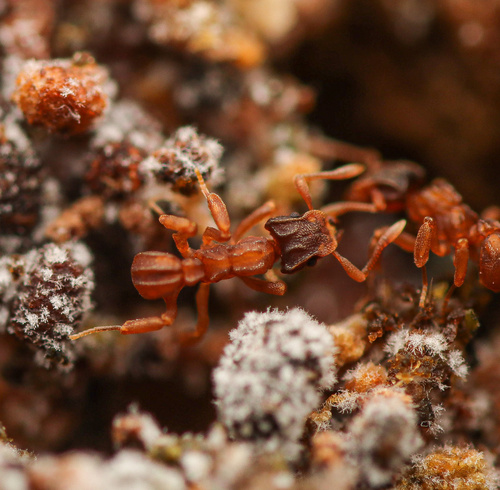
Nylanderia guatemalensis
fauna UNI · Voucher El Medio hormiga generalista

Nylanderia guatemalensis

Nylanderia guatemalensis (Forel, 1885) · Formicidae

Nylanderia guatemalensis — 20 registro(s) directos en Hacienda El Medio (Bautista Giraldo et al 2025, depósito CBUMAG, DOI 10.15472/eajbmi). El Medio aporta 40 especies de un total de 47 entre los 6 sitios del estudio.

Thermal belt927–986 m s.n.m.
HabitatTropical dry forest, edges and paddocks of Hacienda El Medio (La Paila, Zarzal).
Use / careResponsible observation. Keep a safe distance. Do not feed. Report sightings.
Records at El Medio20
Cited source → Species on GBIF → iNaturalist → Report on iNaturalist →
Nylanderia steinheili
fauna UNI · Voucher El Medio hormiga generalista

Nylanderia steinheili

Nylanderia steinheili (Forel, 1893) · Formicidae

Nylanderia steinheili — 20 registro(s) directos en Hacienda El Medio (Bautista Giraldo et al 2025, depósito CBUMAG, DOI 10.15472/eajbmi). El Medio aporta 40 especies de un total de 47 entre los 6 sitios del estudio.

Thermal belt927–986 m s.n.m.
HabitatTropical dry forest, edges and paddocks of Hacienda El Medio (La Paila, Zarzal).
Use / careResponsible observation. Keep a safe distance. Do not feed. Report sightings.
Records at El Medio20
Cited source → Species on GBIF → iNaturalist → Report on iNaturalist →
Azteca velox
fauna UNI · Voucher El Medio hormiga arborícola

Azteca velox

Azteca velox Forel, 1899 · Formicidae

Azteca velox — 17 registro(s) directos en Hacienda El Medio (Bautista Giraldo et al 2025, depósito CBUMAG, DOI 10.15472/eajbmi). El Medio aporta 40 especies de un total de 47 entre los 6 sitios del estudio.

Thermal belt927–986 m s.n.m.
HabitatTropical dry forest, edges and paddocks of Hacienda El Medio (La Paila, Zarzal).
Use / careResponsible observation. Keep a safe distance. Do not feed. Report sightings.
Records at El Medio17
Cited source → Species on GBIF → Wikipedia → Report on iNaturalist →
Crematogaster brasiliensis
fauna UNI · Voucher El Medio hormiga (gáster cardiaco)

Crematogaster brasiliensis

Crematogaster brasiliensis Mayr, 1878 · Formicidae

Crematogaster brasiliensis is a species of ant in tribe Crematogastrini. It was described by Mayr in 1878.

Thermal belt927–986 m s.n.m.
HabitatTropical dry forest, edges and paddocks of Hacienda El Medio (La Paila, Zarzal).
Use / careResponsible observation. Keep a safe distance. Do not feed. Report sightings.
Records at El Medio17
Cited source → Species on GBIF → iNaturalist → Report on iNaturalist →
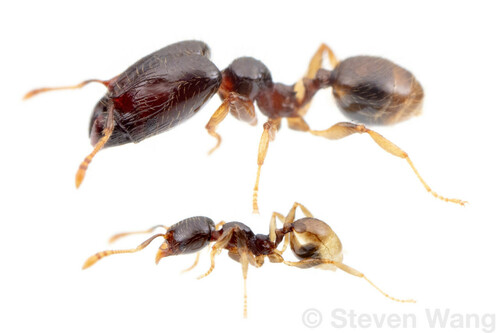
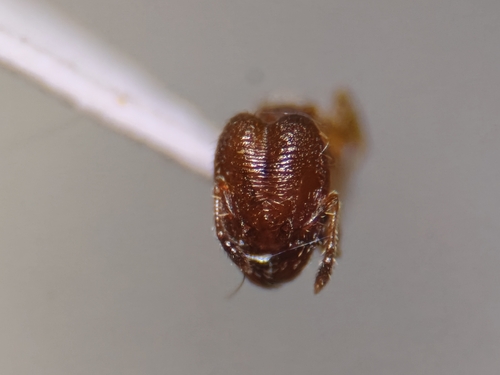
Pheidole synarmata
fauna UNI · Voucher El Medio hormiga (con casta soldado)

Pheidole synarmata

Pheidole synarmata Wilson, 2003 · Formicidae

Pheidole synarmata — 16 registro(s) directos en Hacienda El Medio (Bautista Giraldo et al 2025, depósito CBUMAG, DOI 10.15472/eajbmi). El Medio aporta 40 especies de un total de 47 entre los 6 sitios del estudio.

Thermal belt927–986 m s.n.m.
HabitatTropical dry forest, edges and paddocks of Hacienda El Medio (La Paila, Zarzal).
Use / careResponsible observation. Keep a safe distance. Do not feed. Report sightings.
Records at El Medio16
Cited source → Species on GBIF → iNaturalist → Report on iNaturalist →
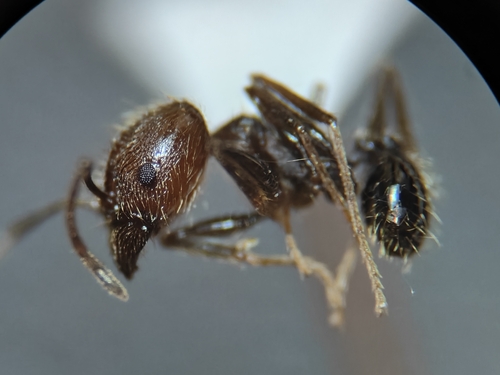
Solenopsis geminata
fauna UNI · Voucher El Medio hormiga (fuego/ladrona)

Solenopsis geminata

Also known as: Hormiga brava tropical · Hormiga de fuego nativa · Hormiga colorada
Solenopsis geminata (Fabricius, 1804) · Formicidae

Solenopsis geminata or tropical fire ant is a species of fire ants, described by Fabricius in 1804, in the tribe Solenopsidini; it was originally placed in the Atta genus. This species has a pan-tropical distribution.

Thermal belt927–986 m s.n.m.
HabitatTropical dry forest, edges and paddocks of Hacienda El Medio (La Paila, Zarzal).
Use / careResponsible observation. Keep a safe distance. Do not feed. Report sightings.
Records at El Medio16
Cited source → Species on GBIF → Wikipedia → Report on iNaturalist →
Marmosa demerarae
fauna UNI · Voucher El Medio mamífero — marsupial

Woolly mouse opossum

Also known as: Marmosa amazónica · Marmosa de cola lanuda · Chuchita
Marmosa demerarae (O.Thomas, 1905) · Didelphidae

The woolly mouse opossum or long-furred woolly mouse opossum, known locally as the cuíca, is a South American marsupial of the family Didelphidae. Its range includes central Colombia, Venezuela, French Guiana, Guyana, Suriname, eastern Peru, northern Bolivia, and northern Brazil. It was formerly assigned to the genus Micoureus, which was made a subgenus of Marmosa in 2009.

Thermal belt927–986 m s.n.m.
HabitatTropical dry forest, edges and paddocks of Hacienda El Medio (La Paila, Zarzal).
Use / careResponsible observation. Keep a safe distance. Do not feed. Report sightings.
Records at El Medio13
Cited source → Species on GBIF → Wikipedia → Report on iNaturalist →
Photo pending
Contribute via iNaturalist ↓
fauna UNI · Voucher El Medio hormiga (fuego/ladrona)

Solenopsis brevicornis

Solenopsis brevicornis Emery, 1888 · Formicidae

Solenopsis brevicornis — 11 registro(s) directos en Hacienda El Medio (Bautista Giraldo et al 2025, depósito CBUMAG, DOI 10.15472/eajbmi). El Medio aporta 40 especies de un total de 47 entre los 6 sitios del estudio.

Thermal belt927–986 m s.n.m.
HabitatTropical dry forest, edges and paddocks of Hacienda El Medio (La Paila, Zarzal).
Use / careResponsible observation. Keep a safe distance. Do not feed. Report sightings.
Records at El Medio11
Cited source → Species on GBIF → Report on iNaturalist →
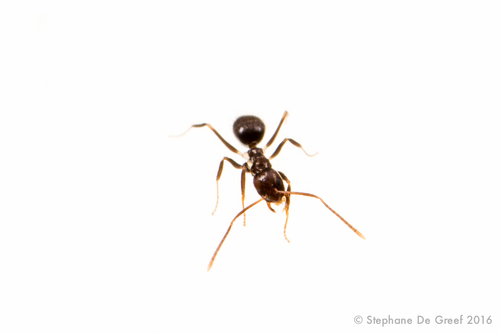
Cardiocondyla nuda
fauna UNI · Voucher El Medio hormiga pequeña

Cardiocondyla nuda

Cardiocondyla nuda (Mayr, 1866) · Formicidae

Cardiocondyla nuda is a species of ant in the subfamily Myrmicinae. It is a widespread ant species, and not invasive in nature.

Thermal belt927–986 m s.n.m.
HabitatTropical dry forest, edges and paddocks of Hacienda El Medio (La Paila, Zarzal).
Use / careResponsible observation. Keep a safe distance. Do not feed. Report sightings.
Records at El Medio8
Cited source → Species on GBIF → Wikipedia → Report on iNaturalist →
Photo pending
Contribute via iNaturalist ↓
fauna UNI · Voucher El Medio hormiga (fuego/ladrona)

Solenopsis Westwood,

Solenopsis Westwood, 1840 · Formicidae

Solenopsis Westwood, — 8 registro(s) directos en Hacienda El Medio (Bautista Giraldo et al 2025, depósito CBUMAG, DOI 10.15472/eajbmi). El Medio aporta 40 especies de un total de 47 entre los 6 sitios del estudio.

Thermal belt927–986 m s.n.m.
HabitatTropical dry forest, edges and paddocks of Hacienda El Medio (La Paila, Zarzal).
Use / careResponsible observation. Keep a safe distance. Do not feed. Report sightings.
Records at El Medio8
Cited source → Species on GBIF → Report on iNaturalist →
Photo pending
Contribute via iNaturalist ↓
fauna UNI · Voucher El Medio hormiga subterránea

Acropyga fuhrmanni

Acropyga fuhrmanni (Forel, 1914) · Formicidae

Acropyga fuhrmanni — 6 registro(s) directos en Hacienda El Medio (Bautista Giraldo et al 2025, depósito CBUMAG, DOI 10.15472/eajbmi). El Medio aporta 40 especies de un total de 47 entre los 6 sitios del estudio.

Thermal belt927–986 m s.n.m.
HabitatTropical dry forest, edges and paddocks of Hacienda El Medio (La Paila, Zarzal).
Use / careResponsible observation. Keep a safe distance. Do not feed. Report sightings.
Records at El Medio6
Cited source → Species on GBIF → Report on iNaturalist →
Camponotus senex
fauna UNI · Voucher El Medio hormiga carpintera

Camponotus senex

Also known as: Hormiga carpintera tejedora · Hormiga de seda
Camponotus senex (Smith, 1858) · Formicidae

Camponotus senex is a fairly common species of weaver ant from the New World. They are opportunistic cavity-dwellers, semi-nomadic carpenter ants which are found around grasslands in Central and South America. It is taxonomically believed to be a complex of cryptic species and was previously considered synonymous with Camponotus textor which once included a distantly-related species of weaver-ant.

Thermal belt927–986 m s.n.m.
HabitatTropical dry forest, edges and paddocks of Hacienda El Medio (La Paila, Zarzal).
Use / careResponsible observation. Keep a safe distance. Do not feed. Report sightings.
Records at El Medio6
Cited source → Species on GBIF → Wikipedia → Report on iNaturalist →
Cyphomyrmex minutus
fauna UNI · Voucher El Medio hormiga — cultivadora de hongo (Attini)

Cyphomyrmex minutus

Cyphomyrmex minutus Mayr, 1862 · Formicidae

Cyphomyrmex minutus — 5 registro(s) directos en Hacienda El Medio (Bautista Giraldo et al 2025, depósito CBUMAG, DOI 10.15472/eajbmi). El Medio aporta 40 especies de un total de 47 entre los 6 sitios del estudio.

Thermal belt927–986 m s.n.m.
HabitatTropical dry forest, edges and paddocks of Hacienda El Medio (La Paila, Zarzal).
Use / careResponsible observation. Keep a safe distance. Do not feed. Report sightings.
Records at El Medio5
Cited source → Species on GBIF → Wikipedia → Report on iNaturalist →
Pheidole susannae
fauna UNI · Voucher El Medio hormiga (con casta soldado)

Pheidole susannae

Pheidole susannae Forel, 1886 · Formicidae

Pheidole susannae — 5 registro(s) directos en Hacienda El Medio (Bautista Giraldo et al 2025, depósito CBUMAG, DOI 10.15472/eajbmi). El Medio aporta 40 especies de un total de 47 entre los 6 sitios del estudio.

Thermal belt927–986 m s.n.m.
HabitatTropical dry forest, edges and paddocks of Hacienda El Medio (La Paila, Zarzal).
Use / careResponsible observation. Keep a safe distance. Do not feed. Report sightings.
Records at El Medio5
Cited source → Species on GBIF → iNaturalist → Report on iNaturalist →
Pheidole transversostriata
fauna UNI · Voucher El Medio hormiga (con casta soldado)

Pheidole transversostriata

Pheidole transversostriata Mayr, 1887 · Formicidae

Pheidole transversostriata — 5 registro(s) directos en Hacienda El Medio (Bautista Giraldo et al 2025, depósito CBUMAG, DOI 10.15472/eajbmi). El Medio aporta 40 especies de un total de 47 entre los 6 sitios del estudio.

Thermal belt927–986 m s.n.m.
HabitatTropical dry forest, edges and paddocks of Hacienda El Medio (La Paila, Zarzal).
Use / careResponsible observation. Keep a safe distance. Do not feed. Report sightings.
Records at El Medio5
Cited source → Species on GBIF → iNaturalist → Report on iNaturalist →
Photo pending
Contribute via iNaturalist ↓
fauna UNI · Voucher El Medio hormiga primitiva (Amblyoponinae)

Prionopelta Mayr,

Prionopelta Mayr, 1866 · Formicidae

Prionopelta Mayr, — 5 registro(s) directos en Hacienda El Medio (Bautista Giraldo et al 2025, depósito CBUMAG, DOI 10.15472/eajbmi). El Medio aporta 40 especies de un total de 47 entre los 6 sitios del estudio.

Thermal belt927–986 m s.n.m.
HabitatTropical dry forest, edges and paddocks of Hacienda El Medio (La Paila, Zarzal).
Use / careResponsible observation. Keep a safe distance. Do not feed. Report sightings.
Records at El Medio5
Cited source → Species on GBIF → Report on iNaturalist →
Pheidole bilimeki
fauna UNI · Voucher El Medio hormiga (con casta soldado)

Pheidole bilimeki

Pheidole bilimeki Mayr, 1870 · Formicidae

Pheidole bilimeki — 4 registro(s) directos en Hacienda El Medio (Bautista Giraldo et al 2025, depósito CBUMAG, DOI 10.15472/eajbmi). El Medio aporta 40 especies de un total de 47 entre los 6 sitios del estudio.

Thermal belt927–986 m s.n.m.
HabitatTropical dry forest, edges and paddocks of Hacienda El Medio (La Paila, Zarzal).
Use / careResponsible observation. Keep a safe distance. Do not feed. Report sightings.
Records at El Medio4
Cited source → Species on GBIF → iNaturalist → Report on iNaturalist →
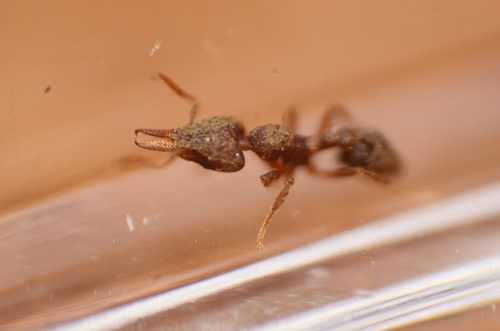
Anochetus mayri
fauna UNI · Voucher El Medio Indicator / rare hormiga — trap-jaw

Anochetus mayri

Anochetus mayri Emery, 1884 · Formicidae

Anochetus mayri — 3 registro(s) directos en Hacienda El Medio (Bautista Giraldo et al 2025, depósito CBUMAG, DOI 10.15472/eajbmi). El Medio aporta 40 especies de un total de 47 entre los 6 sitios del estudio.

Thermal belt927–986 m s.n.m.
HabitatTropical dry forest, edges and paddocks of Hacienda El Medio (La Paila, Zarzal).
Use / careResponsible observation. Keep a safe distance. Do not feed. Report sightings.
Records at El Medio3
Cited source → Species on GBIF → Wikipedia → Report on iNaturalist →
Camponotus indicatus
fauna UNI · Voucher El Medio hormiga carpintera

Camponotus indicatus

Camponotus indicatus Santschi, 1922 · Formicidae

Camponotus indicatus — 3 registro(s) directos en Hacienda El Medio (Bautista Giraldo et al 2025, depósito CBUMAG, DOI 10.15472/eajbmi). El Medio aporta 40 especies de un total de 47 entre los 6 sitios del estudio.

Thermal belt927–986 m s.n.m.
HabitatTropical dry forest, edges and paddocks of Hacienda El Medio (La Paila, Zarzal).
Use / careResponsible observation. Keep a safe distance. Do not feed. Report sightings.
Records at El Medio3
Cited source → Species on GBIF → iNaturalist → Report on iNaturalist →
Crematogaster curvispinosa
fauna UNI · Voucher El Medio hormiga (gáster cardiaco)

Crematogaster curvispinosa

Crematogaster curvispinosa Mayr, 1862 · Formicidae

Crematogaster curvispinosa is a species of ant in tribe Crematogastrini. It was described by Mayr in 1862.

Thermal belt927–986 m s.n.m.
HabitatTropical dry forest, edges and paddocks of Hacienda El Medio (La Paila, Zarzal).
Use / careResponsible observation. Keep a safe distance. Do not feed. Report sightings.
Records at El Medio3
Cited source → Species on GBIF → Wikipedia → Report on iNaturalist →
Gnamptogenys horni
fauna UNI · Voucher El Medio hormiga depredadora

Gnamptogenys horni

Gnamptogenys horni (Santschi, 1929) · Formicidae

Gnamptogenys horni — 3 registro(s) directos en Hacienda El Medio (Bautista Giraldo et al 2025, depósito CBUMAG, DOI 10.15472/eajbmi). El Medio aporta 40 especies de un total de 47 entre los 6 sitios del estudio.

Thermal belt927–986 m s.n.m.
HabitatTropical dry forest, edges and paddocks of Hacienda El Medio (La Paila, Zarzal).
Use / careResponsible observation. Keep a safe distance. Do not feed. Report sightings.
Records at El Medio3
Cited source → Species on GBIF → Wikipedia → Report on iNaturalist →
Pheidole radoszkowskii
fauna UNI · Voucher El Medio hormiga (con casta soldado)

Pheidole radoszkowskii

Pheidole radoszkowskii Mayr, 1884 · Formicidae

Pheidole radoszkowskii — 3 registro(s) directos en Hacienda El Medio (Bautista Giraldo et al 2025, depósito CBUMAG, DOI 10.15472/eajbmi). El Medio aporta 40 especies de un total de 47 entre los 6 sitios del estudio.

Thermal belt927–986 m s.n.m.
HabitatTropical dry forest, edges and paddocks of Hacienda El Medio (La Paila, Zarzal).
Use / careResponsible observation. Keep a safe distance. Do not feed. Report sightings.
Records at El Medio3
Cited source → Species on GBIF → iNaturalist → Report on iNaturalist →
Acropyga exsanguis
fauna UNI · Voucher El Medio hormiga subterránea

Acropyga exsanguis

Acropyga exsanguis (Wheeler, 1909) · Formicidae

Acropyga exsanguis is a species of ant in the subfamily Formicinae. It lives in underground nests in Mexico, Central and South America.

Thermal belt927–986 m s.n.m.
HabitatTropical dry forest, edges and paddocks of Hacienda El Medio (La Paila, Zarzal).
Use / careResponsible observation. Keep a safe distance. Do not feed. Report sightings.
Records at El Medio2
Cited source → Species on GBIF → iNaturalist → Report on iNaturalist →
Cyphomyrmex costatus
fauna UNI · Voucher El Medio hormiga — cultivadora de hongo (Attini)

Cyphomyrmex costatus

Cyphomyrmex costatus Mann, 1922 · Formicidae

Cyphomyrmex costatus — 2 registro(s) directos en Hacienda El Medio (Bautista Giraldo et al 2025, depósito CBUMAG, DOI 10.15472/eajbmi). El Medio aporta 40 especies de un total de 47 entre los 6 sitios del estudio.

Thermal belt927–986 m s.n.m.
HabitatTropical dry forest, edges and paddocks of Hacienda El Medio (La Paila, Zarzal).
Use / careResponsible observation. Keep a safe distance. Do not feed. Report sightings.
Records at El Medio2
Cited source → Species on GBIF → iNaturalist → Report on iNaturalist →
Hypoponera opacior
fauna UNI · Voucher El Medio hormiga primitiva (Ponerinae)

Hypoponera opacior

Hypoponera opacior (Forel, 1893) · Formicidae

Hypoponera opacior is a species of ant in the family Formicidae.

Thermal belt927–986 m s.n.m.
HabitatTropical dry forest, edges and paddocks of Hacienda El Medio (La Paila, Zarzal).
Use / careResponsible observation. Keep a safe distance. Do not feed. Report sightings.
Records at El Medio2
Cited source → Species on GBIF → Wikipedia → Report on iNaturalist →
Mycocepurus smithii
fauna UNI · Voucher El Medio Indicator / rare hormiga — cultivadora de hongo (Attini)

Mycocepurus smithii

Also known as: Hormiga atine asexual
Mycocepurus smithii (Forel, 1893) · Formicidae

Mycocepurus smithii is a species of fungus-growing ant from Latin America. This species is widely distributed geographically and can be found from Mexico in the north to Argentina in the south, as well as on some Caribbean Islands. It lives in a variety of forested habitats and associated open areas. Two studies published in 2009 demonstrated that some populations of the species consist exclusively of females which reproduce via thelytokous parthenogenesis. A detailed study found evidence of sex

Thermal belt927–986 m s.n.m.
HabitatTropical dry forest, edges and paddocks of Hacienda El Medio (La Paila, Zarzal).
Use / careResponsible observation. Keep a safe distance. Do not feed. Report sightings.
Records at El Medio2
Cited source → Species on GBIF → Wikipedia → Report on iNaturalist →
Pheidole fimbriata
fauna UNI · Voucher El Medio hormiga (con casta soldado)

Pheidole fimbriata

Pheidole fimbriata Roger, 1863 · Formicidae

Pheidole fimbriata — 2 registro(s) directos en Hacienda El Medio (Bautista Giraldo et al 2025, depósito CBUMAG, DOI 10.15472/eajbmi). El Medio aporta 40 especies de un total de 47 entre los 6 sitios del estudio.

Thermal belt927–986 m s.n.m.
HabitatTropical dry forest, edges and paddocks of Hacienda El Medio (La Paila, Zarzal).
Use / careResponsible observation. Keep a safe distance. Do not feed. Report sightings.
Records at El Medio2
Cited source → Species on GBIF → iNaturalist → Report on iNaturalist →
Photo pending
Contribute via iNaturalist ↓
fauna UNI · Voucher El Medio hormiga (con casta soldado)

Pheidole gauthieri

Pheidole gauthieri Forel, 1901 · Formicidae

Pheidole gauthieri — 2 registro(s) directos en Hacienda El Medio (Bautista Giraldo et al 2025, depósito CBUMAG, DOI 10.15472/eajbmi). El Medio aporta 40 especies de un total de 47 entre los 6 sitios del estudio.

Thermal belt927–986 m s.n.m.
HabitatTropical dry forest, edges and paddocks of Hacienda El Medio (La Paila, Zarzal).
Use / careResponsible observation. Keep a safe distance. Do not feed. Report sightings.
Records at El Medio2
Cited source → Species on GBIF → Report on iNaturalist →
Strumigenys trinidadensis
fauna UNI · Voucher El Medio Indicator / rare hormiga — trap-jaw

Strumigenys trinidadensis

Strumigenys trinidadensis Wheeler, 1922 · Formicidae

Strumigenys trinidadensis — 2 registro(s) directos en Hacienda El Medio (Bautista Giraldo et al 2025, depósito CBUMAG, DOI 10.15472/eajbmi). El Medio aporta 40 especies de un total de 47 entre los 6 sitios del estudio.

Thermal belt927–986 m s.n.m.
HabitatTropical dry forest, edges and paddocks of Hacienda El Medio (La Paila, Zarzal).
Use / careResponsible observation. Keep a safe distance. Do not feed. Report sightings.
Records at El Medio2
Cited source → Species on GBIF → iNaturalist → Report on iNaturalist →
Yaguarundí
fauna UNI · Voucher El Medio Indicator / rare mamífero — carnívoro

Jaguarundi

Also known as: Yaguarundí · Gato moro · Gato montés · León breñero · Onza
Herpailurus yagouaroundi (É.Geoffroy Saint-Hilaire, 1803) · Felidae

The jaguarundi ; or is a wild cat native to the Americas. Its range extends from central Argentina in the south and much of South America east of the Andes, through Central America, and into northern Mexico. It occurred in the Lower Rio Grande Valley in south Texas as recently as the early 1990s but is now believed to be extirpated from the US. The jaguarundi is a medium-sized cat of slender build. Its coloration is uniform with two color morphs, gray and red. It has an elongated body, with rela

Thermal belt927–986 m s.n.m.
HabitatTropical dry forest, edges and paddocks of Hacienda El Medio (La Paila, Zarzal).
Use / careResponsible observation. Keep a safe distance. Do not feed. Report sightings.
Records at El Medio2
Cited source → Species on GBIF → Wikipedia → Report on iNaturalist →
Brachymyrmex musculus
fauna UNI · Voucher El Medio hormiga muy pequeña

Brachymyrmex musculus

Brachymyrmex musculus Forel, 1899 · Formicidae

Brachymyrmex musculus is a species of ant in the subfamily Formicinae.

Thermal belt927–986 m s.n.m.
HabitatTropical dry forest, edges and paddocks of Hacienda El Medio (La Paila, Zarzal).
Use / careResponsible observation. Keep a safe distance. Do not feed. Report sightings.
Records at El Medio1
Cited source → Species on GBIF → iNaturalist → Report on iNaturalist →
Camponotus atriceps
fauna UNI · Voucher El Medio hormiga carpintera

Camponotus atriceps

Camponotus atriceps (Smith, 1858) · Formicidae

Camponotus atriceps, previously referred as C. abdominalis, is a species of carpenter ant, endemic to the Americas. In the Amazon region, C. atriceps has been seen attacking colonies of stingless bees of the genus Melipona, especially M. flavolineata and M. fasciculata. It destroys hives and eats brood when food is low. Field research at Embrapa Amazônia Oriental in Brazil discovered that ants can be attracted to empty hive "trap boxes," offering an efficient non-chemical alternative for safegua

Thermal belt927–986 m s.n.m.
HabitatTropical dry forest, edges and paddocks of Hacienda El Medio (La Paila, Zarzal).
Use / careResponsible observation. Keep a safe distance. Do not feed. Report sightings.
Records at El Medio1
Cited source → Species on GBIF → Wikipedia → Report on iNaturalist →
Photo pending
Contribute via iNaturalist ↓
fauna UNI · Voucher El Medio Indicator / rare hormiga (gáster cardiaco)

Crematogaster sotobosque

Crematogaster sotobosque Longino, 2003 · Formicidae

Crematogaster sotobosque — 1 registro(s) directos en Hacienda El Medio (Bautista Giraldo et al 2025, depósito CBUMAG, DOI 10.15472/eajbmi). El Medio aporta 40 especies de un total de 47 entre los 6 sitios del estudio.

Thermal belt927–986 m s.n.m.
HabitatTropical dry forest, edges and paddocks of Hacienda El Medio (La Paila, Zarzal).
Use / careResponsible observation. Keep a safe distance. Do not feed. Report sightings.
Records at El Medio1
Cited source → Species on GBIF → Report on iNaturalist →
Guatín
fauna UNI · Voucher El Medio Indicator / rare mamífero — roedor

Central American agouti

Also known as: Guatín · Ñeque · Agutí · Picure · Conejo Pintado
Dasyprocta punctata Gray, 1842 · Dasyproctidae

The Central American agouti is a species of agouti from the family Dasyproctidae. The main portion of its range is from Chiapas and the Yucatan Peninsula, through Central America, to northwestern Ecuador, Colombia and far western Venezuela. A highly disjunct population is found in southeastern Peru, far southwestern Brazil, Bolivia, western Paraguay and far northwestern Argentina. The disjunct population has been treated as a separate species, the brown agouti, but a major review of the geograph

Thermal belt927–986 m s.n.m.
HabitatTropical dry forest, edges and paddocks of Hacienda El Medio (La Paila, Zarzal).
Use / careResponsible observation. Keep a safe distance. Do not feed. Report sightings.
Records at El Medio1
Cited source → Species on GBIF → Wikipedia → Report on iNaturalist →
Hypoponera opaciceps
fauna UNI · Voucher El Medio hormiga primitiva (Ponerinae)

Hypoponera opaciceps

Hypoponera opaciceps (Mayr, 1887) · Formicidae

Hypoponera opaciceps is a species of ant in the family Formicidae.

Thermal belt927–986 m s.n.m.
HabitatTropical dry forest, edges and paddocks of Hacienda El Medio (La Paila, Zarzal).
Use / careResponsible observation. Keep a safe distance. Do not feed. Report sightings.
Records at El Medio1
Cited source → Species on GBIF → Wikipedia → Report on iNaturalist →
Photo pending
Contribute via iNaturalist ↓
fauna UNI · Voucher El Medio hormiga — cultivadora de hongo (Attini)

Mycetomoellerius opulentus

Mycetomoellerius opulentus (Mann, 1922) · Formicidae

Mycetomoellerius opulentus — 1 registro(s) directos en Hacienda El Medio (Bautista Giraldo et al 2025, depósito CBUMAG, DOI 10.15472/eajbmi). El Medio aporta 40 especies de un total de 47 entre los 6 sitios del estudio.

Thermal belt927–986 m s.n.m.
HabitatTropical dry forest, edges and paddocks of Hacienda El Medio (La Paila, Zarzal).
Use / careResponsible observation. Keep a safe distance. Do not feed. Report sightings.
Records at El Medio1
Cited source → Species on GBIF → Report on iNaturalist →
Photo pending
Contribute via iNaturalist ↓
fauna UNI · Voucher El Medio hormiga (con casta soldado)

Pheidole cataractae

Pheidole cataractae Wheeler, 1916 · Formicidae

Pheidole cataractae — 1 registro(s) directos en Hacienda El Medio (Bautista Giraldo et al 2025, depósito CBUMAG, DOI 10.15472/eajbmi). El Medio aporta 40 especies de un total de 47 entre los 6 sitios del estudio.

Thermal belt927–986 m s.n.m.
HabitatTropical dry forest, edges and paddocks of Hacienda El Medio (La Paila, Zarzal).
Use / careResponsible observation. Keep a safe distance. Do not feed. Report sightings.
Records at El Medio1
Cited source → Species on GBIF → Report on iNaturalist →
Pheidole flavens
fauna UNI · Voucher El Medio hormiga (con casta soldado)

Pheidole flavens

Pheidole flavens Roger, 1863 · Formicidae

Pheidole flavens — 1 registro(s) directos en Hacienda El Medio (Bautista Giraldo et al 2025, depósito CBUMAG, DOI 10.15472/eajbmi). El Medio aporta 40 especies de un total de 47 entre los 6 sitios del estudio.

Thermal belt927–986 m s.n.m.
HabitatTropical dry forest, edges and paddocks of Hacienda El Medio (La Paila, Zarzal).
Use / careResponsible observation. Keep a safe distance. Do not feed. Report sightings.
Records at El Medio1
Cited source → Species on GBIF → iNaturalist → Report on iNaturalist →
Photo pending
Contribute via iNaturalist ↓
fauna UNI · Voucher El Medio hormiga críptica de hojarasca

Rogeria gibba

Rogeria gibba · Formicidae

Rogeria gibba — 1 registro(s) directos en Hacienda El Medio (Bautista Giraldo et al 2025, depósito CBUMAG, DOI 10.15472/eajbmi). El Medio aporta 40 especies de un total de 47 entre los 6 sitios del estudio.

Thermal belt927–986 m s.n.m.
HabitatTropical dry forest, edges and paddocks of Hacienda El Medio (La Paila, Zarzal).
Use / careResponsible observation. Keep a safe distance. Do not feed. Report sightings.
Records at El Medio1
Cited source → Species on GBIF → Report on iNaturalist →
Strumigenys subedentata
fauna UNI · Voucher El Medio Indicator / rare hormiga — trap-jaw

Strumigenys subedentata

Strumigenys subedentata Mayr, 1887 · Formicidae

Strumigenys subedentata — 1 registro(s) directos en Hacienda El Medio (Bautista Giraldo et al 2025, depósito CBUMAG, DOI 10.15472/eajbmi). El Medio aporta 40 especies de un total de 47 entre los 6 sitios del estudio.

Thermal belt927–986 m s.n.m.
HabitatTropical dry forest, edges and paddocks of Hacienda El Medio (La Paila, Zarzal).
Use / careResponsible observation. Keep a safe distance. Do not feed. Report sightings.
Records at El Medio1
Cited source → Species on GBIF → iNaturalist → Report on iNaturalist →
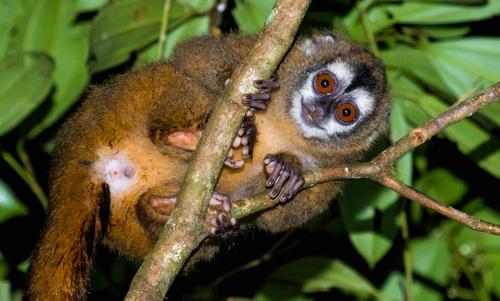
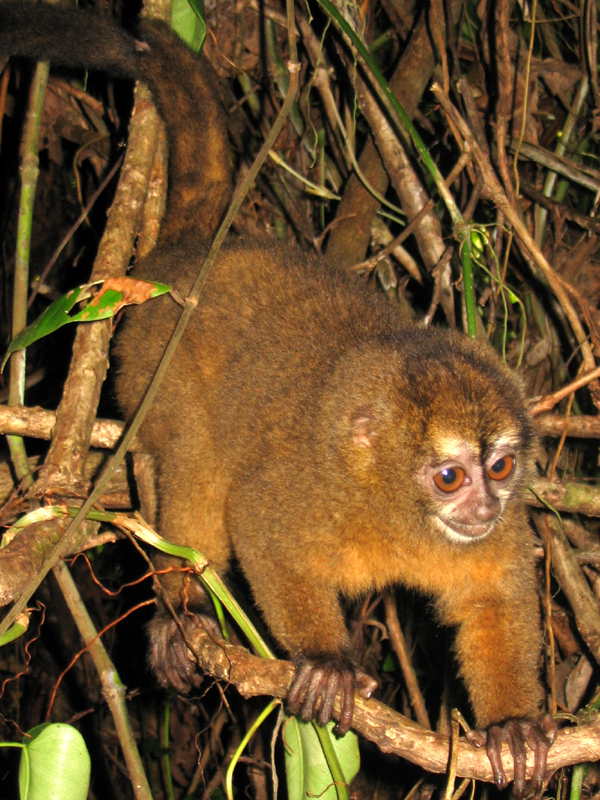
Marteja
fauna MED · At the property Seen by El Medio cam 2026 mamífero — primate nocturno

Andean night monkey

Also known as: Mono nocturno andino · Tutamono · Owl monkey · Douroucouli
Aotus lemurinus (I. Geoffroy, 1843) · Aotidae

The gray-bellied night monkey, also called the grey-legged douroucouli or lemurine owl monkey, is a small New World monkey of the family Aotidae. Native to tropical and subtropical forests of South America, the gray-bellied night monkey faces a significant threat from hunting, harvesting for use in pharmaceutical research and habitat destruction.

Thermal belt927–986 m s.n.m.
HabitatDry-forest relict, edges and tall trees of Hacienda El Medio.
Use / careRespectful nocturnal observation WITHOUT white flashlights (red, low intensity only). NO noise. Key conservation species — its persistence here justifies managing El Medio as a dry-forest refuge.
Records at El Medio1
Cited source → Species on GBIF → Wikipedia → iNaturalist → Report on iNaturalist →
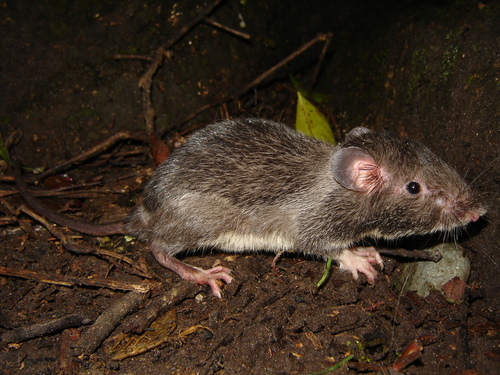
Ratón silvestre
fauna MED · At the property Seen by El Medio cam 2026 mamífero — roedor pequeño silvestre

Wild mouse

Also known as: Ratón de espino · Ratón de monte · Spiny pocket mouse
Heteromys anomalus (Thompson, 1815) · Heteromyidae

The Trinidad spiny pocket mouse is a species of rodent in the family Heteromyidae. It is found in Colombia, Trinidad and Tobago, and Venezuela.

Thermal belt927–986 m s.n.m.
HabitatDry-forest relict, edges and tall trees of Hacienda El Medio.
Use / careNight sighting with red flashlight. Do not confuse with urban pests (Rattus, Mus). DO NOT use poison near the forest — affects the food chain.
Records at El Medio1
Cited source → Species on GBIF → Wikipedia → iNaturalist → Report on iNaturalist →
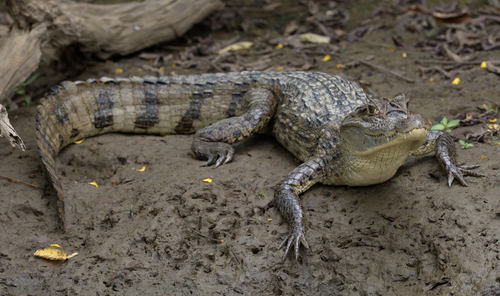
Babilla
fauna MED · At the property Seen by El Medio cam 2026 reptil — caimán

Caimán común

Also known as: Caimán común · Yacaré negro · Cuajipalo · Spectacled caiman
Caiman crocodilus (Linnaeus, 1758) · Alligatoridae

The spectacled caiman, also known as the white caiman, common caiman, and speckled caiman, is a crocodilian in the family Alligatoridae. It is brownish-, greenish-, or yellowish-gray colored and has a spectacle-like ridge between its eyes, which is where its common name come from. It grows to a length of 1.4–2.5 m and a weight of 7–40 kg (15–88 lb), with males being both longer and heavier than females. Its diet varies seasonally, commonly consisting of crabs, fish, small mammals, amphibians and

Thermal belt927–986 m s.n.m.
HabitatTropical dry forest, edges and paddocks of Hacienda El Medio (La Paila, Zarzal).
Use / careView at distance (minimum 20 m) from the lakeside viewpoint. Protected species. Do not feed — alters behaviour.
Cited source → Species on GBIF → Wikipedia → iNaturalist → Report on iNaturalist →
Acacia
flora MED · At the property planta — árbol del bosque seco

Black wattle

Also known as: Black wattle · Mangium
Acacia mangium Willd. · Fabaceae

Acacia mangium is a species of flowering tree in the pea family, Fabaceae, that is native to northeastern Queensland in Australia, the Western Province of Papua New Guinea, Papua, and the eastern Maluku Islands. Common names include black wattle, hickory wattle, mangium, and forest mangrove. Its uses include environmental management and wood.

Thermal belt927–986 m s.n.m. (piso cálido del valle)
HabitatTropical dry-forest relict, edges, paddocks and wetlands of Hacienda El Medio.
Use / careForage leaves and pods for livestock. Nitrogen fixer. Plantation timber. Shade in intensive silvopastoral systems.
Cited source → Species on GBIF → Wikipedia → Report on iNaturalist →
Aguacate
flora MED · At the property planta — frutal cultivado

Palta

Also known as: Palta · Avocado
Persea americana Mill. · Lauraceae

The avocado, alligator pear or avocado pear is an evergreen tree in the laurel family (Lauraceae). It is native to the Americas, with archaeological evidence of early human avocado use dating back thousands of years across various regions of Central and South America. It was prized for its large and unusually oily fruit. The native range of avocado extends from Mexico to Peru, encompassing much of Central America and parts of northern and western South America.

Thermal belt927–986 m s.n.m.
HabitatTropical dry-forest relict, edges, paddocks and wetlands of Hacienda El Medio.
Use / careFruit; cosmetic oil from pulp. Leaves in digestive infusion. Crushed seed in oil traditionally used for hair loss. Leaves toxic to pets.
Cited source → Species on GBIF → Wikipedia → Report on iNaturalist →
Bambú común
flora MED · At the property planta — bambú

Bambú amarillo

Also known as: Bambú amarillo · Common bamboo · Caña brava amarilla
Bambusa vulgaris Schrad. ex J.C.Wendl. · Poaceae

Bambusa vulgaris, common bamboo, is an open-clump type bamboo species. It is native to Bangladesh, India, Sri Lanka, Southeast Asia, and to the province of Yunnan in southern China, but it has been widely cultivated in many other places and has become naturalized in several regions. Among bamboo species, it is one of the largest and most easily recognized.

Thermal belt927–986 m s.n.m.
HabitatTropical dry-forest relict, edges, paddocks and wetlands of Hacienda El Medio.
Use / careMinor construction, basketry. Tender shoots edible. Leaves in traditional infusion as diuretic and for fevers.
Cited source → Species on GBIF → Wikipedia → Report on iNaturalist →
Buchón de agua
flora MED · At the property planta acuática

Jacinto de agua

Also known as: Jacinto de agua · Camalote · Water hyacinth · Bora
Pontederia crassipes Mart. · Pontederiaceae

Pontederia crassipes, commonly known as common water hyacinth, is an aquatic plant native to South America, naturalized throughout the world, and often invasive outside its native range. It is the sole species of the subgenus Oshunae within the genus Pontederia. Anecdotally, it is known as the "terror of Bengal" due to its invasive growth tendencies.

Thermal belt927–986 m s.n.m.
HabitatTropical dry-forest relict, edges, paddocks and wetlands of Hacienda El Medio.
Use / careNo major medicinal use. Composting. Phytoremediation of contaminated water. Manage to prevent invasion.
Cited source → Species on GBIF → Wikipedia → Report on iNaturalist →
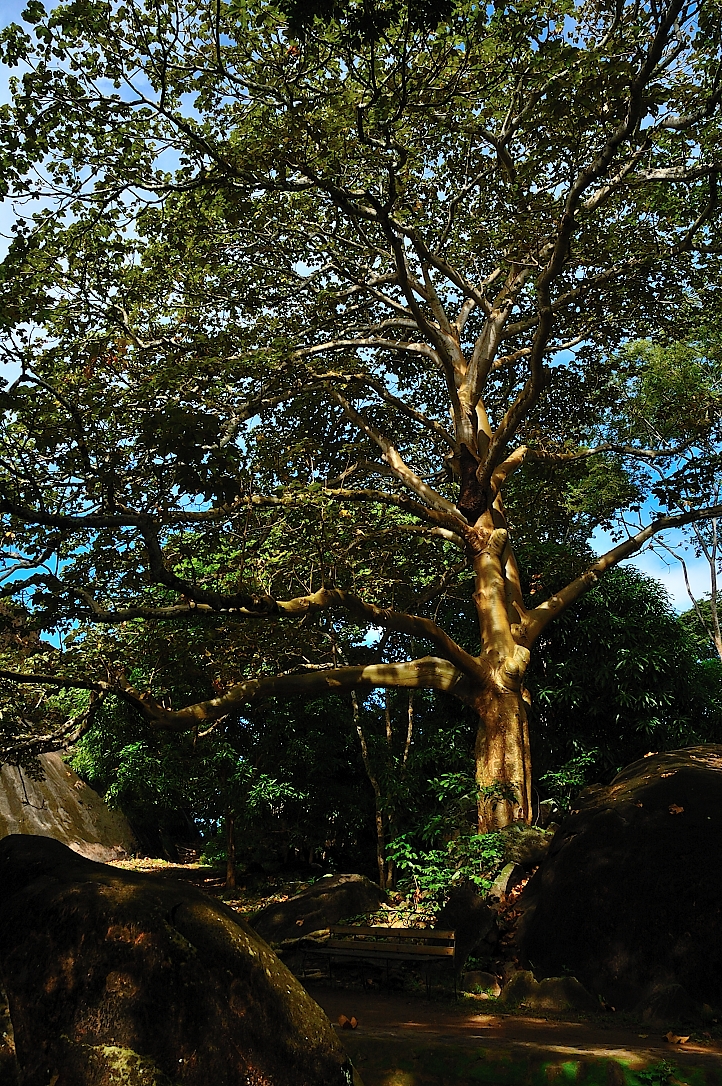
Camajón
flora MED · At the property planta — árbol del bosque seco

Castaño

Also known as: Castaño · Panama tree · Manzano de monte
Sterculia apetala (Jacq.) H.Karst. · Malvaceae

Sterculia apetala, the Panama tree, is a species of flowering plant in the family Malvaceae. It is found in Florida, southern Mexico, Central America, and northern South America, and has been introduced to the Caribbean islands. Sterculia apetala is recognized as the national tree of the Republic of Panama.

Thermal belt927–986 m s.n.m. (piso cálido del valle)
HabitatTropical dry-forest relict, edges, paddocks and wetlands of Hacienda El Medio.
Use / careEdible roasted seeds (cocoa-like flavor). Soft timber for canoes in other regions. Bark traditionally used for stomach ailments.
Cited source → Species on GBIF → Wikipedia → Report on iNaturalist →
Caracolí
flora MED · At the property planta — árbol del bosque seco

Mijao

Also known as: Mijao · Espavé · Wild cashew
Anacardium excelsum (Bertero & Balb. ex Kunth) Skeels · Anacardiaceae

Anacardium excelsum, the wild cashew, espavél or espavé, is a tree in the flowering plant family Anacardiaceae. The tree is common in the tropical and subtropical dry broadleaf forests of Pacific and Atlantic watersheds of Central and South America, extending as far north as Guatemala and south into Ecuador.

Thermal belt927–986 m s.n.m. (piso cálido del valle)
HabitatTropical dry-forest relict, edges, paddocks and wetlands of Hacienda El Medio.
Use / careTimber for construction and posts. Cashew-relative fruits (mijao) less commercial. Resin as traditional adhesive. Astringent bark for diarrhea.
Cited source → Species on GBIF → Wikipedia → Report on iNaturalist →
Carreto
flora MED · At the property planta — árbol del bosque seco

Peroba rosa

Also known as: Peroba rosa · Palo amarillo
Aspidosperma polyneuron Müll.Arg. · Apocynaceae

Aspidosperma polyneuron, commonly known as Peroba and Peroba Rosa, is a species of tree native to eastern and southern Brazil, northeastern Argentina, and Paraguay in eastern South America, and to Colombia, Peru, and Venezuela in northwestern South America. It is a characteristic tree of the Atlantic Forest of eastern Brazil. In addition, it is useful for beekeeping.

Thermal belt927–986 m s.n.m. (piso cálido del valle)
HabitatTropical dry-forest relict, edges, paddocks and wetlands of Hacienda El Medio.
Use / careHigh-quality timber. Bark with alkaloids — preliminary studies for antimalarial use. DO NOT use in folk medicine (toxicity).
Cited source → Species on GBIF → Wikipedia → Report on iNaturalist →
Caña de azúcar
flora MED · At the property planta — cultivo (matriz)

Caña dulce

Also known as: Caña dulce · Sugarcane · Caña común
Saccharum officinarum L. · Poaceae

Saccharum officinarum is a large, strong-growing species of grass in the sugarcane genus. Its stout stalks are rich in sucrose, a disaccharide sugar which accumulates in the stalk internodes. It originated in New Guinea, and is now cultivated in tropical and subtropical countries worldwide for the production of sugar, ethanol and other products. It is one of the most productive and most intensively cultivated kinds of sugarcane.

Thermal belt927–986 m s.n.m.
HabitatTropical dry-forest relict, edges, paddocks and wetlands of Hacienda El Medio.
Use / careIndustrial crop: panela, sugar, ethanol, rum. Traditional: cane juice (guarapo). Folk medicine: raw juice as mild diuretic.
Cited source → Species on GBIF → Wikipedia → Report on iNaturalist →
Photo pending
Contribute via iNaturalist ↓
flora MED · At the property planta — árbol del bosque seco

Cedro macho

Also known as: Cedro macho · Trementino
Trichilia hirta L. · Meliaceae

Árbol del sotobosque y dosel medio del bosque seco. Frutos dispersados por aves y murciélagos. Importante en la regeneración de los relictos. Especie en la matriz del Catálogo Ramos & Silverstone 2018 para el valle geográfico del río Cauca; observada directamente en Hacienda El Medio. Verificación con voucher pendiente.

Thermal belt927–986 m s.n.m. (piso cálido del valle)
HabitatTropical dry-forest relict, edges, paddocks and wetlands of Hacienda El Medio.
Use / careTimber for posts. No major documented medicinal use.
Cited source → Species on GBIF → Report on iNaturalist →
Cedro
flora MED · At the property planta — árbol del bosque seco

Cedro rosado

Also known as: Cedro rosado · Spanish cedar · Cedro real
Cedrela odorata L. · Meliaceae

Cedrela odorata, commonly known as Spanish cedar, Cuban cedar, or cedro in Spanish, is a commercially important species of tree in the chinaberry family, Meliaceae native to the Neotropics.

Thermal belt927–986 m s.n.m. (piso cálido del valle)
HabitatTropical dry-forest relict, edges, paddocks and wetlands of Hacienda El Medio.
Use / careHighly valued aromatic timber (cigar boxes, furniture). Leaves and bark in traditional infusion for fevers and as natural insecticide. Endangered due to overexploitation.
Cited source → Species on GBIF → Wikipedia → Report on iNaturalist →
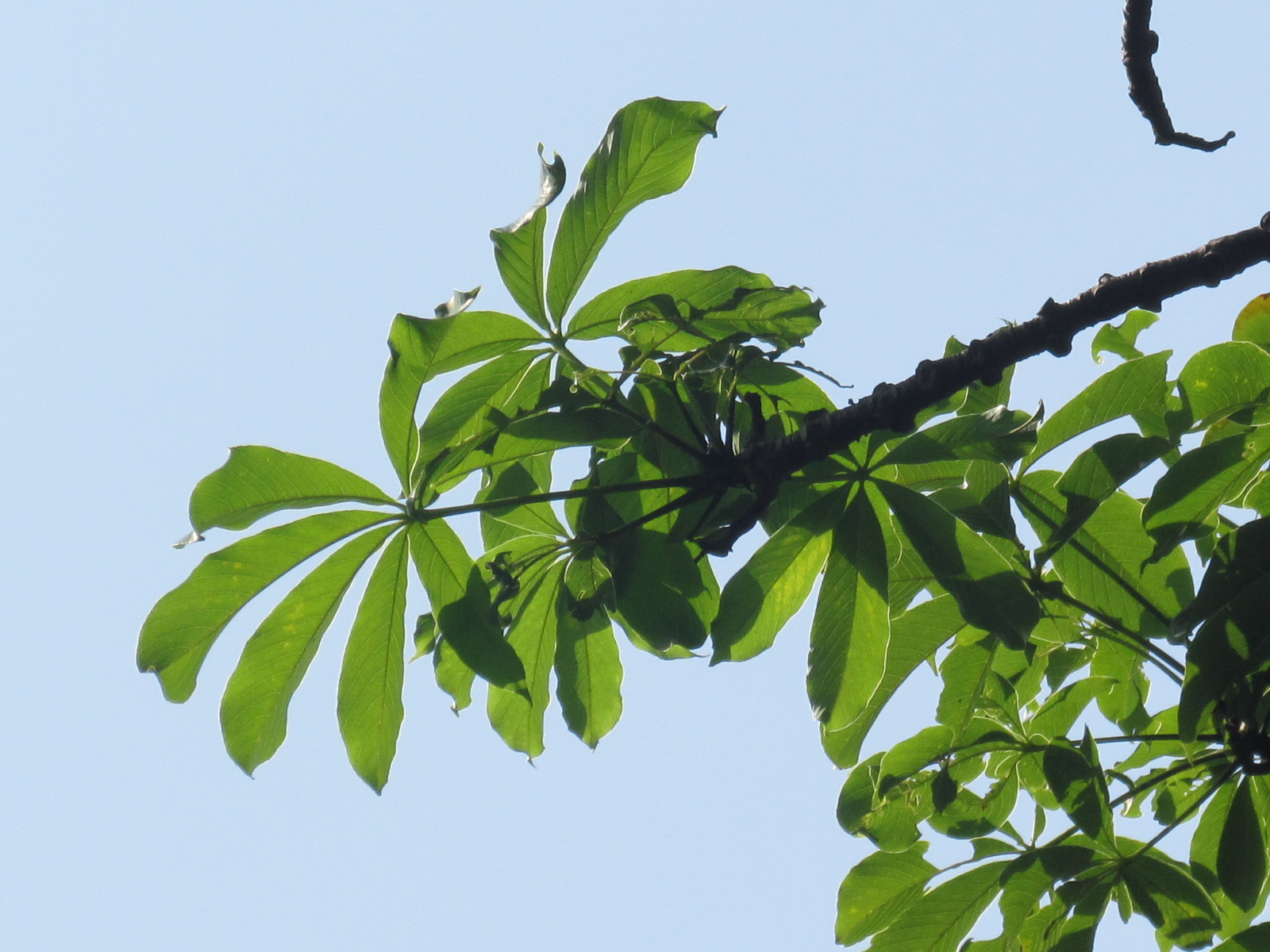
Ceiba
flora MED · At the property planta — árbol del bosque seco

Bonga

Also known as: Bonga · Ceibo blanco · Pochote · Lupuna
Ceiba pentandra (L.) Gaertn. · Bombacaceae

Ceiba pentandra is a tropical tree of the order Malvales and the family Malvaceae, native to Central America, the Caribbean, and the northern half of South America; some authors also consider it native in western and central Africa. It is widely introduced in other tropical regions including South and Southeast Asia, where it is cultivated.

Thermal belt927–986 m s.n.m. (piso cálido del valle)
HabitatTropical dry-forest relict, edges, paddocks and wetlands of Hacienda El Medio.
Use / careKapok fiber from fruit, historically used in mattresses and life vests. Bark in folk infusion for diabetes and as diuretic. Iconic shade tree. Sacred tree in indigenous cosmologies.
Cited source → Species on GBIF → Wikipedia → Report on iNaturalist →
Ceibo
flora MED · At the property planta — árbol del bosque seco

Bala

Also known as: Bala · Jabillo · Sandbox tree · Catahua
Hura crepitans L. · Euphorbiaceae

Hura crepitans, known by the common names sandbox tree, possumwood, monkey no-climb, assacu and jabillo, is a species of evergreen tree in the family Euphorbiaceae, native to tropical regions of North and South America including the Amazon rainforest. It is also present in parts of Tanzania, where it is considered an invasive species. Because its fruit explodes when ripe, it has also received the colloquial nickname "dynamite tree".

Thermal belt927–986 m s.n.m. (piso cálido del valle)
HabitatTropical dry-forest relict, edges, paddocks and wetlands of Hacienda El Medio.
Use / careTIMBER ONLY — latex is highly irritating and toxic. Seeds are poisonous. Historically wood for canoes; now decorative only. DO NOT use in folk medicine.
Cited source → Species on GBIF → Wikipedia → Report on iNaturalist →
Chiminango
flora MED · At the property planta — árbol del bosque seco

Madras thorn

Also known as: Madras thorn · Guayamochil · Pinzán
Pithecellobium dulce (Roxb.) Benth. · Fabaceae

Pithecellobium dulce, commonly known as Manila tamarind, Madras thorn, monkeypod tree or camachile, is a species of flowering plant in the pea family, Fabaceae, that is native to the Pacific Coast and adjacent highlands of Mexico, Central America, and northern South America. It is also sometimes known as monkeypod, but that name is also used for several other plants, including Samanea saman. It is an introduced species and extensively naturalized in the Caribbean and Florida, as well as the Phil

Thermal belt927–986 m s.n.m. (piso cálido del valle)
HabitatTropical dry-forest relict, edges, paddocks and wetlands of Hacienda El Medio.
Use / carePods with sweet edible aril. Timber for posts. Astringent and antidiarrheal bark. Leaves traditionally used for skin infections.
Cited source → Species on GBIF → Wikipedia → Report on iNaturalist →
Cámbulo
flora MED · At the property planta — árbol del bosque seco

Búcaro

Also known as: Búcaro · Coral bean · Písamo
Erythrina fusca Lour. · Fabaceae

Erythrina fusca is a species of flowering tree in the legume family, Fabaceae. It is known by many common names, including purple coraltree, gallito, bois immortelle, bucayo, and the more ambiguous "bucare" and "coral bean". E. fusca has the widest distribution of any Erythrina species; it is the only one found in both the New and Old World. It grows on coasts and along rivers in tropical Asia, Oceania, the Mascarene Islands, Madagascar, Africa, and the Neotropics.

Thermal belt927–986 m s.n.m. (piso cálido del valle)
HabitatTropical dry-forest relict, edges, paddocks and wetlands of Hacienda El Medio.
Use / careLive fence (cuttings root). Red flowering visited by hummingbirds and oropendolas. Traditional: seeds toxic (alkaloids — restricted ceremonial use, DO NOT consume).
Cited source → Species on GBIF → Wikipedia → Report on iNaturalist →
Diomate
flora MED · At the property planta — árbol del bosque seco

Sambo-caspi

Also known as: Sambo-caspi · West Indian boxwood
Phyllostylon rhamnoides (J.Poiss.) Taub. · Ulmaceae

Árbol del bosque seco con madera amarilla muy dura. Especie maderable amenazada por sobreexplotación. Citado por Pizano & García 2014 como representativo del bs-T colombiano. Especie en la matriz del Catálogo Ramos & Silverstone 2018 para el valle geográfico del río Cauca; observada directamente en Hacienda El Medio. Verificación con voucher pendiente.

Thermal belt927–986 m s.n.m. (piso cálido del valle)
HabitatTropical dry-forest relict, edges, paddocks and wetlands of Hacienda El Medio.
Use / careVery hard yellow timber for turned pieces and fine carpentry. No documented medicinal use.
Cited source → Species on GBIF → Wikipedia → Report on iNaturalist →
Diomate
flora MED · At the property planta — árbol del bosque seco

Goncalo alves

Also known as: Goncalo alves · Tigre caspi · Hueso
Astronium graveolens Jacq. · Anacardiaceae

Astronium graveolens is a species of hardwood tree in the cashew family, Anacardiaceae, that is native to Mexico, Central America, and South America as far south as Bolivia. Common names include glassywood, tigerwood, ronrón (Spanish), aroeira (Portuguese), and Gonçalo alves (Portuguese), where it is grouped with two other species of Astronium.

Thermal belt927–986 m s.n.m. (piso cálido del valle)
HabitatTropical dry-forest relict, edges, paddocks and wetlands of Hacienda El Medio.
Use / careHigh-value dark timber (floors, marquetry). Traditionally astringent bark. Endangered species.
Cited source → Species on GBIF → Wikipedia → Report on iNaturalist →
Enea / Junco
flora MED · At the property planta de humedal

Cattail

Also known as: Cattail · Espadaña · Tule · Caña brava
Typha domingensis Pers. · Typhaceae

Typha domingensis, known commonly as southern cattail or cumbungi, is a perennial herbaceous plant of the genus Typha.

Thermal belt927–986 m s.n.m.
HabitatTropical dry-forest relict, edges, paddocks and wetlands of Hacienda El Medio.
Use / careLeaves traditionally used for basketry and light roofing. Edible pollen (high protein). Edible rhizome in indigenous tradition.
Cited source → Species on GBIF → Wikipedia → Report on iNaturalist →
Guadua
flora MED · At the property planta — árbol del bosque seco

Bambú colombiano

Also known as: Bambú colombiano · Guadua común · Tacuara brava
Guadua angustifolia Kunth · Poaceae

Guadua angustifolia also known as the Colombian timber bamboo and Colombian giant thorny, is a species of clumping bamboo in the grass family Poaceae. It is found from Central to South America. It has a long flowering cycle, estimated to be between 30 and 35 years.

Thermal belt927–986 m s.n.m. (piso cálido del valle)
HabitatTropical dry-forest relict, edges, paddocks and wetlands of Hacienda El Medio.
Use / careLight, strong construction (wattle-and-daub, housing, scaffolds). Tender shoots edible. Roots stabilize riverbanks — used in watershed restoration.
Cited source → Species on GBIF → Wikipedia → Report on iNaturalist →
Guama
flora MED · At the property planta — árbol del bosque seco

Ice cream bean

Also known as: Ice cream bean · Pacae · Guamo machete
Inga edulis Mart. · Fabaceae

Inga edulis, known as ice-cream bean, paterna, cushín, joaquiniquil, cuaniquil guama, or guaba, is a fruit native to Central and South America. It is in the mimosoid tribe of the legume family Fabaceae. It is widely grown, especially by Indigenous Amazonians, for shade, food, timber, medicines, and production of the alcoholic beverage cachiri. It is popular in Peru, Ecuador, Pernambuco-Brazil, Venezuela, Guyana, Costa Rica and Colombia. The taxonomic generic name Inga is derived from its name wi

Thermal belt927–986 m s.n.m. (piso cálido del valle)
HabitatTropical dry-forest relict, edges, paddocks and wetlands of Hacienda El Medio.
Use / carePods with sweet white aril ('guama') eaten directly. Excellent shade for coffee and cocoa. Fixes nitrogen, improves soils.
Cited source → Species on GBIF → Wikipedia → Report on iNaturalist →
Guanábana
flora MED · At the property planta — árbol del bosque seco

Soursop

Also known as: Soursop · Catuche
Annona muricata L. · Annonaceae

Soursop is the fruit of Annona muricata, a broadleaf, flowering, evergreen tree. It is native to the tropical Americas and is widely propagated. It is in the same genus, Annona, as cherimoya and is in the Annonaceae family.

Thermal belt927–986 m s.n.m. (piso cálido del valle)
HabitatTropical dry-forest relict, edges, paddocks and wetlands of Hacienda El Medio.
Use / careFresh fruit, juices, ice creams. Leaves in traditional infusion as sedative, antihypertensive and for diabetes. Preclinical studies with annonacins (caution: possible chronic neurotoxicity).
Cited source → Species on GBIF → Wikipedia → Report on iNaturalist →
Guayacán amarillo
flora MED · At the property planta — árbol del bosque seco

Cañahuate

Also known as: Cañahuate · Yellow trumpet tree · Polvillo
Handroanthus chrysanthus (Jacq.) S.O.Grose · Bignoniaceae

Handroanthus chrysanthus, formerly classified as Tabebuia chrysantha, also known as araguaney in Venezuela, as guayacán in Colombia, Ecuador and Panama, as chonta quiru in Peru, as tajibo in Bolivia, and as ipê-amarelo in Brazil, is a native tree of the intertropical broadleaf deciduous forests of South America above the Tropic of Capricorn. On May 29, 1948, Handroanthus chrysanthus was declared the National Tree of Venezuela due to its status as an emblematic native species of extraordinary bea

Thermal belt927–986 m s.n.m. (piso cálido del valle)
HabitatTropical dry-forest relict, edges, paddocks and wetlands of Hacienda El Medio.
Use / careVery hard timber. Bark contains quinones (lapachol) — preliminary ethnomedical antitumor studies. Massive yellow blooming as phenological cue.
Cited source → Species on GBIF → Wikipedia → Report on iNaturalist →
Guáimaro
flora MED · At the property planta — árbol del bosque seco

Ramón

Also known as: Ramón · Breadnut · Capomo
Brosimum alicastrum Sw. · Moraceae

Brosimum alicastrum, commonly known as breadnut, Maya nut or ramon, and many others, is a tree species in the family Moraceae of flowering plants, whose other genera include figs and mulberries.

Thermal belt927–986 m s.n.m. (piso cálido del valle)
HabitatTropical dry-forest relict, edges, paddocks and wetlands of Hacienda El Medio.
Use / careEDIBLE ROASTED SEEDS — Mesoamerican 'Maya nut' ancestral use. High in protein and fiber. Leaves excellent forage. Reforestation of degraded soils.
Cited source → Species on GBIF → Wikipedia → Report on iNaturalist →
Guásimo
flora MED · At the property planta — árbol del bosque seco

Bastard cedar

Also known as: Bastard cedar · Coatzin · Cuáulote
Guazuma ulmifolia Lam. · Malvaceae

Guazuma ulmifolia, commonly known as West Indian elm or bay cedar, is a medium-sized tree normally found in pastures and disturbed forests. This flowering plant from the family Malvaceae grows up to 30m in height and 30–40 cm in diameter. It is widely found in areas such as the Caribbean, South America, Central America and Mexico serving several uses that vary from its value in carpentry to its utility in medicine.

Thermal belt927–986 m s.n.m. (piso cálido del valle)
HabitatTropical dry-forest relict, edges, paddocks and wetlands of Hacienda El Medio.
Use / careCapsule fruits excellent livestock fodder. Leaves also forage. Timber for posts and firewood. Traditionally bark for cough and as diuretic.
Cited source → Species on GBIF → Wikipedia → Report on iNaturalist →
Heliconia bandera
flora MED · At the property planta — heliconia

Bandera roja

Also known as: Bandera roja · Macawflower
Heliconia bihai (L.) L. · Heliconiaceae

Heliconia bihai of the family Heliconiaceae is an erect herb typically growing taller than 1.5 m. It is native to northern South America and the West Indies. It is especially common in northern Brazil and the Guianas but also found in Hispaniola, Jamaica, the Lesser Antilles, Puerto Rico, Trinidad, Venezuela and Colombia. Other names by which the plant is commonly known include balisier and macawflower.

Thermal belt927–986 m s.n.m.
HabitatTropical dry-forest relict, edges, paddocks and wetlands of Hacienda El Medio.
Use / careOrnamental. Bracts with aquatic micro-habitats. Nectar for hummingbirds and Euglossini bees.
Cited source → Species on GBIF → Wikipedia → Report on iNaturalist →
Heliconia colgante
flora MED · At the property planta — heliconia

Pico de loro

Also known as: Pico de loro · Hanging lobster claw · Falsa ave del paraíso
Heliconia rostrata Ruiz & Pav. · Heliconiaceae

Heliconia rostrata, the hanging lobster claw or false bird of paradise, is a herbaceous perennial plant native to El Salvador, Peru, Bolivia, Colombia, Venezuela, Costa Rica, and Ecuador, and naturalized in Puerto Rico. It is found in tropical rainforests, as it thrives in warm and humid environments. The inflorescences of many other heliconias grow vertically, facing upwards, their cup-shaped bracts storing water for birds and insects. This plant, however, has pendulous inflorescences with the

Thermal belt927–986 m s.n.m.
HabitatTropical dry-forest relict, edges, paddocks and wetlands of Hacienda El Medio.
Use / careOrnamental. Bracts hold water, breeding ground for anurans and mosquitoes. Inflorescence is a resource for hummingbirds.
Cited source → Species on GBIF → Wikipedia → Report on iNaturalist →
Hobo
flora MED · At the property planta — árbol del bosque seco

Jobo

Also known as: Jobo · Ciruelo · Yellow mombin · Caja
Spondias mombin L. · Anacardiaceae

Spondias mombin, also known as yellow mombin, hog plum, amra or cajazeira, is a species of tree and flowering plant in the family Anacardiaceae. It is native to the tropical Americas, including the West Indies. The tree was introduced by the Portuguese in South Asia in the beginning of the 17th century. It has been naturalized in parts of Africa, India, Nepal, Bangladesh, Sri Lanka, The Bahamas, Indonesia, and other Caribbean islands. It is rarely cultivated except in parts of the Brazilian Nort

Thermal belt927–986 m s.n.m. (piso cálido del valle)
HabitatTropical dry-forest relict, edges, paddocks and wetlands of Hacienda El Medio.
Use / careFresh fruit, juice, jam. Tender leaves chewed for oral discomfort. Astringent bark for diarrhea. Key fruits for native wildlife.
Cited source → Species on GBIF → Wikipedia → Report on iNaturalist →
Indio desnudo
flora MED · At the property planta — árbol del bosque seco

Resbalamono

Also known as: Resbalamono · Carate · Gumbo limbo · Almácigo
Bursera simaruba (L.) Sarg. · Burseraceae

Bursera simaruba, commonly known as gumbo-limbo, the tourist tree, copperwood, almácigo, chaca, West Indian birch, naked Indian, and turpentine tree, is a tree species in the family Burseraceae, native to the Neotropics, from South Florida to Mexico and the Caribbean to Brazil, Nicaragua, and Venezuela. Bursera simaruba is prevalent in the Petenes mangroves ecoregion of the Yucatán, where it is a subdominant plant species to the mangroves. In the United States, specimens may be found in the Gulf

Thermal belt927–986 m s.n.m. (piso cálido del valle)
HabitatTropical dry-forest relict, edges, paddocks and wetlands of Hacienda El Medio.
Use / careBark infusion for fevers, colds, ant bites and skin rashes. Bark also mild laxative. Easy live fence (cuttings root).
Cited source → Species on GBIF → Wikipedia → Report on iNaturalist →
Lechuga de agua
flora MED · At the property planta acuática

Repollito de agua

Also known as: Repollito de agua · Water lettuce
Pistia stratiotes L. · Araceae

Pistia is a genus of aquatic plants in the arum family, Araceae. It is the sole genus in the tribe Pistieae which reflects its systematic isolation within the family. The single species it comprises, Pistia stratiotes, is often called water cabbage, water lettuce, Nile cabbage, or shellflower. Its native distribution is uncertain but is probably pantropical; it was first scientifically described from plants found on the Nile near Lake Victoria in Africa. It is now present, either naturally or th

Thermal belt927–986 m s.n.m.
HabitatTropical dry-forest relict, edges, paddocks and wetlands of Hacienda El Medio.
Use / careNo major medicinal use. Aquatic wildlife refuge. Indicator of eutrophication if it overgrows.
Cited source → Species on GBIF → Wikipedia → Report on iNaturalist →
Lenteja de agua
flora MED · At the property planta acuática

Duckweed

Also known as: Duckweed
Lemna minor L. · Araceae

Lemna minor, the common duckweed or lesser duckweed, is a species of aquatic freshwater plant in the subfamily Lemnoideae of the arum family Araceae. L. minor is used as animal fodder, bioremediator, for wastewater nutrient recovery, and other applications.

Thermal belt927–986 m s.n.m.
HabitatTropical dry-forest relict, edges, paddocks and wetlands of Hacienda El Medio.
Use / careForage for ducks, fish and other aquatic animals. Studied for human food due to high protein content.
Cited source → Species on GBIF → Wikipedia → Report on iNaturalist →
Majagua
flora MED · At the property planta — árbol del bosque seco

Ceibo verde

Also known as: Ceibo verde · Barrigón · Shaving brush tree
Pseudobombax septenatum (Jacq.) Dugand · Bombacaceae

Pseudobombax septenatum is of the family Malvaceae, commonly known as Algodón de río, beldaco, ceibo barrigón, majagua colorada or barrigon. It is a deciduous tree up to 80 feet in height which grows in semi-deciduous rainforest with a definite dry season. It is found from Nicaragua to Brazil. Its flowers are cream-colored and like those of Ceiba spp., in forming a roundish cluster of stamens on a stalk surrounding the pistel, in this instance up to one thousand stamens in number. The leaves gen

Thermal belt927–986 m s.n.m. (piso cálido del valle)
HabitatTropical dry-forest relict, edges, paddocks and wetlands of Hacienda El Medio.
Use / careNo major commercial use. Night flowering pollinated by nectar bats (Glossophaga — documented at El Medio). Ornamental for green bark and white flowers.
Cited source → Species on GBIF → Wikipedia → Report on iNaturalist →
Mango
flora MED · At the property planta — frutal cultivado

Mango común

Also known as: Mango común · Mango criollo
Mangifera indica L. · Anacardiaceae

Mangifera indica, commonly known as the mango after its fruit, is an evergreen species of flowering plant in the family Anacardiaceae. It is a large fruit tree, capable of growing to a height and width of 30 m (100 ft). There are two distinct genetic populations in modern mangoes – the "Indian type" and the "Southeast Asian type".

Thermal belt927–986 m s.n.m.
HabitatTropical dry-forest relict, edges, paddocks and wetlands of Hacienda El Medio.
Use / careFresh fruit, juice, sauces. Tender leaves in infusion for diabetes (folk). Astringent bark for diarrhea. Shade for livestock.
Cited source → Species on GBIF → Wikipedia → Report on iNaturalist →
Maracuyá
flora MED · At the property planta — trepadora frutal

Granadilla morada

Also known as: Granadilla morada · Passion fruit
Passiflora edulis Sims · Passifloraceae

Passiflora edulis, commonly known as passion fruit, is a vine species of passion flower native to southern Brazil, through Paraguay, and northern Argentina. The fruit is a pepo, a type of botanical berry, round to oval, either yellow or dark purple at maturity, with a soft to firm, juicy interior filled with numerous seeds.

Thermal belt927–986 m s.n.m.
HabitatTropical dry-forest relict, edges, paddocks and wetlands of Hacienda El Medio.
Use / careFresh fruit, juice, sauces. SEDATIVE AND ANXIOLYTIC leaf infusion (well-established traditional use). Passion-flower extracts approved as phytomedicine in several countries.
Cited source → Species on GBIF → Wikipedia → Report on iNaturalist →
Matarratón
flora MED · At the property planta — árbol del bosque seco

Madre cacao

Also known as: Madre cacao · Mata ratón · Madero negro · Saint Vincent plum
Gliricidia sepium (Jacq.) Walp. · Fabaceae

Gliricidia sepium, often simply referred to as gliricidia or by its Spanish common name madre de cacao, is a medium size leguminous tree belonging to the family Fabaceae. It is an important multi-purpose legume tree, with a native range from Mexico to Colombia, but now widely introduced to other tropical zones.

Thermal belt927–986 m s.n.m. (piso cálido del valle)
HabitatTropical dry-forest relict, edges, paddocks and wetlands of Hacienda El Medio.
Use / careLive fence (cuttings root directly). Protein-rich cattle fodder. Natural fly repellent (crushed leaves in barns). Traditional: poultice for scabies and eczema; bark infusion for fever.
Cited source → Species on GBIF → Wikipedia → Report on iNaturalist →
Maíz
flora MED · At the property planta — cultivo

Choclo

Also known as: Choclo · Corn · Maize
Zea mays L. · Poaceae

Maize, also known as corn in North American English, is a tall stout grass that produces cereal grain. The leafy stalk of the plant gives rise to male inflorescences or tassels which produce pollen, and female inflorescences called ears. The ears yield grain, known as kernels or seeds. In modern commercial varieties, these are usually yellow or white; other varieties can be of many colors. Maize was domesticated by indigenous peoples in southern Mexico about 9,000 years ago from wild teosinte. N

Thermal belt927–986 m s.n.m.
HabitatTropical dry-forest relict, edges, paddocks and wetlands of Hacienda El Medio.
Use / careStaple grain (arepa, mazamorra, flour). Cobs as fuel. No major medicinal use.
Cited source → Species on GBIF → Wikipedia → Report on iNaturalist →
Photo pending
Contribute via iNaturalist ↓
flora MED · At the property planta — frutal cultivado

Naranjo dulce

Also known as: Naranjo dulce · Sweet orange
Citrus × sinensis (L.) Osbeck · Rutaceae

Frutal cítrico cultivado en huertos de la finca. Sus flores son recurso de néctar para abejas y colibríes. Observado o cultivado en Hacienda El Medio o en su matriz agroindustrial inmediata. Verificación con foto/voucher pendiente.

Thermal belt927–986 m s.n.m.
HabitatTropical dry-forest relict, edges, paddocks and wetlands of Hacienda El Medio.
Use / careFresh fruit, juice, jam, candied peel. Limonene-rich peel essential oil. Leaves in traditional calming infusion. Aromatic flowers for perfumery (neroli).
Species on GBIF → Report on iNaturalist →
Nenúfar blanco
flora MED · At the property planta acuática

Loto blanco

Also known as: Loto blanco · White waterlily
Nymphaea ampla (Salisb.) DC. · Nymphaeaceae

Nymphaea ampla, also known as the dotleaf waterlily, is a species of flowering plant in the family Nymphaeaceae. It is native to Texas, Florida, Mexico, Central America, the Caribbean, and northern and western South America.

Thermal belt927–986 m s.n.m.
HabitatTropical dry-forest relict, edges, paddocks and wetlands of Hacienda El Medio.
Use / careOrnamental. No documented medicinal use in the valley.
Cited source → Species on GBIF → Wikipedia → Report on iNaturalist →
Palma amarga
flora MED · At the property planta — palma

Palma de escoba

Also known as: Palma de escoba · Bay palmetto
Sabal mauritiiformis (H.Karst.) Griseb. & H.Wendl. · Arecaceae

Sabal mauritiiformis, commonly known as the Savannah palm, is a species of flowering plant in the family Arecaceae. It grows in Mexico, Central America, Colombia, Venezuela and Trinidad.

Thermal belt927–986 m s.n.m.
HabitatTropical dry-forest relict, edges, paddocks and wetlands of Hacienda El Medio.
Use / careFan leaves for traditional roofs. No documented medicinal use in the valley. Fire-resistant — important in natural firebreaks.
Cited source → Species on GBIF → Wikipedia → Report on iNaturalist →
Palma de aceite africana
flora MED · At the property planta — palma cultivada

African oil palm

Also known as: African oil palm
Elaeis guineensis Jacq. · Arecaceae

Elaeis guineensis is a species of palm commonly just called oil palm but also sometimes African oil palm or macaw-fat. The first Western person to describe it and bring back seeds was the French naturalist Michel Adanson.

Thermal belt927–986 m s.n.m.
HabitatTropical dry-forest relict, edges, paddocks and wetlands of Hacienda El Medio.
Use / carePalm oil (food and industrial). Edible palm heart. Industrial crop — controversial for biodiversity impact if it replaces relicts.
Cited source → Species on GBIF → Wikipedia → Report on iNaturalist →
Palma de vino
flora MED · At the property planta — palma

Corozo de vino

Also known as: Corozo de vino · Palma real de aceite · American oil palm
Attalea butyracea (Mutis ex L.f.) Wess.Boer · Arecaceae

Attalea butyracea is a species of palm tree native from Mexico to northern South America.

Thermal belt927–986 m s.n.m.
HabitatTropical dry-forest relict, edges, paddocks and wetlands of Hacienda El Medio.
Use / careLivestock shade. Fruits for wildlife (Sciurus, Dasyprocta). Pulp oil with traditional cosmetic use. Leaves for rural shelter roofs.
Cited source → Species on GBIF → Wikipedia → Report on iNaturalist →
Palma real
flora MED · At the property planta — palma

Palmera real cubana

Also known as: Palmera real cubana · Royal palm
Roystonea regia (Kunth) O.F.Cook · Arecaceae

Roystonea regia, commonly known as the royal palm, Cuban royal palm, or Florida royal palm, is a species of palm native to Mexico, the Caribbean, Florida, and parts of Central America. A large and attractive palm, it has been planted throughout the tropics and subtropics as an ornamental tree. Although it is sometimes called R. elata, the conserved name R. regia is now the correct name for the species. The royal palm reaches heights from 15–24 m (50–80 ft) tall. Populations in Cuba and Florida w

Thermal belt927–986 m s.n.m.
HabitatTropical dry-forest relict, edges, paddocks and wetlands of Hacienda El Medio.
Use / careAvenue ornamental. Leaves for traditional roofs (rare today). Fruits eaten by birds and bats. No documented medicinal use.
Cited source → Species on GBIF → Wikipedia → Report on iNaturalist →
Papaya
flora MED · At the property planta — frutal cultivado

Lechosa

Also known as: Lechosa · Mamón · Pawpaw
Carica papaya L. · Caricaceae

The papaya, papaw, or pawpaw is the plant species Carica papaya, one of the 21 accepted species in the genus Carica of the family Caricaceae. Papaya is also the name of its fruit. It was first domesticated in Mesoamerica, within modern-day southern Mexico and Central America. It is grown in several countries in regions with a tropical climate. In 2024, India was the leading producer, accounting for 36% of the world total.

Thermal belt927–986 m s.n.m.
HabitatTropical dry-forest relict, edges, paddocks and wetlands of Hacienda El Medio.
Use / careFresh fruit. Latex contains papain (proteolytic enzyme), used as meat tenderizer. Seeds with folk antiparasitic effect. Leaves in traditional dengue infusion.
Cited source → Species on GBIF → Wikipedia → Report on iNaturalist →
Photo pending
Contribute via iNaturalist ↓
flora MED · At the property planta — pasto / forraje

Braquiaria

Also known as: Braquiaria · Signal grass · Surinam grass
Urochloa decumbens (Stapf) R.D.Webster · Poaceae

Urochloa eminii, commonly known as Congo grass, is a species of forage crop in the family Poaceae that is grown throughout the humid tropics. With fast growth at the beginning of the wet season due to strong seedling vigour, ease of establishment, good seed production and yield and the ability to suppress weeds it has the ability to become developed into the most important forage crop planted in the tropics. With the aid of genomic tools to research the genotype and gain more information there i

Thermal belt927–986 m s.n.m. (piso cálido del valle)
HabitatTropical dry-forest relict, edges, paddocks and wetlands of Hacienda El Medio.
Use / careField observation. See above for traditional or medicinal uses where documented.
Cited source → Species on GBIF → Report on iNaturalist →
Pasto estrella
flora MED · At the property planta — pasto / forraje

Star grass

Also known as: Star grass · African Bermuda
Cynodon nlemfuensis Vanderyst · Poaceae

Cynodon nlemfuensis, the African Bermuda-grass, is a species of grass, genus Cynodon, family Poaceae. It is native to Tropical Africa except West Africa, and widely introduced as a forage elsewhere; Hawaii, Texas, Florida, Mexico, Central America, the Caribbean, the Galápagos, South America, western and southern Africa, Saudi Arabia, Taiwan, the Philippines and Australia. It is stoloniferous, and not rhizomatous.

Thermal belt927–986 m s.n.m. (piso cálido del valle)
HabitatTropical dry-forest relict, edges, paddocks and wetlands of Hacienda El Medio.
Use / careField observation. See above for traditional or medicinal uses where documented.
Cited source → Species on GBIF → Wikipedia → Report on iNaturalist →
Pasto guinea
flora MED · At the property planta — pasto / forraje

Pasto India

Also known as: Pasto India · Tanner grass · Hierba de Guinea
Megathyrsus maximus (Jacq.) B.K.Simon & S.W.L.Jacobs · Poaceae

Megathyrsus maximus, known as Guinea grass and green panic grass, is a large perennial bunch grass that is native to Africa and Yemen. It has been introduced in the tropics around the world. It has previously been called Urochloa maxima and Panicum maximum. It was moved to the genus Megathyrsus in 2003.

Thermal belt927–986 m s.n.m. (piso cálido del valle)
HabitatTropical dry-forest relict, edges, paddocks and wetlands of Hacienda El Medio.
Use / careField observation. See above for traditional or medicinal uses where documented.
Cited source → Species on GBIF → Wikipedia → Report on iNaturalist →
Pasto puntero
flora MED · At the property planta — pasto / forraje

Yaragua

Also known as: Yaragua · Jaragua grass · Pasto pajón
Hyparrhenia rufa (Nees) Stapf · Poaceae

Hyparrhenia rufa is a species of grass known by the common names jaraguá, jaraguá grass, and giant thatching grass. It is native to Africa and it is widespread in the world as a cultivated forage and fodder for livestock and a naturalized and sometimes invasive species.

Thermal belt927–986 m s.n.m. (piso cálido del valle)
HabitatTropical dry-forest relict, edges, paddocks and wetlands of Hacienda El Medio.
Use / careField observation. See above for traditional or medicinal uses where documented.
Cited source → Species on GBIF → Wikipedia → Report on iNaturalist →
Pino oocarpa
flora MED · At the property planta — pino reforestación

Pino centroamericano

Also known as: Pino centroamericano · Egg-cone pine
Pinus oocarpa Schiede ex Schltdl. · Pinaceae

Pinus oocarpa is a species of pine tree native to Mexico and Central America. It is the national tree of Honduras, where it is known as ocote. Common names include ocote chino, pino amarillo, pino avellano, Mexican yellow pine, egg-cone pine and hazelnut pine. It appears that it was the progenitor (original) species that served as the ancestor for some of the other pines of Mexico.

Thermal belt927–986 m s.n.m.
HabitatTropical dry-forest relict, edges, paddocks and wetlands of Hacienda El Medio.
Use / careSawmill timber and resin. Commercial plantations. NOT native — debated impact on valley soils.
Cited source → Species on GBIF → Wikipedia → Report on iNaturalist →
Photo pending
Contribute via iNaturalist ↓
flora MED · At the property planta — frutal cultivado

Banano

Also known as: Banano · Guineo · Plantain
Musa × paradisiaca L. · Musaceae

Híbrido cultivado de musáceas asiáticas. Cultivo de subsistencia frecuente en fincas del valle. Sus inflorescencias y frutos atraen murciélagos y aves. Observado o cultivado en Hacienda El Medio o en su matriz agroindustrial inmediata. Verificación con foto/voucher pendiente.

Thermal belt927–986 m s.n.m.
HabitatTropical dry-forest relict, edges, paddocks and wetlands of Hacienda El Medio.
Use / careFruits (green plantain, ripe, banana). Leaves to wrap food (tamales). Pseudostem fiber for crafts. Leaves and core traditionally used for inflammation.
Species on GBIF → Report on iNaturalist →
Roble morado
flora MED · At the property planta — árbol del bosque seco

Roble

Also known as: Roble · Guayacán de manizales · Apamate · Pink trumpet tree
Tabebuia rosea (Bertol.) Bertero ex A.DC. · Bignoniaceae

Tabebuia rosea, also called pink poui, Sakura Malaysia and rosy trumpet tree, is a neotropical tree that grows up to 30 m (98 ft) and can reach a diameter at breast height of up to 100 cm (3 ft). The Spanish name roble de sabana, meaning "savannah oak", is widely used in Costa Rica, probably because it often remains in heavily deforested areas and because of the resemblance of its wood to that of oak trees. It is the national tree of El Salvador, where it is called maquilíshuat.

Thermal belt927–986 m s.n.m. (piso cálido del valle)
HabitatTropical dry-forest relict, edges, paddocks and wetlands of Hacienda El Medio.
Use / careFine timber for furniture and construction. Bark in traditional infusion for fevers, anti-inflammatory, antifungal. Massive flowering marks the start of the rains.
Cited source → Species on GBIF → Wikipedia → Report on iNaturalist →
Samán
flora MED · At the property planta — árbol del bosque seco

Algarrobo

Also known as: Algarrobo · Cenízaro · Carreto
Samanea saman (Jacq.) Merr. · Fabaceae

Samanea saman is a semi-deciduous species of flowering tree in the pea family, Fabaceae, now in the Mimosoid clade and is native to Central and South America. It is often placed in the genus Samanea, which by yet other authors is subsumed in Albizia entirely.

Thermal belt927–986 m s.n.m. (piso cálido del valle)
HabitatTropical dry-forest relict, edges, paddocks and wetlands of Hacienda El Medio.
Use / careMassive shade for livestock. Sweet pods as fodder (also rural human treat). Timber for table crafts. No documented medicinal use in the valley.
Cited source → Species on GBIF → Wikipedia → Report on iNaturalist →
Solera
flora MED · At the property planta — árbol del bosque seco

Laurel negro

Also known as: Laurel negro · Spanish elm · Bocote
Cordia gerascanthus L. · Boraginaceae

Cordia gerascanthus, sharing the names Spanish elm and princewood with other species, is a tree occurring in Mexico, Central America and the Caribbean. It belongs to the mostly tropical and subtropical family Cordiaceae'.

Thermal belt927–986 m s.n.m. (piso cálido del valle)
HabitatTropical dry-forest relict, edges, paddocks and wetlands of Hacienda El Medio.
Use / careFine timber for furniture and carpentry. Traditionally bark used in infusion for fevers. Indicator of well-preserved dry forest.
Cited source → Species on GBIF → Wikipedia → Report on iNaturalist →
Totumo
flora MED · At the property planta — árbol del bosque seco

Calabash tree

Also known as: Calabash tree · Higüero · Jícaro
Crescentia cujete L. · Bignoniaceae

Crescentia cujete, commonly known as the calabash tree, is a species of flowering plant. It is a medium-sized tree in the trumpet vine family Bignoniaceae native to the Americas, and which is grown in Africa, Southeast Asia, Central America, South America, the West Indies and extreme southern Florida. It is the national tree of St. Lucia. It is a dicotyledonous plant with simple leaves, which are alternate or in fascicles (clusters) on short shoots. Its fruit is up to 30 cm (12 in) long by 25 cm

Thermal belt927–986 m s.n.m. (piso cálido del valle)
HabitatTropical dry-forest relict, edges, paddocks and wetlands of Hacienda El Medio.
Use / careTotumo pulp in traditional syrup for cough, asthma and bronchitis (Cuba, Colombia). Empty fruits for crafts (vessels, maracas). Leaves as poultice for inflammations.
Cited source → Species on GBIF → Wikipedia → Report on iNaturalist →
Abanico común
fauna MED · At the property hongo

Hongo abanico

Also known as: Split gill · Hongo abanico
Schizophyllum commune Fr. · Schizophyllaceae

Schizophyllum commune is a species of fungus in the genus Schizophyllum. The mushroom resembles undulating waves of tightly packed corals or a loose Chinese fan. Gillies or split-gills vary from creamy yellow to pale white in colour. The cap is 1–4 centimetres wide with a dense yet spongey body texture.

Thermal belt927–986 m s.n.m.
HabitatTropical dry forest, edges and paddocks of Hacienda El Medio (La Paila, Zarzal).
Use / careResponsible observation. Keep a safe distance. Do not feed. Report sightings.
Cited source → Species on GBIF → Wikipedia → Report on iNaturalist →
Abeja angelita
fauna MED · At the property insecto — abeja sin aguijón

Manguileña

Also known as: Abeja sin aguijón · Stingless bee · Manguileña
Trigona fulviventris Guérin, 1844 · Apidae

Trigona fulviventris, known by the common names culo-de-vaca, culo-de-señora, mu'ul-kab, culo-de-buey, and culo-de-vieja, is a species of stingless bee found in Mexico and neotropical regions of Central and South America. It is one of the largest and most widespread bees of its genus. They exhibit complex foraging behaviors by integrating spatio-temporal learning and flower scents. T. fulviventris has traditionally been observed to abstain from aggressive behavior with other species; however, mo

Thermal belt927–986 m s.n.m.
HabitatTropical dry forest, edges and paddocks of Hacienda El Medio (La Paila, Zarzal).
Use / careResponsible observation. Keep a safe distance. Do not feed. Report sightings.
Cited source → Species on GBIF → Wikipedia → Report on iNaturalist →
Abeja melífera
fauna MED · At the property insecto — abeja melífera

Western honey bee

Also known as: Abeja europea · Western honey bee
Apis mellifera Linnaeus, 1758 · Apidae

The western honey bee is the most common of the 7–12 species of honey bees worldwide. The genus name Apis is Latin for 'bee', and mellifera is the Latin for 'honey-bearing' or 'honey-carrying', referring to the species' production of honey.

Thermal belt927–986 m s.n.m.
HabitatTropical dry forest, edges and paddocks of Hacienda El Medio (La Paila, Zarzal).
Use / careResponsible observation. Keep a safe distance. Do not feed. Report sightings.
Cited source → Species on GBIF → Wikipedia → Report on iNaturalist →
Photo pending
Contribute via iNaturalist ↓
fauna MED · At the property arácnido — alacrán

Alacrán de bosque

Also known as: Escorpión negro · Black scorpion · Alacrán de bosque
Tityus asthenes Pocock, 1893 · Buthidae

Alacrán negro del bosque seco neotropical, picadura dolorosa. Frecuente bajo troncos y rocas. Precaución al manipular leña. Observada o esperable en Hacienda El Medio (La Paila, Zarzal). Verificación con foto/voucher pendiente.

Thermal belt927–986 m s.n.m.
HabitatTropical dry forest, edges and paddocks of Hacienda El Medio (La Paila, Zarzal).
Use / careResponsible observation. Keep a safe distance. Do not feed. Report sightings.
Species on GBIF → Report on iNaturalist →
Anolis dorado
fauna MED · At the property reptil — anolis

Grass anole

Also known as: Camaleón · Grass anole
Anolis auratus Daudin, 1802 · Dactyloidae

Anolis auratus, the grass anole, is a species of lizard in the family Dactyloidae. The species is found in Costa Rica, Panama, Venezuela, Colombia, French Guiana, Guyana, and Brazil.

Thermal belt927–986 m s.n.m.
HabitatTropical dry forest, edges and paddocks of Hacienda El Medio (La Paila, Zarzal).
Use / careResponsible observation. Keep a safe distance. Do not feed. Report sightings.
Cited source → Species on GBIF → Wikipedia → Report on iNaturalist →
Araña errante
fauna MED · At the property arácnido — araña

Brazilian wandering spider

Also known as: Araña del banano · Brazilian wandering spider
Phoneutria fera Perty, 1833 · Ctenidae

Phoneutria fera is a species of spider with medically significant venom in the family Ctenidae found in South America. It is commonly known as the Brazilian wandering spider and the banana spider, although these names are applied to other species in the genus Phoneutria, particularly Phoneutria nigriventer. P. fera tends to spend a larger amount of time in vegetation during the early period of its life and spends more time on the ground once it becomes larger. This is more common in females, sin

Thermal belt927–986 m s.n.m.
HabitatTropical dry forest, edges and paddocks of Hacienda El Medio (La Paila, Zarzal).
Use / careResponsible observation. Keep a safe distance. Do not feed. Report sightings.
Cited source → Species on GBIF → Wikipedia → Report on iNaturalist →
Boa
fauna MED · At the property reptil — boa

Boa constrictor

Also known as: Boa común · Tragavenado · Boa constrictor
Boa constrictor Linnaeus, 1758 · Boidae

The boa constrictor, also known as the common boa, is a species of large, non-venomous, heavy-bodied snake that is frequently kept and bred in captivity. The boa constrictor is a member of the family Boidae. The species is native to tropical South America. A staple of private collections and public displays, its color pattern is highly variable yet distinctive. Four subspecies are recognized.

Thermal belt927–986 m s.n.m.
HabitatTropical dry forest, edges and paddocks of Hacienda El Medio (La Paila, Zarzal).
Use / careProtected species — do not kill. Keep distance. Useful as natural rodent control.
Cited source → Species on GBIF → Wikipedia → Report on iNaturalist →
Photo pending
Contribute via iNaturalist ↓
fauna MED · At the property pez — bocachico

Bocachico

Also known as: Bocachico · Pacora
Prochilodus reticulatus Valenciennes, 1837 · Prochilodontidae

Pez nativo del río Cauca-Magdalena. Detritívoro que limpia el fondo de los cuerpos de agua. Migratorio en su forma silvestre. Especie de conservación prioritaria. Especie observada directamente en Hacienda El Medio. Verificación con foto/voucher pendiente.

Thermal belt927–986 m s.n.m.
HabitatTropical dry forest, edges and paddocks of Hacienda El Medio (La Paila, Zarzal).
Use / careResponsible observation. Keep a safe distance. Do not feed. Report sightings.
Species on GBIF → Report on iNaturalist →
Búfalo de agua
fauna MED · At the property mamífero — bovino doméstico

Water buffalo

Also known as: Búfalo de agua · Búfalo doméstico · Carabao
Bubalus bubalis (Linnaeus, 1758) · Bovidae

Domestic buffalo herd raised at the hacienda's paddocks and wetlands. Domesticated species of Asian origin, not part of the wild dry-forest fauna but a central part of the productive landscape of El Medio. Coexistence with native wildlife is documented.

Thermal belt927–986 m s.n.m.
HabitatTropical dry forest, edges and paddocks of Hacienda El Medio (La Paila, Zarzal).
Use / careView from the lake lookout. Do not enter the paddock without accompaniment. Minimum 30 m distance.
Cited source → Species on GBIF → Report on iNaturalist →
Caballo
fauna MED · At the property mamífero — équido doméstico

Horse

Also known as: Caballo · Equino
Equus caballus Linnaeus, 1758 · Equidae

Working and riding horses of the hacienda. Traditional tool of cattle ranching in the Cauca River valley and means of transport along internal routes. Frequent meeting point for visitors in the paddock area.

Thermal belt927–986 m s.n.m.
HabitatTropical dry forest, edges and paddocks of Hacienda El Medio (La Paila, Zarzal).
Use / careOnly ride assigned horses with accompaniment. Respect animal welfare protocols.
Cited source → Species on GBIF → Report on iNaturalist →
Cachama blanca
fauna MED · At the property pez — cachama blanca

Pirapitinga

Also known as: Pirapitinga · Morocoto
Piaractus brachypomus (Cuvier, 1818) · Serrasalmidae

Piaractus brachypomus also known as the red-bellied Pacu or pirapitinga, is a large species of pacu, a close relative of piranhas and silver dollars, in the serrasalmid family. It is native to the Amazon basin in tropical South America, but it formerly included populations in the Orinoco, which was described in 2019 as a separate species, P. orinoquensis. Additionally, P. brachypomus is widely farmed and has been introduced to other regions. In South Florida they are invasive in rivers, canals o

Thermal belt927–986 m s.n.m.
HabitatTropical dry forest, edges and paddocks of Hacienda El Medio (La Paila, Zarzal).
Use / careResponsible observation. Keep a safe distance. Do not feed. Report sightings.
Cited source → Species on GBIF → Wikipedia → Report on iNaturalist →
Cachama negra
fauna MED · At the property pez — cachama

Cachama

Also known as: Cachama · Tambaquí · Gamitana · Black pacu
Colossoma macropomum (Cuvier, 1816) · Serrasalmidae

The tambaqui is a large species of freshwater fish in the family Serrasalmidae. It is native to tropical South America, but kept in aquaculture and introduced elsewhere. It is also known by the names black pacu, black-finned pacu, giant pacu, cachama, gamitana, and sometimes as pacu.

Thermal belt927–986 m s.n.m.
HabitatTropical dry forest, edges and paddocks of Hacienda El Medio (La Paila, Zarzal).
Use / careResponsible observation. Keep a safe distance. Do not feed. Report sightings.
Cited source → Species on GBIF → Wikipedia → Report on iNaturalist →
Cazadora
fauna MED · At the property reptil — serpiente

Yellow rat snake

Also known as: Toche · Tigre · Yellow rat snake
Spilotes pullatus (Linnaeus, 1758) · Colubridae

Spilotes pullatus, commonly known as the chicken snake, tropical chicken snake, or yellow rat snake, is a species of large nonvenomous colubrid snake endemic to the Neotropics.

Thermal belt927–986 m s.n.m.
HabitatTropical dry forest, edges and paddocks of Hacienda El Medio (La Paila, Zarzal).
Use / careResponsible observation. Keep a safe distance. Do not feed. Report sightings.
Cited source → Species on GBIF → Wikipedia → Report on iNaturalist →
Chigüiro
fauna MED · At the property mamífero — roedor gigante

Capybara

Also known as: Chigüiro · Capibara · Carpincho · Ronsoco · Poncho
Hydrochoerus hydrochaeris (Linnaeus, 1766) · Caviidae

The world's largest rodent. Regularly observed at the lagoon and wetlands of Hacienda El Medio. Aquatic herbivore that grazes on riparian grasses. Not yet in the Velásquez 2021 dataset (camera traps were restricted to forest trails) but presence at the property is stable.

Thermal belt927–986 m s.n.m.
HabitatTropical dry forest, edges and paddocks of Hacienda El Medio (La Paila, Zarzal).
Use / careResponsible viewing at minimum 15 m; do not feed; never approach young. Viewing spot from the lake lookout.
Cited source → Species on GBIF → Report on iNaturalist →
Escorpión de corteza
fauna MED · At the property arácnido — alacrán

Bark scorpion

Also known as: Alacrán amarillo · Bark scorpion
Centruroides margaritatus (Gervais, 1841) · Buthidae

Centruroides margaritatus es una especie de escorpión del género Centruroides, familia Buthidae. Fue descrita científicamente por Gervais en 1841.

Thermal belt927–986 m s.n.m.
HabitatTropical dry forest, edges and paddocks of Hacienda El Medio (La Paila, Zarzal).
Use / careResponsible observation. Keep a safe distance. Do not feed. Report sightings.
Cited source → Species on GBIF → Wikipedia → Report on iNaturalist →
Falsa coral
fauna MED · At the property reptil — serpiente

Banded calico snake

Also known as: Coral macho · Banded calico snake
Oxyrhopus petolarius (Linnaeus, 1758) · Colubridae

Oxyrhopus petolarius, commonly known as the forest flame snake, is a species of mildly venomous snake in the family Colubridae. The species is endemic to Central and South America. There are three recognized subspecies.

Thermal belt927–986 m s.n.m.
HabitatTropical dry forest, edges and paddocks of Hacienda El Medio (La Paila, Zarzal).
Use / careResponsible observation. Keep a safe distance. Do not feed. Report sightings.
Cited source → Species on GBIF → Wikipedia → Report on iNaturalist →
Hongo ostra rosado
fauna MED · At the property hongo — comestible

Pink oyster mushroom

Also known as: Orejón · Pink oyster mushroom
Pleurotus djamor (Rumph. ex Fr.) Boedijn · Pleurotaceae

Pleurotus djamor, commonly known as the pink oyster mushroom, is a species of fungus in the family Pleurotaceae.

Thermal belt927–986 m s.n.m.
HabitatTropical dry forest, edges and paddocks of Hacienda El Medio (La Paila, Zarzal).
Use / careResponsible observation. Keep a safe distance. Do not feed. Report sightings.
Cited source → Species on GBIF → Wikipedia → Report on iNaturalist →
Iguana verde
fauna MED · At the property reptil — iguana

Iguana común

Also known as: Iguana común · Green iguana · Garrobo · Pichete
Iguana iguana (Linnaeus, 1758) · Iguanidae

The green iguana, also known as the American iguana or the common green iguana, is a large, arboreal, mostly herbivorous species of lizard of the genus Iguana. Usually, this animal is simply called the iguana. The green iguana ranges over a large geographic area; it is native from southern Brazil and Paraguay as far north as Mexico. It is highly invasive in many subtropical and tropical environments throughout the world.

Thermal belt927–986 m s.n.m.
HabitatTropical dry forest, edges and paddocks of Hacienda El Medio (La Paila, Zarzal).
Use / careResponsible observation; do not chase. Frequent on riparian samanes and caracoli trees.
Cited source → Species on GBIF → Wikipedia → Report on iNaturalist →
Lobito
fauna MED · At the property reptil — lagartija

Giant ameiva

Also known as: Llanero · Lagartija azulada · Giant ameiva
Ameiva ameiva (Linnaeus, 1758) · Teiidae

Ameiva ameiva, also known as the giant ameiva, green ameiva, South American ground lizard, or Amazon racerunner, is a species of lizard in the family Teiidae found in Central America, South America, and some Caribbean Islands.

Thermal belt927–986 m s.n.m.
HabitatTropical dry forest, edges and paddocks of Hacienda El Medio (La Paila, Zarzal).
Use / careResponsible observation. Keep a safe distance. Do not feed. Report sightings.
Cited source → Species on GBIF → Wikipedia → Report on iNaturalist →
Photo pending
Contribute via iNaturalist ↓
fauna MED · At the property insecto — luciérnaga

Firefly

Also known as: Cucuyo · Cocuyo · Firefly
Photuris sp. · Lampyridae

Coleóptero bioluminiscente. Espectáculo nocturno en humedales y bordes del bosque seco al inicio de la noche. Indicador de baja contaminación lumínica. Observada o esperable en Hacienda El Medio (La Paila, Zarzal). Verificación con foto/voucher pendiente.

Thermal belt927–986 m s.n.m.
HabitatTropical dry forest, edges and paddocks of Hacienda El Medio (La Paila, Zarzal).
Use / careResponsible observation. Keep a safe distance. Do not feed. Report sightings.
Species on GBIF → Report on iNaturalist →
Mapaná
fauna MED · At the property reptil — serpiente venenosa

Fer-de-lance

Also known as: Talla X · Cuatronarices · Equis · Fer-de-lance
Bothrops asper (Garman, 1884) · Viperidae

The terciopelo is a species of pit vipers, found from north-east Mexico to northern South America. At low to moderate elevations, its habitat ranges from northeastern Mexico to Colombian and Ecuadorian Andes, as well as Venezuela. With a mass of up to 6 kilograms (13 lb), and a maximal length of 2.5 metres (8.2 ft), the terciopelo is among the largest vipers. It is light to dark brown in color, often with yellowish, zig-zag patterning on either side of its body. Dubbed "the ultimate pit-viper" f

Thermal belt927–986 m s.n.m.
HabitatTropical dry forest, edges and paddocks of Hacienda El Medio (La Paila, Zarzal).
Use / careEXTREME CAUTION. Highly venomous. Never approach. Boots and trail awareness essential at dawn and dusk.
Cited source → Species on GBIF → Wikipedia → Report on iNaturalist →
Mariposa azul
fauna MED · At the property mariposa — Morpho

Mariposa morfo

Also known as: Morpho · Common morpho · Mariposa morfo
Morpho helenor (Cramer, 1776) · Nymphalidae

Morpho helenor, also known as the Helenor blue morpho or common blue morpho, is a Neotropical butterfly found throughout Central and South America from Mexico to Argentina. It is a species group that may or may not be several species. Many subspecies have been described.

Thermal belt927–986 m s.n.m.
HabitatTropical dry forest, edges and paddocks of Hacienda El Medio (La Paila, Zarzal).
Use / careResponsible observation. Keep a safe distance. Do not feed. Report sightings.
Cited source → Species on GBIF → Wikipedia → Report on iNaturalist →
Mariposa cebra
fauna MED · At the property mariposa — Heliconius

Zebra longwing

Also known as: Heliconius · Zebra longwing
Heliconius charithonia (Linnaeus, 1767) · Nymphalidae

Heliconius charithonia, the zebra longwing or zebra heliconian, is a species of butterfly belonging to the subfamily Heliconiinae of the family Nymphalidae. It was first described by Carl Linnaeus in his 1767 12th edition of Systema Naturae. The boldly striped black and white wing pattern is aposematic, warning off predators. It is the state butterfly of Florida.

Thermal belt927–986 m s.n.m.
HabitatTropical dry forest, edges and paddocks of Hacienda El Medio (La Paila, Zarzal).
Use / careResponsible observation. Keep a safe distance. Do not feed. Report sightings.
Cited source → Species on GBIF → Wikipedia → Report on iNaturalist →
Mariposa monarca
fauna MED · At the property mariposa — monarca

Monarca

Also known as: Monarch butterfly · Monarca
Danaus plexippus (Linnaeus, 1758) · Nymphalidae

The monarch butterfly or simply monarch is a milkweed butterfly in the family Nymphalidae. Other common names, depending on region, include milkweed, common tiger, wanderer, and black-veined brown. It is among the most familiar of North American butterflies and an iconic pollinator, although it is not an especially effective pollinator of milkweeds. Its wings feature an easily recognizable black, orange, and white pattern, with a wingspan of 8.9–10.2 cm (3.5–4.0 in). A Müllerian mimic, the vicer

Thermal belt927–986 m s.n.m.
HabitatTropical dry forest, edges and paddocks of Hacienda El Medio (La Paila, Zarzal).
Use / careResponsible observation. Keep a safe distance. Do not feed. Report sightings.
Cited source → Species on GBIF → Wikipedia → Report on iNaturalist →
Oreja de palo
fauna MED · At the property hongo — políporo

Artist's bracket fungus

Also known as: Hongo políporo · Artist's bracket fungus
Ganoderma applanatum (Pers.) Pat. · Ganodermataceae

Ganoderma applanatum is a bracket fungus with a cosmopolitan distribution. As its common names suggest, it can be used as a drawing medium.

Thermal belt927–986 m s.n.m.
HabitatTropical dry forest, edges and paddocks of Hacienda El Medio (La Paila, Zarzal).
Use / careResponsible observation. Keep a safe distance. Do not feed. Report sightings.
Cited source → Species on GBIF → Wikipedia → Report on iNaturalist →
Rana mochilera
fauna MED · At the property anfibio — rana

Sapo verrugoso

Also known as: Tungara frog · Sapo verrugoso
Engystomops pustulosus (Cope, 1864) · Leptodactylidae
Recording: (c) Jorge Guerrel, all rights reserved · Observation on iNaturalist

The túngara frog is a species of frog in the family Leptodactylidae. It is a small nocturnal terrestrial frog found in Mexico, Central America, and the northeastern regions of South America.

Thermal belt927–986 m s.n.m.
HabitatTropical dry forest, edges and paddocks of Hacienda El Medio (La Paila, Zarzal).
Use / careResponsible observation. Keep a safe distance. Do not feed. Report sightings.
Cited source → Species on GBIF → Wikipedia → Report on iNaturalist →
Rana platanera
fauna MED · At the property anfibio — rana arborícola

Veined tree frog

Also known as: Rana arborícola · Veined tree frog
Boana xerophylla (Duméril & Bibron, 1841) · Hylidae

Boana xerophylla is a species of frog in the family Hylidae. It is found in northern Brazil, French Guiana, Guyana, Suriname, and Venezuela south of the Orinoco.

Thermal belt927–986 m s.n.m.
HabitatTropical dry forest, edges and paddocks of Hacienda El Medio (La Paila, Zarzal).
Use / careResponsible observation. Keep a safe distance. Do not feed. Report sightings.
Cited source → Species on GBIF → Wikipedia → Report on iNaturalist →
Rana toro
fauna MED · At the property anfibio — rana toro

Foam-nest frog

Also known as: Rana platanera · Foam-nest frog
Leptodactylus insularum Barbour, 1906 · Leptodactylidae
Recording: (c) Vincent Prémel, all rights reserved · Observation on iNaturalist

Leptodactylus insularum is a species of frog in the family Leptodactylidae. The species is found in Costa Rica, Panama, Colombia, Venezuela, and Trinidad and Tobago. Scientists suspect it might also live in Bolivia.

Thermal belt927–986 m s.n.m.
HabitatTropical dry forest, edges and paddocks of Hacienda El Medio (La Paila, Zarzal).
Use / careResponsible observation. Keep a safe distance. Do not feed. Report sightings.
Cited source → Species on GBIF → Wikipedia → Report on iNaturalist →
Sapo común
fauna MED · At the property anfibio — sapo

Sapo de caña

Also known as: Sapo gigante · Cane toad · Sapo de caña
Rhinella marina (Linnaeus, 1758) · Bufonidae
Recording: (c) Ainsley Jade Helen McLeod, some rights reserved (CC BY-NC) · CC-BY-NC · Observation on iNaturalist

The cane toad, also known as the giant neotropical toad or marine toad, is a large, terrestrial true toad native to South and mainland Central America, but which has been introduced to various islands throughout Oceania and the Caribbean, as well as Northern Australia. It is a member of the genus Rhinella, which includes many true toad species found throughout Central and South America, but it was formerly assigned to the genus Bufo.

Thermal belt927–986 m s.n.m.
HabitatTropical dry forest, edges and paddocks of Hacienda El Medio (La Paila, Zarzal).
Use / careToxic skin glands. Keep pets away. Do not handle. Natural insect controller.
Cited source → Species on GBIF → Wikipedia → Report on iNaturalist →
Tilapia nilótica
fauna MED · At the property pez — tilapia (introducida)

Tilapia

Also known as: Tilapia · Mojarra negra · Tilapia del Nilo · Nile tilapia
Oreochromis niloticus (Linnaeus, 1758) · Cichlidae

The Nile tilapia is a species of tilapia, a cichlid occurring naturally in parts of Africa and the Levant, though numerous introduced populations exist outside its natural range. This current wide range is caused by its high commercial value as a food fish, where it is marketed as mango fish, nilotica, or boulti, along with many other names, both local and foreign. Due to its value, the Nile tilapia is widely aquacultured across the world due to its hardiness and a mode of reproduction conducive

Thermal belt927–986 m s.n.m.
HabitatTropical dry forest, edges and paddocks of Hacienda El Medio (La Paila, Zarzal).
Use / careResponsible observation. Keep a safe distance. Do not feed. Report sightings.
Cited source → Species on GBIF → Wikipedia → Report on iNaturalist →
Vaca / Ganado bovino
fauna MED · At the property mamífero — bovino doméstico

Domestic cattle

Also known as: Vaca · Toro · Res · Ganado bovino
Bos taurus Linnaeus, 1758 · Bovidae

Cattle from the livestock operation of Hacienda El Medio. Part of the agropastoral landscape of the Cauca River valley. Paddock management with scattered trees is one of the keys for maintaining biological connectivity between dry-forest relicts.

Thermal belt927–986 m s.n.m.
HabitatTropical dry forest, edges and paddocks of Hacienda El Medio (La Paila, Zarzal).
Use / careDo not enter paddocks without accompaniment. Minimum 20 m distance. Respect milking schedule.
Cited source → Species on GBIF → Report on iNaturalist →
Coquito / Ibis negro
aves MED · At the property ave — ibis

Caica

Also known as: Caica · Bare-faced ibis
Phimosus infuscatus (Lichtenstein, 1823) · Threskiornithidae
Recording: (c) Junior Aves, all rights reserved · Observation on iNaturalist

The bare-faced ibis, also known as the whispering ibis, is a species of bird in the family Threskiornithidae, in the monotypic genus Phimosus.

Thermal belt927–986 m s.n.m.
HabitatForest edges, lagoon, paddocks and pastures of Hacienda El Medio.
Use / careWatch in lakeside paddocks at dawn. Flies in flocks — do not flush.
Cited source → Species on GBIF → Wikipedia → Report on iNaturalist →
Garcita patiamarilla
aves MED · At the property ave — garza pequeña

Garceta nívea

Also known as: Garceta nívea · Snowy egret
Egretta thula (Molina, 1782) · Ardeidae
Recording: (c) Eddie Bartley, some rights reserved (CC BY-NC) · CC-BY-NC · Observation on iNaturalist

The snowy egret is a small white heron. The genus name comes from Provençal French for the little egret, aigrette, which is a diminutive of aigron, 'heron'. The species name thula is the Mapudungun term for the black-necked swan, applied to this species in error by Chilean naturalist Juan Ignacio Molina in 1782.

Thermal belt927–986 m s.n.m.
HabitatForest edges, lagoon, paddocks and pastures of Hacienda El Medio.
Use / careMorning viewing from the viewpoint. Do not feed. Indicator of shoreline condition.
Cited source → Species on GBIF → Wikipedia → Report on iNaturalist →
Garrapatero piquiliso
aves MED · At the property ave — garrapatero

Cocinera

Also known as: Cocinera · Cusumbé · Smooth-billed ani
Crotophaga ani Linnaeus, 1758 · Cuculidae
Recording: (c) Rebecca Shivvers, some rights reserved (CC BY-NC) · CC-BY-NC · Observation on iNaturalist

The smooth-billed ani is a bird in the cuckoo family. It is a resident breeding species from southern Florida, the Caribbean, parts of Central America, south to western Ecuador, Brazil, northern Argentina and southern Chile. It was introduced to Galápagos around the 1960s and is potentially impacting native and endemic species across the archipelago.

Thermal belt927–986 m s.n.m.
HabitatForest edges, lagoon, paddocks and pastures of Hacienda El Medio.
Use / careEasy viewing next to cattle. Companion bird of the paddocks. Do not disturb flocks.
Cited source → Species on GBIF → Wikipedia → Report on iNaturalist →
Garza real
aves MED · At the property ave — garza grande

Garza blanca grande

Also known as: Garza blanca grande · Great egret
Ardea alba Linnaeus, 1758 · Ardeidae
Recording: (c) Josh Vandermeulen, some rights reserved (CC BY-NC-ND) · CC-BY-NC-ND · Observation on iNaturalist

The great egret, also known as the common egret, large egret, great white egret, or great white heron, is a large, widely distributed egret. The four subspecies are found in Asia, Africa, the Americas, and southern Europe. Recently, it has also been spreading to more northern areas of Europe. Distributed across most of the tropical and warmer temperate regions of the world, it builds tree nests in colonies close to water.

Thermal belt927–986 m s.n.m.
HabitatForest edges, lagoon, paddocks and pastures of Hacienda El Medio.
Use / careObserve from the lakeside viewpoint. Do not approach the nesting colony. The egret concentration gives the name to 'El Garcero'.
Cited source → Species on GBIF → Wikipedia → Report on iNaturalist →
Murciélago Castaño de Cola Corta
fauna REG · regional Seen by El Medio cam 2026 mamífero (regional)

Murciélago Castaño de Cola Corta

Carollia brevicaudum · Phyllostomidae

Murciélago Castaño de Cola Corta — registrada en 8 ocasión(es) en los predios vecinos estudiados por Calidris 2024 (955–1008 m, mismo bosque seco que El Medio). No es registro de El Medio: confirmarla aquí con foto / canto / iNaturalist es paso de campo pendiente.

Thermal belt955–1008 m s.n.m. (predios vecinos en Zarzal y El Dovio)
HabitatTropical dry forest, edges and paddocks of Hacienda El Medio (La Paila, Zarzal).
Use / careResponsible observation. Keep a safe distance. Do not feed. Report sightings.
Sampled atPredios candidatos a RNSC en El Dovio (El Porvenir, El Nogal, La Esmeralda, El Paraíso, La Esperanza — veredas La Hondura, El Diamante, La Virginia, La Diamantina) y Zarzal (Predio Pilitas, Vereda Guasimal). Ninguno es Hacienda El Medio — son fincas vecinas con el mismo ecosistema.
Cited source → Species on GBIF → iNaturalist → Report on iNaturalist →
Murciélago Frutero Chico Amarillento
fauna REG · regional Seen by El Medio cam 2026 mamífero (regional)

Dermanura

Dermanura · Phyllostomidae

Dermanura is a genus of leaf-nosed bats.

Thermal belt955–1008 m s.n.m. (predios vecinos en Zarzal y El Dovio)
HabitatTropical dry forest, edges and paddocks of Hacienda El Medio (La Paila, Zarzal).
Use / careResponsible observation. Keep a safe distance. Do not feed. Report sightings.
Sampled atPredios candidatos a RNSC en El Dovio (El Porvenir, El Nogal, La Esmeralda, El Paraíso, La Esperanza — veredas La Hondura, El Diamante, La Virginia, La Diamantina) y Zarzal (Predio Pilitas, Vereda Guasimal). Ninguno es Hacienda El Medio — son fincas vecinas con el mismo ecosistema.
Cited source → Species on GBIF → Wikipedia → Report on iNaturalist →
Murciélago Frutero Chico Amarillento
fauna REG · regional Seen by El Medio cam 2026 mamífero (regional)

Dermanura rava

Dermanura rava · Phyllostomidae

Dermanura rava is a species of leaf-nosed bat found in Central and South America.

Thermal belt955–1008 m s.n.m. (predios vecinos en Zarzal y El Dovio)
HabitatTropical dry forest, edges and paddocks of Hacienda El Medio (La Paila, Zarzal).
Use / careResponsible observation. Keep a safe distance. Do not feed. Report sightings.
Sampled atPredios candidatos a RNSC en El Dovio (El Porvenir, El Nogal, La Esmeralda, El Paraíso, La Esperanza — veredas La Hondura, El Diamante, La Virginia, La Diamantina) y Zarzal (Predio Pilitas, Vereda Guasimal). Ninguno es Hacienda El Medio — son fincas vecinas con el mismo ecosistema.
Cited source → Species on GBIF → Wikipedia → iNaturalist → Report on iNaturalist →
Murciélago Lengueton de Godman
fauna REG · regional Seen by El Medio cam 2026 mamífero (regional)

Godman's long-tailed bat

Choeroniscus godmani · Phyllostomidae

Godman's long-tailed bat is a species of bat in the family Phyllostomidae. It is found in Colombia, Costa Rica, El Salvador, Guatemala, Guyana, Honduras, Mexico, Nicaragua, Suriname, and Venezuela.

Thermal belt955–1008 m s.n.m. (predios vecinos en Zarzal y El Dovio)
HabitatTropical dry forest, edges and paddocks of Hacienda El Medio (La Paila, Zarzal).
Use / careResponsible observation. Keep a safe distance. Do not feed. Report sightings.
Sampled atPredios candidatos a RNSC en El Dovio (El Porvenir, El Nogal, La Esmeralda, El Paraíso, La Esperanza — veredas La Hondura, El Diamante, La Virginia, La Diamantina) y Zarzal (Predio Pilitas, Vereda Guasimal). Ninguno es Hacienda El Medio — son fincas vecinas con el mismo ecosistema.
Cited source → Species on GBIF → Wikipedia → iNaturalist → Report on iNaturalist →
Murciélago Lengueton de Godman
fauna REG · regional Seen by El Medio cam 2026 mamífero (regional)

Choeroniscus

Choeroniscus · Phyllostomidae

Choeroniscus is a genus of bat in the family Phyllostomidae.

Thermal belt955–1008 m s.n.m. (predios vecinos en Zarzal y El Dovio)
HabitatTropical dry forest, edges and paddocks of Hacienda El Medio (La Paila, Zarzal).
Use / careResponsible observation. Keep a safe distance. Do not feed. Report sightings.
Sampled atPredios candidatos a RNSC en El Dovio (El Porvenir, El Nogal, La Esmeralda, El Paraíso, La Esperanza — veredas La Hondura, El Diamante, La Virginia, La Diamantina) y Zarzal (Predio Pilitas, Vereda Guasimal). Ninguno es Hacienda El Medio — son fincas vecinas con el mismo ecosistema.
Cited source → Species on GBIF → iNaturalist → Report on iNaturalist →
Murciélago Sedoso de Cola Corta
fauna REG · regional Seen by El Medio cam 2026 mamífero (regional)

Chestnut short-tailed bat

Carollia castanea · Phyllostomidae

The chestnut short-tailed bat is a bat species from South and Central America. The species is often confused with the Benkeith's short-tailed bat. It is a mainly frugivorous species that has been known to consume insects. To determine which pipers to forage on, it focuses on odour and then after proceeds to echolocate to determine position. It hunts between nightfall and midnight. Habitats include hollow trees, caves, cracks, abandoned mines, sewers, and house roofs. It does not decrease activit

Thermal belt955–1008 m s.n.m. (predios vecinos en Zarzal y El Dovio)
HabitatTropical dry forest, edges and paddocks of Hacienda El Medio (La Paila, Zarzal).
Use / careResponsible observation. Keep a safe distance. Do not feed. Report sightings.
Sampled atPredios candidatos a RNSC en El Dovio (El Porvenir, El Nogal, La Esmeralda, El Paraíso, La Esperanza — veredas La Hondura, El Diamante, La Virginia, La Diamantina) y Zarzal (Predio Pilitas, Vereda Guasimal). Ninguno es Hacienda El Medio — son fincas vecinas con el mismo ecosistema.
Cited source → Species on GBIF → Wikipedia → iNaturalist → Report on iNaturalist →
Murciélago de Hombros Amarillos de Baker
fauna REG · regional Seen by El Medio cam 2026 mamífero (regional)

Sturnira bakeri

Sturnira bakeri · Phyllostomidae

Sturnira bakeri is a species of bat found in South-America.

Thermal belt955–1008 m s.n.m. (predios vecinos en Zarzal y El Dovio)
HabitatTropical dry forest, edges and paddocks of Hacienda El Medio (La Paila, Zarzal).
Use / careResponsible observation. Keep a safe distance. Do not feed. Report sightings.
Sampled atPredios candidatos a RNSC en El Dovio (El Porvenir, El Nogal, La Esmeralda, El Paraíso, La Esperanza — veredas La Hondura, El Diamante, La Virginia, La Diamantina) y Zarzal (Predio Pilitas, Vereda Guasimal). Ninguno es Hacienda El Medio — son fincas vecinas con el mismo ecosistema.
Cited source → Species on GBIF → Wikipedia → iNaturalist → Report on iNaturalist →
Murciélago de Hombros Amarillos de Luis
fauna REG · regional Seen by El Medio cam 2026 mamífero (regional)

Sturnira

Sturnira · Phyllostomidae

Sturnira known as a yellow-shouldered bat or American epauleted bat, is a genus of bat in the family Phyllostomidae. The genus name comes from the Latin for "starling" and refers to HMS Starling, which took part in an 1836 voyage to Brazil during which the type specimen was collected. It contains the following species:Angel's yellow-shouldered bat, Sturnira angeli Aratathomas's yellow-shouldered bat, Sturnira aratathomasi Baker's yellow-shouldered bat, Sturnira bakeri Bidentate yellow-shouldered

Thermal belt955–1008 m s.n.m. (predios vecinos en Zarzal y El Dovio)
HabitatTropical dry forest, edges and paddocks of Hacienda El Medio (La Paila, Zarzal).
Use / careResponsible observation. Keep a safe distance. Do not feed. Report sightings.
Sampled atPredios candidatos a RNSC en El Dovio (El Porvenir, El Nogal, La Esmeralda, El Paraíso, La Esperanza — veredas La Hondura, El Diamante, La Virginia, La Diamantina) y Zarzal (Predio Pilitas, Vereda Guasimal). Ninguno es Hacienda El Medio — son fincas vecinas con el mismo ecosistema.
Cited source → Species on GBIF → Wikipedia → Report on iNaturalist →
Murciélago de Hombros Amarillos de Luis
fauna REG · regional Seen by El Medio cam 2026 mamífero (regional)

Louis's yellow-shouldered bat

Sturnira luisi · Phyllostomidae

Louis's yellow-shouldered bat is a species of bat in the family Phyllostomidae. It is found in Colombia, Costa Rica, Ecuador, Panama, and Peru.

Thermal belt955–1008 m s.n.m. (predios vecinos en Zarzal y El Dovio)
HabitatTropical dry forest, edges and paddocks of Hacienda El Medio (La Paila, Zarzal).
Use / careResponsible observation. Keep a safe distance. Do not feed. Report sightings.
Sampled atPredios candidatos a RNSC en El Dovio (El Porvenir, El Nogal, La Esmeralda, El Paraíso, La Esperanza — veredas La Hondura, El Diamante, La Virginia, La Diamantina) y Zarzal (Predio Pilitas, Vereda Guasimal). Ninguno es Hacienda El Medio — son fincas vecinas con el mismo ecosistema.
Cited source → Species on GBIF → Wikipedia → iNaturalist → Report on iNaturalist →
Anolis de San Antonio
fauna REG · regional reptil

Anolis antonii

Anolis antonii · Anolidae

Anolis antonii, the San Antonio anole or Anton's anole, is a species of lizard in the family Dactyloidae. The species is found in Colombia.

Thermal belt955–1008 m s.n.m. (predios vecinos en Zarzal y El Dovio)
HabitatTropical dry forest, edges and paddocks of Hacienda El Medio (La Paila, Zarzal).
Use / careResponsible observation. Keep a safe distance. Do not feed. Report sightings.
Sampled atPredios candidatos a RNSC en El Dovio (El Porvenir, El Nogal, La Esmeralda, El Paraíso, La Esperanza — veredas La Hondura, El Diamante, La Virginia, La Diamantina) y Zarzal (Predio Pilitas, Vereda Guasimal). Ninguno es Hacienda El Medio — son fincas vecinas con el mismo ecosistema.
Cited source → Species on GBIF → Wikipedia → Report on iNaturalist →
Ardilla
fauna REG · regional mamífero (regional)

Red-tailed squirrel

Notosciurus granatensis · Sciuridae

The red-tailed squirrel is a species of tree squirrel distributed from southern Central America to northern South America.

Thermal belt955–1008 m s.n.m. (predios vecinos en Zarzal y El Dovio)
HabitatTropical dry forest, edges and paddocks of Hacienda El Medio (La Paila, Zarzal).
Use / careResponsible observation. Keep a safe distance. Do not feed. Report sightings.
Sampled atPredios candidatos a RNSC en El Dovio (El Porvenir, El Nogal, La Esmeralda, El Paraíso, La Esperanza — veredas La Hondura, El Diamante, La Virginia, La Diamantina) y Zarzal (Predio Pilitas, Vereda Guasimal). Ninguno es Hacienda El Medio — son fincas vecinas con el mismo ecosistema.
Cited source → Species on GBIF → Wikipedia → Report on iNaturalist →
Bejuquilla Café
fauna REG · regional reptil

Oxybelis aeneus

Oxybelis aeneus · Colubridae

Oxybelis aeneus, commonly known as the Mexican vine snake or brown vine snake, is a species of colubrid snake, which is endemic to the Americas.

Thermal belt955–1008 m s.n.m. (predios vecinos en Zarzal y El Dovio)
HabitatTropical dry forest, edges and paddocks of Hacienda El Medio (La Paila, Zarzal).
Use / careResponsible observation. Keep a safe distance. Do not feed. Report sightings.
Sampled atPredios candidatos a RNSC en El Dovio (El Porvenir, El Nogal, La Esmeralda, El Paraíso, La Esperanza — veredas La Hondura, El Diamante, La Virginia, La Diamantina) y Zarzal (Predio Pilitas, Vereda Guasimal). Ninguno es Hacienda El Medio — son fincas vecinas con el mismo ecosistema.
Cited source → Species on GBIF → Wikipedia → Report on iNaturalist →
Bejuquillo
fauna REG · regional reptil

Imantodes cenchoa

Imantodes cenchoa · Colubridae

Imantodes cenchoa, also known commonly as the blunthead tree snake, the neotropical blunt-headed tree snake, and the fiddle-string snake, is a species of mildly venomous, rear-fanged snake in the family Colubridae. The species is native to Mexico, Central America, and South America.

Thermal belt955–1008 m s.n.m. (predios vecinos en Zarzal y El Dovio)
HabitatTropical dry forest, edges and paddocks of Hacienda El Medio (La Paila, Zarzal).
Use / careResponsible observation. Keep a safe distance. Do not feed. Report sightings.
Sampled atPredios candidatos a RNSC en El Dovio (El Porvenir, El Nogal, La Esmeralda, El Paraíso, La Esperanza — veredas La Hondura, El Diamante, La Virginia, La Diamantina) y Zarzal (Predio Pilitas, Vereda Guasimal). Ninguno es Hacienda El Medio — son fincas vecinas con el mismo ecosistema.
Cited source → Species on GBIF → Wikipedia → Report on iNaturalist →
Camaleon de Frente Ancha
fauna REG · regional reptil

Anolis latifrons

Anolis latifrons · Anolidae

Anolis latifrons is a species of lizard belonging to the family Dactyloidae, primarily found in Colombia and Panama.

Thermal belt955–1008 m s.n.m. (predios vecinos en Zarzal y El Dovio)
HabitatTropical dry forest, edges and paddocks of Hacienda El Medio (La Paila, Zarzal).
Use / careResponsible observation. Keep a safe distance. Do not feed. Report sightings.
Sampled atPredios candidatos a RNSC en El Dovio (El Porvenir, El Nogal, La Esmeralda, El Paraíso, La Esperanza — veredas La Hondura, El Diamante, La Virginia, La Diamantina) y Zarzal (Predio Pilitas, Vereda Guasimal). Ninguno es Hacienda El Medio — son fincas vecinas con el mismo ecosistema.
Cited source → Species on GBIF → iNaturalist → Report on iNaturalist →
Caracolera Jaspeada
fauna REG · regional reptil

Sibon nebulatus

Sibon nebulatus · Colubridae

Sibon nebulatus, commonly known as the cloudy snail-eating snake, is a species of small, slender arboreal snake which is found in southern Mexico, Central America, northern South America, Isla Margarita, and Trinidad and Tobago.

Thermal belt955–1008 m s.n.m. (predios vecinos en Zarzal y El Dovio)
HabitatTropical dry forest, edges and paddocks of Hacienda El Medio (La Paila, Zarzal).
Use / careResponsible observation. Keep a safe distance. Do not feed. Report sightings.
Sampled atPredios candidatos a RNSC en El Dovio (El Porvenir, El Nogal, La Esmeralda, El Paraíso, La Esperanza — veredas La Hondura, El Diamante, La Virginia, La Diamantina) y Zarzal (Predio Pilitas, Vereda Guasimal). Ninguno es Hacienda El Medio — son fincas vecinas con el mismo ecosistema.
Cited source → Species on GBIF → Wikipedia → Report on iNaturalist →
Chucha
fauna REG · regional mamífero (regional)

Opossum

Didelphidae · Didelphidae

Opossums are members of the marsupial order Didelphimorphia endemic to the Americas. The largest order of marsupials in the Western Hemisphere, it comprises 126 species in 18 genera. Opossums originated in South America and entered North America in the Great American Interchange following the connection of North and South America in the late Cenozoic.

Thermal belt955–1008 m s.n.m. (predios vecinos en Zarzal y El Dovio)
HabitatTropical dry forest, edges and paddocks of Hacienda El Medio (La Paila, Zarzal).
Use / careResponsible observation. Keep a safe distance. Do not feed. Report sightings.
Sampled atPredios candidatos a RNSC en El Dovio (El Porvenir, El Nogal, La Esmeralda, El Paraíso, La Esperanza — veredas La Hondura, El Diamante, La Virginia, La Diamantina) y Zarzal (Predio Pilitas, Vereda Guasimal). Ninguno es Hacienda El Medio — son fincas vecinas con el mismo ecosistema.
Cited source → Species on GBIF → Wikipedia → Report on iNaturalist →
Chucha
fauna REG · regional mamífero (regional)

Andean white-eared opossum

Didelphis pernigra · Didelphidae

The Andean white-eared opossum is an opossum species from South America. It is found in the Andes Mountains, ranging from Venezuela to Bolivia.

Thermal belt955–1008 m s.n.m. (predios vecinos en Zarzal y El Dovio)
HabitatTropical dry forest, edges and paddocks of Hacienda El Medio (La Paila, Zarzal).
Use / careResponsible observation. Keep a safe distance. Do not feed. Report sightings.
Sampled atPredios candidatos a RNSC en El Dovio (El Porvenir, El Nogal, La Esmeralda, El Paraíso, La Esperanza — veredas La Hondura, El Diamante, La Virginia, La Diamantina) y Zarzal (Predio Pilitas, Vereda Guasimal). Ninguno es Hacienda El Medio — son fincas vecinas con el mismo ecosistema.
Cited source → Species on GBIF → Wikipedia → Report on iNaturalist →
Chucha Lanuda
fauna REG · regional mamífero (regional)

Derby's woolly opossum

Caluromys derbianus · Didelphidae

Derby's woolly opossum, or the Central American woolly opossum, is an opossum found in deciduous and moist evergreen forests of Central America, from southern Mexico to western Ecuador and Colombia. It was first described by English naturalist George Robert Waterhouse, and named in honor of Edward Smith-Stanley, 13th Earl of Derby. Derby's woolly opossum is the largest in its genus, with a total length of 60 to 70 centimetres and weight between 200 and 400 grams. The coat is brown and the unders
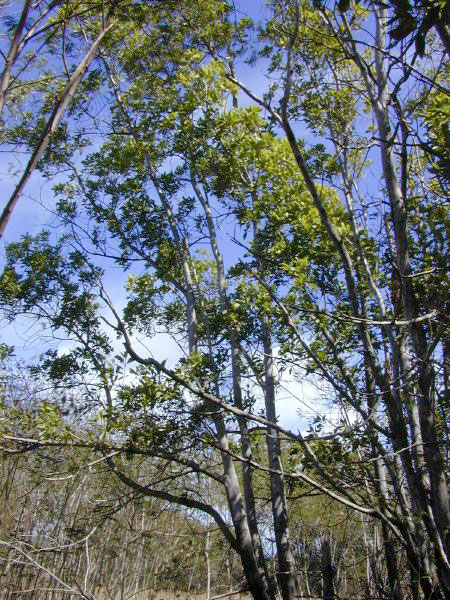
Thermal belt955–1008 m s.n.m. (predios vecinos en Zarzal y El Dovio)
HabitatTropical dry forest, edges and paddocks of Hacienda El Medio (La Paila, Zarzal).
Use / careResponsible observation. Keep a safe distance. Do not feed. Report sightings.
Sampled atPredios candidatos a RNSC en El Dovio (El Porvenir, El Nogal, La Esmeralda, El Paraíso, La Esperanza — veredas La Hondura, El Diamante, La Virginia, La Diamantina) y Zarzal (Predio Pilitas, Vereda Guasimal). Ninguno es Hacienda El Medio — son fincas vecinas con el mismo ecosistema.
Cited source → Species on GBIF → Wikipedia → Report on iNaturalist →
Corredora
fauna REG · regional reptil

Dendrophidion bivittatus

Dendrophidion bivittatus · Colubridae

Dendrophidion bivittatus, commonly known as the forest racer, is a snake of the colubrid family.

Thermal belt955–1008 m s.n.m. (predios vecinos en Zarzal y El Dovio)
HabitatTropical dry forest, edges and paddocks of Hacienda El Medio (La Paila, Zarzal).
Use / careResponsible observation. Keep a safe distance. Do not feed. Report sightings.
Sampled atPredios candidatos a RNSC en El Dovio (El Porvenir, El Nogal, La Esmeralda, El Paraíso, La Esperanza — veredas La Hondura, El Diamante, La Virginia, La Diamantina) y Zarzal (Predio Pilitas, Vereda Guasimal). Ninguno es Hacienda El Medio — son fincas vecinas con el mismo ecosistema.
Cited source → Species on GBIF → iNaturalist → Report on iNaturalist →
Culebra Ciega
fauna REG · regional reptil

Trilepida

Trilepida · Leptotyphlopidae

Trilepida is a genus of snakes in the family Leptotyphlopidae.

Thermal belt955–1008 m s.n.m. (predios vecinos en Zarzal y El Dovio)
HabitatTropical dry forest, edges and paddocks of Hacienda El Medio (La Paila, Zarzal).
Use / careResponsible observation. Keep a safe distance. Do not feed. Report sightings.
Sampled atPredios candidatos a RNSC en El Dovio (El Porvenir, El Nogal, La Esmeralda, El Paraíso, La Esperanza — veredas La Hondura, El Diamante, La Virginia, La Diamantina) y Zarzal (Predio Pilitas, Vereda Guasimal). Ninguno es Hacienda El Medio — son fincas vecinas con el mismo ecosistema.
Cited source → Species on GBIF → Wikipedia → Report on iNaturalist →
Culebra Ojo de Gato Bandada
fauna REG · regional reptil

Leptodeira annulata

Leptodeira annulata · Colubridae

Leptodeira annulata, also known commonly as the banded cat-eyed snake, is a species of mildly venomous, rear-fanged, snake in the subfamily Dipsadinae of the family Colubridae. The species is endemic to the New World.

Thermal belt955–1008 m s.n.m. (predios vecinos en Zarzal y El Dovio)
HabitatTropical dry forest, edges and paddocks of Hacienda El Medio (La Paila, Zarzal).
Use / careResponsible observation. Keep a safe distance. Do not feed. Report sightings.
Sampled atPredios candidatos a RNSC en El Dovio (El Porvenir, El Nogal, La Esmeralda, El Paraíso, La Esperanza — veredas La Hondura, El Diamante, La Virginia, La Diamantina) y Zarzal (Predio Pilitas, Vereda Guasimal). Ninguno es Hacienda El Medio — son fincas vecinas con el mismo ecosistema.
Cited source → Species on GBIF → Wikipedia → Report on iNaturalist →
Gecko Común
fauna REG · regional reptil

Hemidactylus

Hemidactylus · Gekkonidae

Hemidactylus is a genus of the common gecko family, Gekkonidae. It has 199 described species, newfound ones being described every few years. These geckos are found in all the tropical regions of the world, extending into the subtropical parts of Africa and Europe. They excel in colonizing oceanic islands by rafting on flotsam, and are for example found across most of Polynesia. In some archipelagoes, cryptic species complexes are found. Geckos like to live in and out of houses. They have been in

Thermal belt955–1008 m s.n.m. (predios vecinos en Zarzal y El Dovio)
HabitatTropical dry forest, edges and paddocks of Hacienda El Medio (La Paila, Zarzal).
Use / careResponsible observation. Keep a safe distance. Do not feed. Report sightings.
Sampled atPredios candidatos a RNSC en El Dovio (El Porvenir, El Nogal, La Esmeralda, El Paraíso, La Esperanza — veredas La Hondura, El Diamante, La Virginia, La Diamantina) y Zarzal (Predio Pilitas, Vereda Guasimal). Ninguno es Hacienda El Medio — son fincas vecinas con el mismo ecosistema.
Cited source → Species on GBIF → Wikipedia → Report on iNaturalist →
Geco Cabeza Amarilla
fauna REG · regional reptil

Yellow-headed gecko

Gonatodes albogularis · Sphaerodactylidae

Gonatodes albogularis, which has been called a number of vernacular names in English, is a smallish species of gecko found in warm parts of Central and South America, Cuba, Hispaniola and Jamaica. They prefer to live in tropical dry forest habitats. It is sexually dimorphic: the male is colourful, while the female is a more drab grey. The fingers do not have lamellar pads for climbing smooth surfaces like many other geckos but instead have normal claws like most lizards. At one time the species

Thermal belt955–1008 m s.n.m. (predios vecinos en Zarzal y El Dovio)
HabitatTropical dry forest, edges and paddocks of Hacienda El Medio (La Paila, Zarzal).
Use / careResponsible observation. Keep a safe distance. Do not feed. Report sightings.
Sampled atPredios candidatos a RNSC en El Dovio (El Porvenir, El Nogal, La Esmeralda, El Paraíso, La Esperanza — veredas La Hondura, El Diamante, La Virginia, La Diamantina) y Zarzal (Predio Pilitas, Vereda Guasimal). Ninguno es Hacienda El Medio — son fincas vecinas con el mismo ecosistema.
Cited source → Species on GBIF → Wikipedia → Report on iNaturalist →
Granadilla
fauna REG · regional reptil

Spilotes pullatus

Spilotes pullatus · Colubridae

Spilotes pullatus, commonly known as the chicken snake, tropical chicken snake, or yellow rat snake, is a species of large nonvenomous colubrid snake endemic to the Neotropics.

Thermal belt955–1008 m s.n.m. (predios vecinos en Zarzal y El Dovio)
HabitatTropical dry forest, edges and paddocks of Hacienda El Medio (La Paila, Zarzal).
Use / careResponsible observation. Keep a safe distance. Do not feed. Report sightings.
Sampled atPredios candidatos a RNSC en El Dovio (El Porvenir, El Nogal, La Esmeralda, El Paraíso, La Esperanza — veredas La Hondura, El Diamante, La Virginia, La Diamantina) y Zarzal (Predio Pilitas, Vereda Guasimal). Ninguno es Hacienda El Medio — son fincas vecinas con el mismo ecosistema.
Cited source → Species on GBIF → Wikipedia → Report on iNaturalist →
Lagartija Espinosa de Palmer
fauna REG · regional reptil

Echinosaura palmeri

Echinosaura palmeri · Gymnophthalmidae

Echinosaura palmeri, Palmer's teiid, is a species of lizard in the family Gymnophthalmidae. It is found in Panama and Colombia.

Thermal belt955–1008 m s.n.m. (predios vecinos en Zarzal y El Dovio)
HabitatTropical dry forest, edges and paddocks of Hacienda El Medio (La Paila, Zarzal).
Use / careResponsible observation. Keep a safe distance. Do not feed. Report sightings.
Sampled atPredios candidatos a RNSC en El Dovio (El Porvenir, El Nogal, La Esmeralda, El Paraíso, La Esperanza — veredas La Hondura, El Diamante, La Virginia, La Diamantina) y Zarzal (Predio Pilitas, Vereda Guasimal). Ninguno es Hacienda El Medio — son fincas vecinas con el mismo ecosistema.
Cited source → Species on GBIF → Wikipedia → Report on iNaturalist →
Lagarto
fauna REG · regional reptil

Alopoglossus

Ptychoglossus · Gymnophthalmidae

Alopoglossus is a genus of lizards in the monogeneric family Alopoglossidae. The genus is distributed from Costa Rica in Central America to northern South America.

Thermal belt955–1008 m s.n.m. (predios vecinos en Zarzal y El Dovio)
HabitatTropical dry forest, edges and paddocks of Hacienda El Medio (La Paila, Zarzal).
Use / careResponsible observation. Keep a safe distance. Do not feed. Report sightings.
Sampled atPredios candidatos a RNSC en El Dovio (El Porvenir, El Nogal, La Esmeralda, El Paraíso, La Esperanza — veredas La Hondura, El Diamante, La Virginia, La Diamantina) y Zarzal (Predio Pilitas, Vereda Guasimal). Ninguno es Hacienda El Medio — son fincas vecinas con el mismo ecosistema.
Cited source → Species on GBIF → Wikipedia → Report on iNaturalist →
Lagarto Gusano Moteado
fauna REG · regional reptil

Amphisbaena fuliginosa

Amphisbaena fuliginosa · Amphisbaenidae

Amphisbaena fuliginosa, also known as the black-and-white worm lizard, speckled worm lizard or spotted worm lizard, is a species of amphisbaenian in the genus Amphisbaena. The ecology of A. fuliginosa is poorly known due to its fossorial habits. However, this species can be easily distinguished from others because of its characteristic white and black mosaic pattern that covers both the dorsal and ventral side.

Thermal belt955–1008 m s.n.m. (predios vecinos en Zarzal y El Dovio)
HabitatTropical dry forest, edges and paddocks of Hacienda El Medio (La Paila, Zarzal).
Use / careResponsible observation. Keep a safe distance. Do not feed. Report sightings.
Sampled atPredios candidatos a RNSC en El Dovio (El Porvenir, El Nogal, La Esmeralda, El Paraíso, La Esperanza — veredas La Hondura, El Diamante, La Virginia, La Diamantina) y Zarzal (Predio Pilitas, Vereda Guasimal). Ninguno es Hacienda El Medio — son fincas vecinas con el mismo ecosistema.
Cited source → Species on GBIF → Wikipedia → Report on iNaturalist →
Lepidoblepharis duolepis
fauna REG · regional reptil

Lepidoblepharis duolepis

Lepidoblepharis duolepis · Sphaerodactylidae

Lepidoblepharis duolepis is a species of gecko, a lizard in the family Sphaerodactylidae. The species is endemic to Colombia.

Thermal belt955–1008 m s.n.m. (predios vecinos en Zarzal y El Dovio)
HabitatTropical dry forest, edges and paddocks of Hacienda El Medio (La Paila, Zarzal).
Use / careResponsible observation. Keep a safe distance. Do not feed. Report sightings.
Sampled atPredios candidatos a RNSC en El Dovio (El Porvenir, El Nogal, La Esmeralda, El Paraíso, La Esperanza — veredas La Hondura, El Diamante, La Virginia, La Diamantina) y Zarzal (Predio Pilitas, Vereda Guasimal). Ninguno es Hacienda El Medio — son fincas vecinas con el mismo ecosistema.
Cited source → Species on GBIF → Wikipedia → Report on iNaturalist →
Leptodactylus insularum
fauna REG · regional anfibio

Leptodactylus insularum

Leptodactylus insularum · Leptodactylidae

Leptodactylus insularum is a species of frog in the family Leptodactylidae. The species is found in Costa Rica, Panama, Colombia, Venezuela, and Trinidad and Tobago. Scientists suspect it might also live in Bolivia.

Thermal belt955–1008 m s.n.m. (predios vecinos en Zarzal y El Dovio)
HabitatTropical dry forest, edges and paddocks of Hacienda El Medio (La Paila, Zarzal).
Use / careResponsible observation. Keep a safe distance. Do not feed. Report sightings.
Sampled atPredios candidatos a RNSC en El Dovio (El Porvenir, El Nogal, La Esmeralda, El Paraíso, La Esperanza — veredas La Hondura, El Diamante, La Virginia, La Diamantina) y Zarzal (Predio Pilitas, Vereda Guasimal). Ninguno es Hacienda El Medio — son fincas vecinas con el mismo ecosistema.
Cited source → Species on GBIF → Wikipedia → Report on iNaturalist →
Mapana | Equis
fauna REG · regional reptil

Bothrops

Bothrops · Viperidae

Bothrops is a genus of highly venomous pit vipers endemic to the Neotropics. The generic name, Bothrops, is derived from the Greek words βόθρος, bothros, meaning 'pit', and ὄψ, ops, meaning 'eye' or 'face', together an allusion to the heat-sensitive loreal pit organs. Members of this genus are responsible for more human deaths in the Americas than any other group of venomous snakes. Currently, 48 species are recognized.

Thermal belt955–1008 m s.n.m. (predios vecinos en Zarzal y El Dovio)
HabitatTropical dry forest, edges and paddocks of Hacienda El Medio (La Paila, Zarzal).
Use / careResponsible observation. Keep a safe distance. Do not feed. Report sightings.
Sampled atPredios candidatos a RNSC en El Dovio (El Porvenir, El Nogal, La Esmeralda, El Paraíso, La Esperanza — veredas La Hondura, El Diamante, La Virginia, La Diamantina) y Zarzal (Predio Pilitas, Vereda Guasimal). Ninguno es Hacienda El Medio — son fincas vecinas con el mismo ecosistema.
Cited source → Species on GBIF → Wikipedia → Report on iNaturalist →
Mono Nocturno | Marteja
fauna REG · regional mamífero (regional)

Panamanian night monkey

Aotus zonalis · Aotidae

The Panamanian night monkey or Chocoan night monkey is a species of night monkey formerly considered a subspecies of the gray-bellied night monkey of the family Aotidae. Its range consists of Panama and the Chocó region of Colombia. There are also unconfirmed reports of its occurrence in Costa Rica, especially on the Caribbean coast of Costa Rica. The species definitely occurs in the Atlantic lowlands of Panama close to the Costa Rica border.

Thermal belt955–1008 m s.n.m. (predios vecinos en Zarzal y El Dovio)
HabitatTropical dry forest, edges and paddocks of Hacienda El Medio (La Paila, Zarzal).
Use / careResponsible observation. Keep a safe distance. Do not feed. Report sightings.
Sampled atPredios candidatos a RNSC en El Dovio (El Porvenir, El Nogal, La Esmeralda, El Paraíso, La Esperanza — veredas La Hondura, El Diamante, La Virginia, La Diamantina) y Zarzal (Predio Pilitas, Vereda Guasimal). Ninguno es Hacienda El Medio — son fincas vecinas con el mismo ecosistema.
Cited source → Species on GBIF → Wikipedia → Report on iNaturalist →
Rana Arborea Colombiana
fauna REG · regional anfibio

Dendropsophus columbianus

Dendropsophus columbianus · Hylidae

Dendropsophus columbianus is a species of frog in the family Hylidae. It is endemic to the Andes of Colombia. Dendropsophus columbianus is a common and adaptable species that lives in disturbed areas that formerly supported cloud forests; it has not been found in closed forests. It is typically associated with open habitats, especially those with some waterbodies.

Thermal belt955–1008 m s.n.m. (predios vecinos en Zarzal y El Dovio)
HabitatTropical dry forest, edges and paddocks of Hacienda El Medio (La Paila, Zarzal).
Use / careResponsible observation. Keep a safe distance. Do not feed. Report sightings.
Sampled atPredios candidatos a RNSC en El Dovio (El Porvenir, El Nogal, La Esmeralda, El Paraíso, La Esperanza — veredas La Hondura, El Diamante, La Virginia, La Diamantina) y Zarzal (Predio Pilitas, Vereda Guasimal). Ninguno es Hacienda El Medio — son fincas vecinas con el mismo ecosistema.
Cited source → Species on GBIF → Wikipedia → Report on iNaturalist →
Rana Chivita
fauna REG · regional anfibio

Craugastor raniformis

Craugastor raniformis · Craugastoridae

Craugastor raniformis is a species of frog in the family Craugastoridae. It is found in Colombia and Panama. It is a reasonably common species found in humid lowland and montane forests up to 1,500 m (4,900 ft) asl. It is also common in wet pastureland. Furthermore, it is one of the dominant frogs in abandoned mixed farming areas in the coastal Pacific rainforests in Colombia. This adaptable species is not considered threatened.

Thermal belt955–1008 m s.n.m. (predios vecinos en Zarzal y El Dovio)
HabitatTropical dry forest, edges and paddocks of Hacienda El Medio (La Paila, Zarzal).
Use / careResponsible observation. Keep a safe distance. Do not feed. Report sightings.
Sampled atPredios candidatos a RNSC en El Dovio (El Porvenir, El Nogal, La Esmeralda, El Paraíso, La Esperanza — veredas La Hondura, El Diamante, La Virginia, La Diamantina) y Zarzal (Predio Pilitas, Vereda Guasimal). Ninguno es Hacienda El Medio — son fincas vecinas con el mismo ecosistema.
Cited source → Species on GBIF → Wikipedia → Report on iNaturalist →
Rana Cohete de Boquete
fauna REG · regional anfibio

Silverstoneia nubicola

Silverstoneia nubicola · Dendrobatidae

Silverstoneia nubicola is a species of frog in the family Dendrobatidae. It is found in western Colombia, Panama, and southwestern Costa Rica.

Thermal belt955–1008 m s.n.m. (predios vecinos en Zarzal y El Dovio)
HabitatTropical dry forest, edges and paddocks of Hacienda El Medio (La Paila, Zarzal).
Use / careResponsible observation. Keep a safe distance. Do not feed. Report sightings.
Sampled atPredios candidatos a RNSC en El Dovio (El Porvenir, El Nogal, La Esmeralda, El Paraíso, La Esperanza — veredas La Hondura, El Diamante, La Virginia, La Diamantina) y Zarzal (Predio Pilitas, Vereda Guasimal). Ninguno es Hacienda El Medio — son fincas vecinas con el mismo ecosistema.
Cited source → Species on GBIF → iNaturalist → Report on iNaturalist →
Rana Cohete de Santa Rita
fauna REG · regional anfibio

Leucostethus fraterdanieli

Leucostethus fraterdanieli · Dendrobatidae

Leucostethus fraterdanieli is a species of frog in the family Dendrobatidae. It is endemic to the Andes in Colombia. Colostethus yaguara might be its junior synonym.

Thermal belt955–1008 m s.n.m. (predios vecinos en Zarzal y El Dovio)
HabitatTropical dry forest, edges and paddocks of Hacienda El Medio (La Paila, Zarzal).
Use / careResponsible observation. Keep a safe distance. Do not feed. Report sightings.
Sampled atPredios candidatos a RNSC en El Dovio (El Porvenir, El Nogal, La Esmeralda, El Paraíso, La Esperanza — veredas La Hondura, El Diamante, La Virginia, La Diamantina) y Zarzal (Predio Pilitas, Vereda Guasimal). Ninguno es Hacienda El Medio — son fincas vecinas con el mismo ecosistema.
Cited source → Species on GBIF → Wikipedia → Report on iNaturalist →
Rana Duende de Dedos Angostos
fauna REG · regional anfibio

Niceforonia mantipus

Niceforonia mantipus · Craugastoridae

Niceforonia mantipus, the mantipus robber frog, is a species of frog in the family Strabomantidae. It is endemic to Colombia and found on the Cordillera Occidental and Cordillera Central, 800–2,400 m (2,600–7,900 ft) asl. Its natural habitats are cloud forests and secondary forests. It lives in leaf-litter and on ground. It is threatened by habitat loss.

Thermal belt955–1008 m s.n.m. (predios vecinos en Zarzal y El Dovio)
HabitatTropical dry forest, edges and paddocks of Hacienda El Medio (La Paila, Zarzal).
Use / careResponsible observation. Keep a safe distance. Do not feed. Report sightings.
Sampled atPredios candidatos a RNSC en El Dovio (El Porvenir, El Nogal, La Esmeralda, El Paraíso, La Esperanza — veredas La Hondura, El Diamante, La Virginia, La Diamantina) y Zarzal (Predio Pilitas, Vereda Guasimal). Ninguno es Hacienda El Medio — son fincas vecinas con el mismo ecosistema.
Cited source → Species on GBIF → iNaturalist → Report on iNaturalist →
Rana Platanera
fauna REG · regional anfibio

Boana platanera

Boana platanera · Hylidae

Boana platanera, commonly known as the banana tree dwelling frog, is a species of tree frog in the family Hylidae. It is distributed within Venezuela, Colombia, Panama, and Trinidad and Tobago. Boana platanera was described in 2021, and individuals of the species were previously classified as Boana crepitans or Boana xerophylla.

Thermal belt955–1008 m s.n.m. (predios vecinos en Zarzal y El Dovio)
HabitatTropical dry forest, edges and paddocks of Hacienda El Medio (La Paila, Zarzal).
Use / careResponsible observation. Keep a safe distance. Do not feed. Report sightings.
Sampled atPredios candidatos a RNSC en El Dovio (El Porvenir, El Nogal, La Esmeralda, El Paraíso, La Esperanza — veredas La Hondura, El Diamante, La Virginia, La Diamantina) y Zarzal (Predio Pilitas, Vereda Guasimal). Ninguno es Hacienda El Medio — son fincas vecinas con el mismo ecosistema.
Cited source → Species on GBIF → Wikipedia → Report on iNaturalist →
Rana Ruby
fauna REG · regional anfibio

Cauca poison frog

Andinobates bombetes · Dendrobatidae

The Cauca poison frog is a species of frog in the family Dendrobatidae. It is endemic to Colombia.

Thermal belt955–1008 m s.n.m. (predios vecinos en Zarzal y El Dovio)
HabitatTropical dry forest, edges and paddocks of Hacienda El Medio (La Paila, Zarzal).
Use / careResponsible observation. Keep a safe distance. Do not feed. Report sightings.
Sampled atPredios candidatos a RNSC en El Dovio (El Porvenir, El Nogal, La Esmeralda, El Paraíso, La Esperanza — veredas La Hondura, El Diamante, La Virginia, La Diamantina) y Zarzal (Predio Pilitas, Vereda Guasimal). Ninguno es Hacienda El Medio — son fincas vecinas con el mismo ecosistema.
Cited source → Species on GBIF → Wikipedia → Report on iNaturalist →
Rana Toro
fauna REG · regional anfibio

American bullfrog

Lithobates catesbeianus · Ranidae

The American bullfrog, often simply known as the bullfrog in Canada and the United States, is a large true frog native to eastern North America. It typically inhabits large permanent water bodies such as swamps, ponds, and lakes. Bullfrogs can also be found in manmade habitats such as pools, koi ponds, canals, ditches, reservoirs and culverts. The bullfrog gets its name from the sound the male makes during the breeding season, which sounds similar to a bull bellowing. They are generalist carnivo

Thermal belt955–1008 m s.n.m. (predios vecinos en Zarzal y El Dovio)
HabitatTropical dry forest, edges and paddocks of Hacienda El Medio (La Paila, Zarzal).
Use / careResponsible observation. Keep a safe distance. Do not feed. Report sightings.
Sampled atPredios candidatos a RNSC en El Dovio (El Porvenir, El Nogal, La Esmeralda, El Paraíso, La Esperanza — veredas La Hondura, El Diamante, La Virginia, La Diamantina) y Zarzal (Predio Pilitas, Vereda Guasimal). Ninguno es Hacienda El Medio — son fincas vecinas con el mismo ecosistema.
Cited source → Species on GBIF → Wikipedia → Report on iNaturalist →
Rana de Bigotes
fauna REG · regional anfibio

Leptodactylus fragilis

Leptodactylus fragilis · Leptodactylidae

Leptodactylus fragilis, known under many common names such as the Mexican white-lipped frog, American white-lipped frog or simply white-lipped frog, is a species of leptodactylid frog. Its distribution ranges from the Lower Rio Grande Valley of Texas in the United States south through Mexico and Central America to Colombia and Venezuela. It is often—wrongly—referred to as Leptodactylus labialis (Cope, 1878), which is a junior synonym of Leptodactylus mystacinus.

Thermal belt955–1008 m s.n.m. (predios vecinos en Zarzal y El Dovio)
HabitatTropical dry forest, edges and paddocks of Hacienda El Medio (La Paila, Zarzal).
Use / careResponsible observation. Keep a safe distance. Do not feed. Report sightings.
Sampled atPredios candidatos a RNSC en El Dovio (El Porvenir, El Nogal, La Esmeralda, El Paraíso, La Esperanza — veredas La Hondura, El Diamante, La Virginia, La Diamantina) y Zarzal (Predio Pilitas, Vereda Guasimal). Ninguno es Hacienda El Medio — son fincas vecinas con el mismo ecosistema.
Cited source → Species on GBIF → Wikipedia → Report on iNaturalist →
Rana de Cristal Variable
fauna REG · regional anfibio

Espadarana prosoblepon

Espadarana prosoblepon · Centrolenidae

Espadarana prosoblepon is a species of frog in the family Centrolenidae, commonly known as the emerald glass frog or Nicaragua giant glass frog. This species can be found in Ecuador, Colombia, Panama, Costa Rica, Nicaragua, and Honduras. Its natural habitats are lowland tropical forests and montane cloud forests. It is a nocturnal species occurring in low vegetation in mature forests only. It is not considered threatened overall by the IUCN although deforestation and pollution are potential thre

Thermal belt955–1008 m s.n.m. (predios vecinos en Zarzal y El Dovio)
HabitatTropical dry forest, edges and paddocks of Hacienda El Medio (La Paila, Zarzal).
Use / careResponsible observation. Keep a safe distance. Do not feed. Report sightings.
Sampled atPredios candidatos a RNSC en El Dovio (El Porvenir, El Nogal, La Esmeralda, El Paraíso, La Esperanza — veredas La Hondura, El Diamante, La Virginia, La Diamantina) y Zarzal (Predio Pilitas, Vereda Guasimal). Ninguno es Hacienda El Medio — son fincas vecinas con el mismo ecosistema.
Cited source → Species on GBIF → Wikipedia → Report on iNaturalist →
Rana de Lluvia de Cachabi
fauna REG · regional anfibio

Pristimantis achatinus

Pristimantis achatinus · Craugastoridae

Pristimantis achatinus, also known as Cachabi robber frog or pastures rainfrog, is a species of frog in the family Strabomantidae. It is found from eastern Panama through Colombia to western Ecuador. Its natural habitats are both lowland and montane habitats: forest clearings, road cuts in forest, and banana, cacao and coffee plantations, as well as in forested areas. It is mostly terrestrial, sometimes occurring off the ground in vegetation. It is a very common frog.

Thermal belt955–1008 m s.n.m. (predios vecinos en Zarzal y El Dovio)
HabitatTropical dry forest, edges and paddocks of Hacienda El Medio (La Paila, Zarzal).
Use / careResponsible observation. Keep a safe distance. Do not feed. Report sightings.
Sampled atPredios candidatos a RNSC en El Dovio (El Porvenir, El Nogal, La Esmeralda, El Paraíso, La Esperanza — veredas La Hondura, El Diamante, La Virginia, La Diamantina) y Zarzal (Predio Pilitas, Vereda Guasimal). Ninguno es Hacienda El Medio — son fincas vecinas con el mismo ecosistema.
Cited source → Species on GBIF → Wikipedia → Report on iNaturalist →
Rana de Lluvia de Palmer
fauna REG · regional anfibio

Pristimantis palmeri

Pristimantis palmeri · Craugastoridae

Pristimantis palmeri is a species of frog in the family Strabomantidae. It is endemic to Colombia. Its natural habitats are tropical moist montane forests, rural gardens, and heavily degraded former forest. It is threatened by habitat loss.

Thermal belt955–1008 m s.n.m. (predios vecinos en Zarzal y El Dovio)
HabitatTropical dry forest, edges and paddocks of Hacienda El Medio (La Paila, Zarzal).
Use / careResponsible observation. Keep a safe distance. Do not feed. Report sightings.
Sampled atPredios candidatos a RNSC en El Dovio (El Porvenir, El Nogal, La Esmeralda, El Paraíso, La Esperanza — veredas La Hondura, El Diamante, La Virginia, La Diamantina) y Zarzal (Predio Pilitas, Vereda Guasimal). Ninguno es Hacienda El Medio — son fincas vecinas con el mismo ecosistema.
Cited source → Species on GBIF → Wikipedia → Report on iNaturalist →
Ratón
fauna REG · regional mamífero (regional)

Rodent

Rodentia

Rodents are a group of mammals belonging to the order Rodentia characterized by a single pair of continuously growing incisors in each of the upper and lower jaws. Rodents make up about 40% of all mammal species. They are native to all major landmasses except Antarctica and several oceanic islands, though they have subsequently been introduced to most of these landmasses by human activity. Most rodents are small animals with robust bodies, short limbs, and long tails. They use their sharp inciso

Thermal belt955–1008 m s.n.m. (predios vecinos en Zarzal y El Dovio)
HabitatTropical dry forest, edges and paddocks of Hacienda El Medio (La Paila, Zarzal).
Use / careResponsible observation. Keep a safe distance. Do not feed. Report sightings.
Sampled atPredios candidatos a RNSC en El Dovio (El Porvenir, El Nogal, La Esmeralda, El Paraíso, La Esperanza — veredas La Hondura, El Diamante, La Virginia, La Diamantina) y Zarzal (Predio Pilitas, Vereda Guasimal). Ninguno es Hacienda El Medio — son fincas vecinas con el mismo ecosistema.
Cited source → Species on GBIF → Wikipedia → Report on iNaturalist →
Salamanquesa
fauna REG · regional reptil

Turnip-tailed gecko

Thecadactylus rapicauda · Phyllodactylidae

The turnip-tailed gecko is a species of gecko widely distributed from Mexico southward through Central America and into South America as far south as Brazil, and on many islands in the Lesser Antilles. It was long thought to be the only member of its genus, until T. solimoensis was described in 2007.

Thermal belt955–1008 m s.n.m. (predios vecinos en Zarzal y El Dovio)
HabitatTropical dry forest, edges and paddocks of Hacienda El Medio (La Paila, Zarzal).
Use / careResponsible observation. Keep a safe distance. Do not feed. Report sightings.
Sampled atPredios candidatos a RNSC en El Dovio (El Porvenir, El Nogal, La Esmeralda, El Paraíso, La Esperanza — veredas La Hondura, El Diamante, La Virginia, La Diamantina) y Zarzal (Predio Pilitas, Vereda Guasimal). Ninguno es Hacienda El Medio — son fincas vecinas con el mismo ecosistema.
Cited source → Species on GBIF → Wikipedia → Report on iNaturalist →
Sapo
fauna REG · regional anfibio

Rhinella horribilis

Rhinella horribilis · Bufonidae

Rhinella horribilis is the scientific name used for populations of the cane toad or giant toad located in Mesoamerica and north-western South America when they are considered to be a separate species from Rhinella marina, a name which is then mostly restricted to Amazon basin populations. R. horribilis was originally described from Mexico as Bufo horribilis before later being considered a synonym of Bufo marina and later Rhinella marina. The specific epithet horribilis has now been revived after

Thermal belt955–1008 m s.n.m. (predios vecinos en Zarzal y El Dovio)
HabitatTropical dry forest, edges and paddocks of Hacienda El Medio (La Paila, Zarzal).
Use / careResponsible observation. Keep a safe distance. Do not feed. Report sightings.
Sampled atPredios candidatos a RNSC en El Dovio (El Porvenir, El Nogal, La Esmeralda, El Paraíso, La Esperanza — veredas La Hondura, El Diamante, La Virginia, La Diamantina) y Zarzal (Predio Pilitas, Vereda Guasimal). Ninguno es Hacienda El Medio — son fincas vecinas con el mismo ecosistema.
Cited source → Species on GBIF → Wikipedia → Report on iNaturalist →
Sapo de Ttruando
fauna REG · regional anfibio

Rhaebo haematiticus

Rhaebo haematiticus · Bufonidae

Rhaebo haematiticus is a species of toad in the family Bufonidae. It is found in eastern Honduras, Nicaragua, Costa Rica, Panama, Colombia, northwestern Venezuela, and northwestern Ecuador. Its altitudinal range is from sea level to 1,300 m (4,300 ft) asl. Its natural habitats are primary tropical moist forest and submontane humid forest. It is a nocturnal, leaf-litter species that during the breeding seasons is found along small streams and large rivers. It tolerates some habitat degradation bu

Thermal belt955–1008 m s.n.m. (predios vecinos en Zarzal y El Dovio)
HabitatTropical dry forest, edges and paddocks of Hacienda El Medio (La Paila, Zarzal).
Use / careResponsible observation. Keep a safe distance. Do not feed. Report sightings.
Sampled atPredios candidatos a RNSC en El Dovio (El Porvenir, El Nogal, La Esmeralda, El Paraíso, La Esperanza — veredas La Hondura, El Diamante, La Virginia, La Diamantina) y Zarzal (Predio Pilitas, Vereda Guasimal). Ninguno es Hacienda El Medio — son fincas vecinas con el mismo ecosistema.
Cited source → Species on GBIF → Wikipedia → Report on iNaturalist →
Abanico Pechinegro
aves REG · regional ave — reinita migratoria

Slate-throated whitestart

Myioborus miniatus · Parulidae
Recording: (c) sea-kangaroo, some rights reserved (CC BY-NC) · CC-BY-NC · Observation on iNaturalist

The slate-throated whitestart, also known as the slate-throated redstart, is a small insectivorous bird in the New World warbler family Parulidae that is native to Central and South America.

Thermal belt955–1008 m s.n.m. (predios vecinos en Zarzal y El Dovio)
HabitatForest edges, lagoon, paddocks and pastures of Hacienda El Medio.
Use / careQuiet bird-watching at dawn. No playback. Use binoculars. Submit a checklist to eBird or iNaturalist.
Sampled atPredios candidatos a RNSC en El Dovio (El Porvenir, El Nogal, La Esmeralda, El Paraíso, La Esperanza — veredas La Hondura, El Diamante, La Virginia, La Diamantina) y Zarzal (Predio Pilitas, Vereda Guasimal). Ninguno es Hacienda El Medio — son fincas vecinas con el mismo ecosistema.
Cited source → Species on GBIF → Wikipedia → Report on iNaturalist →
Amazilia Andina
aves REG · regional ave — colibrí

Andean emerald

Uranomitra franciae · Trochilidae

The Andean emerald is a species of hummingbird in the "emeralds", tribe Trochilini of subfamily Trochilinae. It is found in Colombia, Ecuador, and Peru.

Thermal belt955–1008 m s.n.m. (predios vecinos en Zarzal y El Dovio)
HabitatForest edges, lagoon, paddocks and pastures of Hacienda El Medio.
Use / careQuiet bird-watching at dawn. No playback. Use binoculars. Submit a checklist to eBird or iNaturalist.
Sampled atPredios candidatos a RNSC en El Dovio (El Porvenir, El Nogal, La Esmeralda, El Paraíso, La Esperanza — veredas La Hondura, El Diamante, La Virginia, La Diamantina) y Zarzal (Predio Pilitas, Vereda Guasimal). Ninguno es Hacienda El Medio — son fincas vecinas con el mismo ecosistema.
Cited source → Species on GBIF → Wikipedia → Report on iNaturalist →
Amazilia Coliazul
aves REG · regional ave — colibrí

Steely-vented hummingbird

Saucerottia saucerottei · Trochilidae

The steely-vented hummingbird is a species of hummingbird in the "emeralds", tribe Trochilini of subfamily Trochilinae. It is found in Colombia and Venezuela.

Thermal belt955–1008 m s.n.m. (predios vecinos en Zarzal y El Dovio)
HabitatForest edges, lagoon, paddocks and pastures of Hacienda El Medio.
Use / careQuiet bird-watching at dawn. No playback. Use binoculars. Submit a checklist to eBird or iNaturalist.
Sampled atPredios candidatos a RNSC en El Dovio (El Porvenir, El Nogal, La Esmeralda, El Paraíso, La Esperanza — veredas La Hondura, El Diamante, La Virginia, La Diamantina) y Zarzal (Predio Pilitas, Vereda Guasimal). Ninguno es Hacienda El Medio — son fincas vecinas con el mismo ecosistema.
Cited source → Species on GBIF → Wikipedia → Report on iNaturalist →
Amazilia Colirrufa
aves REG · regional ave — colibrí

Rufous-tailed hummingbird

Amazilia tzacatl · Trochilidae
Recording: (c) Manuel de Jesús Hernández Ancheita, some rights reserved (CC BY-NC-SA) · CC-BY-NC-SA · Observation on iNaturalist

The rufous-tailed hummingbird is a medium-sized hummingbird in the "emeralds", tribe Trochilini of subfamily Trochilinae. It is found from east-central Mexico through Central America and Colombia into Ecuador and Venezuela.

Thermal belt955–1008 m s.n.m. (predios vecinos en Zarzal y El Dovio)
HabitatForest edges, lagoon, paddocks and pastures of Hacienda El Medio.
Use / careQuiet bird-watching at dawn. No playback. Use binoculars. Submit a checklist to eBird or iNaturalist.
Sampled atPredios candidatos a RNSC en El Dovio (El Porvenir, El Nogal, La Esmeralda, El Paraíso, La Esperanza — veredas La Hondura, El Diamante, La Virginia, La Diamantina) y Zarzal (Predio Pilitas, Vereda Guasimal). Ninguno es Hacienda El Medio — son fincas vecinas con el mismo ecosistema.
Cited source → Species on GBIF → Wikipedia → Report on iNaturalist →
Arañero Coronidorado
aves REG · regional ave — reinita migratoria

Golden-crowned warbler

Basileuterus culicivorus · Parulidae
Recording: (c) Connor Cochrane, some rights reserved (CC BY-NC) · CC-BY-NC · Observation on iNaturalist

The golden-crowned warbler is a small insectivorous bird in the New World warbler family Parulidae. It has a large geographic range that extends from northeastern Mexico south to northern Argentina. The white-bellied warbler was formerly treated as a separate species but is now considered to be conspecific with the golden-crowned warbler.

Thermal belt955–1008 m s.n.m. (predios vecinos en Zarzal y El Dovio)
HabitatForest edges, lagoon, paddocks and pastures of Hacienda El Medio.
Use / careQuiet bird-watching at dawn. No playback. Use binoculars. Submit a checklist to eBird or iNaturalist.
Sampled atPredios candidatos a RNSC en El Dovio (El Porvenir, El Nogal, La Esmeralda, El Paraíso, La Esperanza — veredas La Hondura, El Diamante, La Virginia, La Diamantina) y Zarzal (Predio Pilitas, Vereda Guasimal). Ninguno es Hacienda El Medio — son fincas vecinas con el mismo ecosistema.
Cited source → Species on GBIF → Wikipedia → Report on iNaturalist →
Arreñero Ribereño
aves REG · regional ave — reinita migratoria

Buff-rumped warbler

Myiothlypis fulvicauda · Parulidae
Recording: (c) Mateo Hernandez Schmidt, some rights reserved (CC BY-NC-SA) · CC-BY-NC-SA · Observation on iNaturalist

The buff-rumped warbler is a New World warbler that is resident from Honduras south to northwestern Peru and disjunctly in the western Amazon. It is found in forests at up to 1500 m altitude, always near water.

Thermal belt955–1008 m s.n.m. (predios vecinos en Zarzal y El Dovio)
HabitatForest edges, lagoon, paddocks and pastures of Hacienda El Medio.
Use / careQuiet bird-watching at dawn. No playback. Use binoculars. Submit a checklist to eBird or iNaturalist.
Sampled atPredios candidatos a RNSC en El Dovio (El Porvenir, El Nogal, La Esmeralda, El Paraíso, La Esperanza — veredas La Hondura, El Diamante, La Virginia, La Diamantina) y Zarzal (Predio Pilitas, Vereda Guasimal). Ninguno es Hacienda El Medio — son fincas vecinas con el mismo ecosistema.
Cited source → Species on GBIF → Wikipedia → Report on iNaturalist →
Arrocero Renegrido
aves REG · regional ave — tángara

Large-billed seed finch

Sporophila crassirostris · Thraupidae
Recording: (c) David Monroy R, some rights reserved (CC BY-NC) · CC-BY-NC · Observation on iNaturalist

The large-billed seed finch is a species of bird in the family Thraupidae.

Thermal belt955–1008 m s.n.m. (predios vecinos en Zarzal y El Dovio)
HabitatForest edges, lagoon, paddocks and pastures of Hacienda El Medio.
Use / careQuiet bird-watching at dawn. No playback. Use binoculars. Submit a checklist to eBird or iNaturalist.
Sampled atPredios candidatos a RNSC en El Dovio (El Porvenir, El Nogal, La Esmeralda, El Paraíso, La Esperanza — veredas La Hondura, El Diamante, La Virginia, La Diamantina) y Zarzal (Predio Pilitas, Vereda Guasimal). Ninguno es Hacienda El Medio — son fincas vecinas con el mismo ecosistema.
Cited source → Species on GBIF → Wikipedia → Report on iNaturalist →
Atrapamoscas Apical
aves REG · regional ave — atrapamoscas

Apical flycatcher

Myiarchus apicalis · Tyrannidae
Recording: (c) David Monroy R, some rights reserved (CC BY-NC) · CC-BY-NC · Observation on iNaturalist

The apical flycatcher is a species of bird in the family Tyrannidae, the tyrant flycatchers. It is endemic to Colombia.

Thermal belt955–1008 m s.n.m. (predios vecinos en Zarzal y El Dovio)
HabitatForest edges, lagoon, paddocks and pastures of Hacienda El Medio.
Use / careQuiet bird-watching at dawn. No playback. Use binoculars. Submit a checklist to eBird or iNaturalist.
Sampled atPredios candidatos a RNSC en El Dovio (El Porvenir, El Nogal, La Esmeralda, El Paraíso, La Esperanza — veredas La Hondura, El Diamante, La Virginia, La Diamantina) y Zarzal (Predio Pilitas, Vereda Guasimal). Ninguno es Hacienda El Medio — son fincas vecinas con el mismo ecosistema.
Cited source → Species on GBIF → Wikipedia → Report on iNaturalist →
Atrapamoscas Cabecinegro
aves REG · regional ave — atrapamoscas

Dusky-capped flycatcher

Myiarchus tuberculifer · Tyrannidae
Recording: (c) Damon Haan, all rights reserved · Observation on iNaturalist

The dusky-capped flycatcher is a passerine bird in the family Tyrannidae, the tyrant flycatchers. It is found in the United States, Mexico, every Central American country, Trinidad, and in every mainland South American country except Chile, Paraguay, and Uruguay.

Thermal belt955–1008 m s.n.m. (predios vecinos en Zarzal y El Dovio)
HabitatForest edges, lagoon, paddocks and pastures of Hacienda El Medio.
Use / careQuiet bird-watching at dawn. No playback. Use binoculars. Submit a checklist to eBird or iNaturalist.
Sampled atPredios candidatos a RNSC en El Dovio (El Porvenir, El Nogal, La Esmeralda, El Paraíso, La Esperanza — veredas La Hondura, El Diamante, La Virginia, La Diamantina) y Zarzal (Predio Pilitas, Vereda Guasimal). Ninguno es Hacienda El Medio — son fincas vecinas con el mismo ecosistema.
Cited source → Species on GBIF → Wikipedia → Report on iNaturalist →
Atrapamoscas Cuidapuentes
aves REG · regional ave — atrapamoscas

Black phoebe

Sayornis nigricans · Tyrannidae
Recording: (c) Jessica Huang AWB®, some rights reserved (CC BY-NC) · CC-BY-NC · Observation on iNaturalist

The black phoebe is a passerine bird in the tyrant-flycatcher family. It breeds from southwest Oregon and California south through Central and South America. It occurs year-round throughout most of its range and migrates less than the other birds in its genus though its northern populations are partially migratory. Six subspecies are commonly recognized although two are occasionally combined as a separate species, the white-winged phoebe.

Thermal belt955–1008 m s.n.m. (predios vecinos en Zarzal y El Dovio)
HabitatForest edges, lagoon, paddocks and pastures of Hacienda El Medio.
Use / careQuiet bird-watching at dawn. No playback. Use binoculars. Submit a checklist to eBird or iNaturalist.
Sampled atPredios candidatos a RNSC en El Dovio (El Porvenir, El Nogal, La Esmeralda, El Paraíso, La Esperanza — veredas La Hondura, El Diamante, La Virginia, La Diamantina) y Zarzal (Predio Pilitas, Vereda Guasimal). Ninguno es Hacienda El Medio — son fincas vecinas con el mismo ecosistema.
Cited source → Species on GBIF → Wikipedia → Report on iNaturalist →
Atrapamoscas Ocráceo
aves REG · regional ave — atrapamoscas

Ochre-bellied flycatcher

Mionectes oleagineus · Tyrannidae
Recording: (c) Randall Jiménez, some rights reserved (CC BY-NC) · CC-BY-NC · Observation on iNaturalist

The ochre-bellied flycatcher is a small bird of the tyrant flycatcher family. It is found in Mexico, Central America, Trinidad and Tobago, and northern South America.

Thermal belt955–1008 m s.n.m. (predios vecinos en Zarzal y El Dovio)
HabitatForest edges, lagoon, paddocks and pastures of Hacienda El Medio.
Use / careQuiet bird-watching at dawn. No playback. Use binoculars. Submit a checklist to eBird or iNaturalist.
Sampled atPredios candidatos a RNSC en El Dovio (El Porvenir, El Nogal, La Esmeralda, El Paraíso, La Esperanza — veredas La Hondura, El Diamante, La Virginia, La Diamantina) y Zarzal (Predio Pilitas, Vereda Guasimal). Ninguno es Hacienda El Medio — son fincas vecinas con el mismo ecosistema.
Cited source → Species on GBIF → Wikipedia → Report on iNaturalist →
Atrapamoscas Orejinegro
aves REG · regional ave — atrapamoscas

Slaty-capped flycatcher

Leptopogon superciliaris · Tyrannidae
Recording: (c) David Monroy R, some rights reserved (CC BY-NC) · CC-BY-NC · Observation on iNaturalist

The slaty-capped flycatcher is a small passerine bird in the tyrant flycatcher family. It is found from Costa Rica south to Bolivia and east to Venezuela and Trinidad.

Thermal belt955–1008 m s.n.m. (predios vecinos en Zarzal y El Dovio)
HabitatForest edges, lagoon, paddocks and pastures of Hacienda El Medio.
Use / careQuiet bird-watching at dawn. No playback. Use binoculars. Submit a checklist to eBird or iNaturalist.
Sampled atPredios candidatos a RNSC en El Dovio (El Porvenir, El Nogal, La Esmeralda, El Paraíso, La Esperanza — veredas La Hondura, El Diamante, La Virginia, La Diamantina) y Zarzal (Predio Pilitas, Vereda Guasimal). Ninguno es Hacienda El Medio — son fincas vecinas con el mismo ecosistema.
Cited source → Species on GBIF → Wikipedia → Report on iNaturalist →
Atrapamoscas Pechirrayado
aves REG · regional ave — atrapamoscas

Bran-colored flycatcher

Myiophobus fasciatus · Tyrannidae
Recording: (c) Luiz Fernando Matos, all rights reserved · Observation on iNaturalist

The bran-colored flycatcher is a small passerine bird in the tyrant flycatcher family. It is found in Costa Rica and Panama, on Trinidad, and in every mainland South American country except Chile.

Thermal belt955–1008 m s.n.m. (predios vecinos en Zarzal y El Dovio)
HabitatForest edges, lagoon, paddocks and pastures of Hacienda El Medio.
Use / careQuiet bird-watching at dawn. No playback. Use binoculars. Submit a checklist to eBird or iNaturalist.
Sampled atPredios candidatos a RNSC en El Dovio (El Porvenir, El Nogal, La Esmeralda, El Paraíso, La Esperanza — veredas La Hondura, El Diamante, La Virginia, La Diamantina) y Zarzal (Predio Pilitas, Vereda Guasimal). Ninguno es Hacienda El Medio — son fincas vecinas con el mismo ecosistema.
Cited source → Species on GBIF → Wikipedia → Report on iNaturalist →
Azor Cordillerano
aves REG · regional ave — gavilán/águila

Sharp-shinned hawk

Accipiter striatus · Accipitridae
Recording: no rights reserved · CC0 · Observation on iNaturalist

The sharp-shinned hawk or northern sharp-shinned hawk, colloquially often nicknamed sharpie, is a small hawk, with males being the smallest hawks in the United States and Canada, but with the species averaging larger than some Neotropical species, such as the tiny hawk. The taxonomy is far from resolved, with some authorities considering the southern taxa to represent three separate species, white-breasted hawk, plain-breasted hawk, and rufous-thighed hawk. The American Ornithological Society an

Thermal belt955–1008 m s.n.m. (predios vecinos en Zarzal y El Dovio)
HabitatForest edges, lagoon, paddocks and pastures of Hacienda El Medio.
Use / careQuiet bird-watching at dawn. No playback. Use binoculars. Submit a checklist to eBird or iNaturalist.
Sampled atPredios candidatos a RNSC en El Dovio (El Porvenir, El Nogal, La Esmeralda, El Paraíso, La Esperanza — veredas La Hondura, El Diamante, La Virginia, La Diamantina) y Zarzal (Predio Pilitas, Vereda Guasimal). Ninguno es Hacienda El Medio — son fincas vecinas con el mismo ecosistema.
Cited source → Species on GBIF → Wikipedia → Report on iNaturalist →
Azulejo Común
aves REG · regional ave — tángara

Blue-gray tanager

Thraupis episcopus · Thraupidae
Recording: (c) elpatitojuan, some rights reserved (CC BY-NC) · CC-BY-NC · Observation on iNaturalist

The blue-gray tanager is a medium-sized South American songbird of the tanager family, Thraupidae. Its range is from Mexico south to northeast Bolivia and northern Brazil, all of the Amazon Basin, except the very south. It has been introduced to Lima (Peru) and Florida. On Trinidad and Tobago, this bird is called blue jean.

Thermal belt955–1008 m s.n.m. (predios vecinos en Zarzal y El Dovio)
HabitatForest edges, lagoon, paddocks and pastures of Hacienda El Medio.
Use / careQuiet bird-watching at dawn. No playback. Use binoculars. Submit a checklist to eBird or iNaturalist.
Sampled atPredios candidatos a RNSC en El Dovio (El Porvenir, El Nogal, La Esmeralda, El Paraíso, La Esperanza — veredas La Hondura, El Diamante, La Virginia, La Diamantina) y Zarzal (Predio Pilitas, Vereda Guasimal). Ninguno es Hacienda El Medio — son fincas vecinas con el mismo ecosistema.
Cited source → Species on GBIF → Wikipedia → Report on iNaturalist →
Azulejo Palmero
aves REG · regional ave — tángara

Palm tanager

Thraupis palmarum · Thraupidae
Recording: (c) Alan Valentino, all rights reserved · Observation on iNaturalist

The palm tanager is a medium-sized passerine bird. This tanager is a resident breeder from Nicaragua south to Bolivia, Paraguay, and southern Brazil. It also breeds on Trinidad and, since 1962, on Tobago. In Trinidad and Tobago, it is known by colloquial names such as the "palmiste," on American Spanish countries, Brazil Pipira-verde, and the "green jean" in American English.

Thermal belt955–1008 m s.n.m. (predios vecinos en Zarzal y El Dovio)
HabitatForest edges, lagoon, paddocks and pastures of Hacienda El Medio.
Use / careQuiet bird-watching at dawn. No playback. Use binoculars. Submit a checklist to eBird or iNaturalist.
Sampled atPredios candidatos a RNSC en El Dovio (El Porvenir, El Nogal, La Esmeralda, El Paraíso, La Esperanza — veredas La Hondura, El Diamante, La Virginia, La Diamantina) y Zarzal (Predio Pilitas, Vereda Guasimal). Ninguno es Hacienda El Medio — son fincas vecinas con el mismo ecosistema.
Cited source → Species on GBIF → Wikipedia → Report on iNaturalist →
Barranquero
aves REG · regional ave — momoto

Andean motmot

Momotus aequatorialis · Momotidae
Recording: (c) Mateo Hernandez Schmidt, some rights reserved (CC BY-NC-SA) · CC-BY-NC-SA · Observation on iNaturalist

The Andean motmot or highland motmot is a colorful near-passerine bird found from northern Colombia to western Bolivia.

Thermal belt955–1008 m s.n.m. (predios vecinos en Zarzal y El Dovio)
HabitatForest edges, lagoon, paddocks and pastures of Hacienda El Medio.
Use / careQuiet bird-watching at dawn. No playback. Use binoculars. Submit a checklist to eBird or iNaturalist.
Sampled atPredios candidatos a RNSC en El Dovio (El Porvenir, El Nogal, La Esmeralda, El Paraíso, La Esperanza — veredas La Hondura, El Diamante, La Virginia, La Diamantina) y Zarzal (Predio Pilitas, Vereda Guasimal). Ninguno es Hacienda El Medio — son fincas vecinas con el mismo ecosistema.
Cited source → Species on GBIF → Wikipedia → Report on iNaturalist →
Batará Carcajada
aves REG · regional ave

Bar-crested antshrike

Thamnophilus multistriatus · Thamnophilidae
Recording: (c) maryannrobledo, some rights reserved (CC BY-NC) · CC-BY-NC · Observation on iNaturalist

The bar-crested antshrike is a species of bird in subfamily Thamnophilinae of family Thamnophilidae, the "typical antbirds". It is found in Colombia and Venezuela.

Thermal belt955–1008 m s.n.m. (predios vecinos en Zarzal y El Dovio)
HabitatForest edges, lagoon, paddocks and pastures of Hacienda El Medio.
Use / careQuiet bird-watching at dawn. No playback. Use binoculars. Submit a checklist to eBird or iNaturalist.
Sampled atPredios candidatos a RNSC en El Dovio (El Porvenir, El Nogal, La Esmeralda, El Paraíso, La Esperanza — veredas La Hondura, El Diamante, La Virginia, La Diamantina) y Zarzal (Predio Pilitas, Vereda Guasimal). Ninguno es Hacienda El Medio — son fincas vecinas con el mismo ecosistema.
Cited source → Species on GBIF → Wikipedia → Report on iNaturalist →
Batará Grande
aves REG · regional ave

Great antshrike

Taraba major · Thamnophilidae
Recording: (c) Pablo Fraire, some rights reserved (CC BY-NC) · CC-BY-NC · Observation on iNaturalist

The great antshrike is a passerine bird in subfamily Thamnophilinae of family Thamnophilidae, the "typical antbirds". It is found in southern Mexico, in every Central American country except El Salvador, on Trinidad, and in every mainland South American country except Chile, though only as a vagrant in Uruguay.

Thermal belt955–1008 m s.n.m. (predios vecinos en Zarzal y El Dovio)
HabitatForest edges, lagoon, paddocks and pastures of Hacienda El Medio.
Use / careQuiet bird-watching at dawn. No playback. Use binoculars. Submit a checklist to eBird or iNaturalist.
Sampled atPredios candidatos a RNSC en El Dovio (El Porvenir, El Nogal, La Esmeralda, El Paraíso, La Esperanza — veredas La Hondura, El Diamante, La Virginia, La Diamantina) y Zarzal (Predio Pilitas, Vereda Guasimal). Ninguno es Hacienda El Medio — son fincas vecinas con el mismo ecosistema.
Cited source → Species on GBIF → Wikipedia → Report on iNaturalist →
Bichofué
aves REG · regional ave — atrapamoscas

Great kiskadee

Pitangus sulphuratus · Tyrannidae
Recording: (c) Cristina Cauich-Tzab, all rights reserved · Observation on iNaturalist

The great kiskadee is a passerine bird in the tyrant flycatcher family Tyrannidae. It is the only member of the genus Pitangus. It breeds in open woodland with some tall trees, including cultivation and around human habitation. It is found from the extreme southern United States south to Argentina. It was introduced to Bermuda in 1957, and to Tobago in about 1970.

Thermal belt955–1008 m s.n.m. (predios vecinos en Zarzal y El Dovio)
HabitatForest edges, lagoon, paddocks and pastures of Hacienda El Medio.
Use / careQuiet bird-watching at dawn. No playback. Use binoculars. Submit a checklist to eBird or iNaturalist.
Sampled atPredios candidatos a RNSC en El Dovio (El Porvenir, El Nogal, La Esmeralda, El Paraíso, La Esperanza — veredas La Hondura, El Diamante, La Virginia, La Diamantina) y Zarzal (Predio Pilitas, Vereda Guasimal). Ninguno es Hacienda El Medio — son fincas vecinas con el mismo ecosistema.
Cited source → Species on GBIF → Wikipedia → Report on iNaturalist →
Biemparado Común
aves REG · regional ave

Common potoo

Nyctibius griseus · Nyctibiidae
Recording: (c) romanlabrousse, algunos derechos reservados (CC BY-NC) · CC-BY-NC · Observation on iNaturalist

The common potoo, or kakuy, or urutau is one of seven species of birds within the genus Nyctibius. It is notable for its large, yellow eyes and a wide mouth. Potoos are nocturnal and are related to nightjars and frogmouths. They lack the characteristic bristles around the mouths of true nightjars.

Thermal belt955–1008 m s.n.m. (predios vecinos en Zarzal y El Dovio)
HabitatForest edges, lagoon, paddocks and pastures of Hacienda El Medio.
Use / careQuiet bird-watching at dawn. No playback. Use binoculars. Submit a checklist to eBird or iNaturalist.
Sampled atPredios candidatos a RNSC en El Dovio (El Porvenir, El Nogal, La Esmeralda, El Paraíso, La Esperanza — veredas La Hondura, El Diamante, La Virginia, La Diamantina) y Zarzal (Predio Pilitas, Vereda Guasimal). Ninguno es Hacienda El Medio — son fincas vecinas con el mismo ecosistema.
Cited source → Species on GBIF → Wikipedia → Report on iNaturalist →
Bienteveo Coronidorado
aves REG · regional ave — atrapamoscas

Golden-crowned flycatcher

Myiodynastes chrysocephalus · Tyrannidae
Recording: (c) Josh Vandermeulen, some rights reserved (CC BY-NC-ND) · CC-BY-NC-ND · Observation on iNaturalist

The golden-crowned flycatcher is a species of bird in the family Tyrannidae, the tyrant flycatchers. It is found in Argentina, Bolivia, and Peru.

Thermal belt955–1008 m s.n.m. (predios vecinos en Zarzal y El Dovio)
HabitatForest edges, lagoon, paddocks and pastures of Hacienda El Medio.
Use / careQuiet bird-watching at dawn. No playback. Use binoculars. Submit a checklist to eBird or iNaturalist.
Sampled atPredios candidatos a RNSC en El Dovio (El Porvenir, El Nogal, La Esmeralda, El Paraíso, La Esperanza — veredas La Hondura, El Diamante, La Virginia, La Diamantina) y Zarzal (Predio Pilitas, Vereda Guasimal). Ninguno es Hacienda El Medio — son fincas vecinas con el mismo ecosistema.
Cited source → Species on GBIF → Wikipedia → Report on iNaturalist →
Bigotudo Canoso
aves REG · regional ave — bobo

Moustached puffbird

Malacoptila mystacalis · Bucconidae
Recording: (c) David Monroy R, some rights reserved (CC BY-NC) · CC-BY-NC · Observation on iNaturalist

The moustached puffbird is a species of near-passerine bird in the family Bucconidae, the puffbirds, nunlets, and nunbirds. It is one of seven species in the genus Malacoptila. It is found in Colombia, Ecuador, and Venezuela.

Thermal belt955–1008 m s.n.m. (predios vecinos en Zarzal y El Dovio)
HabitatForest edges, lagoon, paddocks and pastures of Hacienda El Medio.
Use / careQuiet bird-watching at dawn. No playback. Use binoculars. Submit a checklist to eBird or iNaturalist.
Sampled atPredios candidatos a RNSC en El Dovio (El Porvenir, El Nogal, La Esmeralda, El Paraíso, La Esperanza — veredas La Hondura, El Diamante, La Virginia, La Diamantina) y Zarzal (Predio Pilitas, Vereda Guasimal). Ninguno es Hacienda El Medio — son fincas vecinas con el mismo ecosistema.
Cited source → Species on GBIF → Wikipedia → Report on iNaturalist →
Bujío
aves REG · regional ave — chotacabra

Pauraque

Nyctidromus albicollis · Caprimulgidae
Recording: (c) elpatitojuan, some rights reserved (CC BY-NC) · CC-BY-NC · Observation on iNaturalist

The pauraque – also called the common pauraque to distinguish it from similar species – is a nightjar species, one of two birds in the genus Nyctidromus. It breeds in the subtropical and tropical regions of the New World, and except for northernmost birds it is largely resident all year round.

Thermal belt955–1008 m s.n.m. (predios vecinos en Zarzal y El Dovio)
HabitatForest edges, lagoon, paddocks and pastures of Hacienda El Medio.
Use / careQuiet bird-watching at dawn. No playback. Use binoculars. Submit a checklist to eBird or iNaturalist.
Sampled atPredios candidatos a RNSC en El Dovio (El Porvenir, El Nogal, La Esmeralda, El Paraíso, La Esperanza — veredas La Hondura, El Diamante, La Virginia, La Diamantina) y Zarzal (Predio Pilitas, Vereda Guasimal). Ninguno es Hacienda El Medio — son fincas vecinas con el mismo ecosistema.
Cited source → Species on GBIF → Wikipedia → Report on iNaturalist →
Búho Moteado
aves REG · regional ave — búho

Mottled owl

Strix virgata · Strigidae
Recording: (c) Alvin Miller, all rights reserved · Observation on iNaturalist

The mottled owl is a medium-sized owl found in Central and South America from Mexico to Brazil and Argentina. The head and back are mottled brown and the underparts whitish, with vertical bars on the chest and throat. The eyes are dark and the head is round and they do not have ear tufts. They are territorial and found in dry forests and jungles at altitudes of up to 2,500 m (8,200 ft) above sea level.

Thermal belt955–1008 m s.n.m. (predios vecinos en Zarzal y El Dovio)
HabitatForest edges, lagoon, paddocks and pastures of Hacienda El Medio.
Use / careQuiet bird-watching at dawn. No playback. Use binoculars. Submit a checklist to eBird or iNaturalist.
Sampled atPredios candidatos a RNSC en El Dovio (El Porvenir, El Nogal, La Esmeralda, El Paraíso, La Esperanza — veredas La Hondura, El Diamante, La Virginia, La Diamantina) y Zarzal (Predio Pilitas, Vereda Guasimal). Ninguno es Hacienda El Medio — son fincas vecinas con el mismo ecosistema.
Cited source → Species on GBIF → Wikipedia → Report on iNaturalist →
Búho Ocelado
aves REG · regional ave — búho

Rufous-banded owl

Strix albitarsis · Strigidae
Recording: (c) User 618753523, some rights reserved (CC BY-NC) · CC-BY-NC · Observation on iNaturalist

The rufous-banded owl is a species of owl in the family Strigidae. It is found in Bolivia, Colombia, Ecuador, Peru, and Venezuela.

Thermal belt955–1008 m s.n.m. (predios vecinos en Zarzal y El Dovio)
HabitatForest edges, lagoon, paddocks and pastures of Hacienda El Medio.
Use / careQuiet bird-watching at dawn. No playback. Use binoculars. Submit a checklist to eBird or iNaturalist.
Sampled atPredios candidatos a RNSC en El Dovio (El Porvenir, El Nogal, La Esmeralda, El Paraíso, La Esperanza — veredas La Hondura, El Diamante, La Virginia, La Diamantina) y Zarzal (Predio Pilitas, Vereda Guasimal). Ninguno es Hacienda El Medio — son fincas vecinas con el mismo ecosistema.
Cited source → Species on GBIF → Wikipedia → Report on iNaturalist →
Cabezón Aliblanco
aves REG · regional ave — titira

White-winged becard

Pachyramphus polychopterus · Tityridae
Recording: (c) Pablo Alejandro Pla, algunos derechos reservados (CC BY-NC) · CC-BY-NC · Observation on iNaturalist

The white-winged becard is a species of bird in the family Tityridae, the tityras, becards, and allies. It is found in every Central American country except El Salvador, on Trinidad and Tobago, and in every mainland South American country except Chile.

Thermal belt955–1008 m s.n.m. (predios vecinos en Zarzal y El Dovio)
HabitatForest edges, lagoon, paddocks and pastures of Hacienda El Medio.
Use / careQuiet bird-watching at dawn. No playback. Use binoculars. Submit a checklist to eBird or iNaturalist.
Sampled atPredios candidatos a RNSC en El Dovio (El Porvenir, El Nogal, La Esmeralda, El Paraíso, La Esperanza — veredas La Hondura, El Diamante, La Virginia, La Diamantina) y Zarzal (Predio Pilitas, Vereda Guasimal). Ninguno es Hacienda El Medio — son fincas vecinas con el mismo ecosistema.
Cited source → Species on GBIF → Wikipedia → Report on iNaturalist →
Cabezón Cinéreo
aves REG · regional ave — titira

Cinereous becard

Pachyramphus rufus · Tityridae
Recording: (c) Julien Piolain, some rights reserved (CC BY-NC) · CC-BY-NC · Observation on iNaturalist

The cinereous becard is a species of bird in the family Tityridae, the tityras, becards, and allies. It is found in Brazil, Colombia, French Guiana, Guyana, Panama, Peru, Suriname, Venezuela, and possibly Ecuador.

Thermal belt955–1008 m s.n.m. (predios vecinos en Zarzal y El Dovio)
HabitatForest edges, lagoon, paddocks and pastures of Hacienda El Medio.
Use / careQuiet bird-watching at dawn. No playback. Use binoculars. Submit a checklist to eBird or iNaturalist.
Sampled atPredios candidatos a RNSC en El Dovio (El Porvenir, El Nogal, La Esmeralda, El Paraíso, La Esperanza — veredas La Hondura, El Diamante, La Virginia, La Diamantina) y Zarzal (Predio Pilitas, Vereda Guasimal). Ninguno es Hacienda El Medio — son fincas vecinas con el mismo ecosistema.
Cited source → Species on GBIF → Wikipedia → Report on iNaturalist →
Canario Coronado
aves REG · regional ave — tángara

Saffron finch

Sicalis flaveola · Thraupidae
Recording: (c) Ciclolibres, some rights reserved (CC BY-NC) · CC-BY-NC · Observation on iNaturalist

The saffron finch is a tanager from South America that is common in open and semi-open areas in lowlands outside the Amazon Basin. They have a wide distribution in Colombia, northern Venezuela, western Ecuador, western Peru, eastern and southern Brazil, Bolivia, Paraguay, Uruguay, northern Argentina, and Trinidad and Tobago. It has also been introduced to Hawaii, Panama, Puerto Rico, Jamaica and elsewhere. Although commonly regarded as a canary, it is not related to the Atlantic canary. Formerl

Thermal belt955–1008 m s.n.m. (predios vecinos en Zarzal y El Dovio)
HabitatForest edges, lagoon, paddocks and pastures of Hacienda El Medio.
Use / careQuiet bird-watching at dawn. No playback. Use binoculars. Submit a checklist to eBird or iNaturalist.
Sampled atPredios candidatos a RNSC en El Dovio (El Porvenir, El Nogal, La Esmeralda, El Paraíso, La Esperanza — veredas La Hondura, El Diamante, La Virginia, La Diamantina) y Zarzal (Predio Pilitas, Vereda Guasimal). Ninguno es Hacienda El Medio — son fincas vecinas con el mismo ecosistema.
Cited source → Species on GBIF → Wikipedia → Report on iNaturalist →
Carpinterito Punteado
aves REG · regional ave — carpintero

Greyish piculet

Picumnus granadensis · Picidae
Recording: (c) Josh Vandermeulen, some rights reserved (CC BY-NC-ND) · CC-BY-NC-ND · Observation on iNaturalist

The greyish piculet is a species of bird in subfamily Picumninae of the woodpecker family Picidae. It is endemic to Colombia.

Thermal belt955–1008 m s.n.m. (predios vecinos en Zarzal y El Dovio)
HabitatForest edges, lagoon, paddocks and pastures of Hacienda El Medio.
Use / careQuiet bird-watching at dawn. No playback. Use binoculars. Submit a checklist to eBird or iNaturalist.
Sampled atPredios candidatos a RNSC en El Dovio (El Porvenir, El Nogal, La Esmeralda, El Paraíso, La Esperanza — veredas La Hondura, El Diamante, La Virginia, La Diamantina) y Zarzal (Predio Pilitas, Vereda Guasimal). Ninguno es Hacienda El Medio — son fincas vecinas con el mismo ecosistema.
Cited source → Species on GBIF → Wikipedia → Report on iNaturalist →
Carpintero Habado
aves REG · regional ave — carpintero

Red-crowned woodpecker

Melanerpes rubricapillus · Picidae
Recording: (c) Alejo Sánchez, all rights reserved · Observation on iNaturalist

The red-crowned woodpecker is a species of bird in the subfamily Picinae of the woodpecker family Picidae. It is found in Costa Rica, Panama, Colombia, Venezuela, Guyana, Suriname, and Tobago.

Thermal belt955–1008 m s.n.m. (predios vecinos en Zarzal y El Dovio)
HabitatForest edges, lagoon, paddocks and pastures of Hacienda El Medio.
Use / careQuiet bird-watching at dawn. No playback. Use binoculars. Submit a checklist to eBird or iNaturalist.
Sampled atPredios candidatos a RNSC en El Dovio (El Porvenir, El Nogal, La Esmeralda, El Paraíso, La Esperanza — veredas La Hondura, El Diamante, La Virginia, La Diamantina) y Zarzal (Predio Pilitas, Vereda Guasimal). Ninguno es Hacienda El Medio — son fincas vecinas con el mismo ecosistema.
Cited source → Species on GBIF → Wikipedia → Report on iNaturalist →
Carpintero Marcial
aves REG · regional ave — carpintero

Crimson-crested woodpecker

Campephilus melanoleucos · Picidae
Recording: (c) Finni Ferni, some rights reserved (CC BY) · CC-BY · Observation on iNaturalist

The crimson-crested woodpecker is a species of bird in subfamily Picinae of the woodpecker family Picidae. It is found in Panama, Trinidad, and in every mainland South American country except Chile and Uruguay.

Thermal belt955–1008 m s.n.m. (predios vecinos en Zarzal y El Dovio)
HabitatForest edges, lagoon, paddocks and pastures of Hacienda El Medio.
Use / careQuiet bird-watching at dawn. No playback. Use binoculars. Submit a checklist to eBird or iNaturalist.
Sampled atPredios candidatos a RNSC en El Dovio (El Porvenir, El Nogal, La Esmeralda, El Paraíso, La Esperanza — veredas La Hondura, El Diamante, La Virginia, La Diamantina) y Zarzal (Predio Pilitas, Vereda Guasimal). Ninguno es Hacienda El Medio — son fincas vecinas con el mismo ecosistema.
Cited source → Species on GBIF → Wikipedia → Report on iNaturalist →
Carpintero Pardo
aves REG · regional ave — carpintero

Smoky-brown woodpecker

Dryobates fumigatus · Picidae
Recording: (c) Sandra Rtpo, some rights reserved (CC BY-NC-SA) · CC-BY-NC-SA · Observation on iNaturalist

The smoky-brown woodpecker is a species of bird in subfamily Picinae of the woodpecker family Picidae. It is found in Argentina, Belize, Bolivia, Colombia, Costa Rica, Ecuador, El Salvador, Guatemala, Honduras, Mexico, Nicaragua, Panama, Peru, and Venezuela.

Thermal belt955–1008 m s.n.m. (predios vecinos en Zarzal y El Dovio)
HabitatForest edges, lagoon, paddocks and pastures of Hacienda El Medio.
Use / careQuiet bird-watching at dawn. No playback. Use binoculars. Submit a checklist to eBird or iNaturalist.
Sampled atPredios candidatos a RNSC en El Dovio (El Porvenir, El Nogal, La Esmeralda, El Paraíso, La Esperanza — veredas La Hondura, El Diamante, La Virginia, La Diamantina) y Zarzal (Predio Pilitas, Vereda Guasimal). Ninguno es Hacienda El Medio — son fincas vecinas con el mismo ecosistema.
Cited source → Species on GBIF → Wikipedia → Report on iNaturalist →
Carpintero Real
aves REG · regional ave — carpintero

Lineated woodpecker

Dryocopus lineatus · Picidae
Recording: (c) Raul Pommer, all rights reserved · Observation on iNaturalist

The lineated woodpecker is a very large woodpecker which is a resident breeding bird from southern Mexico to northern Argentina and Trinidad in the Caribbean.

Thermal belt955–1008 m s.n.m. (predios vecinos en Zarzal y El Dovio)
HabitatForest edges, lagoon, paddocks and pastures of Hacienda El Medio.
Use / careQuiet bird-watching at dawn. No playback. Use binoculars. Submit a checklist to eBird or iNaturalist.
Sampled atPredios candidatos a RNSC en El Dovio (El Porvenir, El Nogal, La Esmeralda, El Paraíso, La Esperanza — veredas La Hondura, El Diamante, La Virginia, La Diamantina) y Zarzal (Predio Pilitas, Vereda Guasimal). Ninguno es Hacienda El Medio — son fincas vecinas con el mismo ecosistema.
Cited source → Species on GBIF → Wikipedia → Report on iNaturalist →
Carpintero de Robledales
aves REG · regional ave — carpintero

Acorn woodpecker

Melanerpes formicivorus · Picidae
Recording: (c) amutti, all rights reserved · Observation on iNaturalist

The acorn woodpecker is a medium-sized woodpecker with a length of around 20 cm (8 in), and an average weight of 85 g (3.0 oz). It is found across Central America, as well as North into the western United States and South into parts of Colombia.

Thermal belt955–1008 m s.n.m. (predios vecinos en Zarzal y El Dovio)
HabitatForest edges, lagoon, paddocks and pastures of Hacienda El Medio.
Use / careQuiet bird-watching at dawn. No playback. Use binoculars. Submit a checklist to eBird or iNaturalist.
Sampled atPredios candidatos a RNSC en El Dovio (El Porvenir, El Nogal, La Esmeralda, El Paraíso, La Esperanza — veredas La Hondura, El Diamante, La Virginia, La Diamantina) y Zarzal (Predio Pilitas, Vereda Guasimal). Ninguno es Hacienda El Medio — son fincas vecinas con el mismo ecosistema.
Cited source → Species on GBIF → Wikipedia → Report on iNaturalist →
Cernícalo Americano
aves REG · regional ave — halcón

American kestrel

Falco sparverius · Falconidae
Recording: (c) Shannon Carnevale, some rights reserved (CC BY-NC) · CC-BY-NC · Observation on iNaturalist

The American kestrel is the smallest and most common falcon in North America. Though it has been called the American sparrowhawk, this common name is a misnomer; the American kestrel is a true falcon, while neither the Eurasian sparrowhawk nor the other species called sparrowhawks are in the Falconidae family, hence only very distantly related to the American kestrel. It has a roughly two-to-one range in size over subspecies and sex, varying in size from about the weight of a blue jay to a mourn

Thermal belt955–1008 m s.n.m. (predios vecinos en Zarzal y El Dovio)
HabitatForest edges, lagoon, paddocks and pastures of Hacienda El Medio.
Use / careQuiet bird-watching at dawn. No playback. Use binoculars. Submit a checklist to eBird or iNaturalist.
Sampled atPredios candidatos a RNSC en El Dovio (El Porvenir, El Nogal, La Esmeralda, El Paraíso, La Esperanza — veredas La Hondura, El Diamante, La Virginia, La Diamantina) y Zarzal (Predio Pilitas, Vereda Guasimal). Ninguno es Hacienda El Medio — son fincas vecinas con el mismo ecosistema.
Cited source → Species on GBIF → Wikipedia → Report on iNaturalist →
Chamicero Pálido
aves REG · regional ave — trepatroncos

Pale-breasted spinetail

Synallaxis albescens · Furnariidae
Recording: (c) Pichard, some rights reserved (CC BY-NC) · CC-BY-NC · Observation on iNaturalist

The pale-breasted spinetail is a passerine bird in the Furnariinae subfamily of the ovenbird family Furnariidae. It is found in Costa Rica, Panama, Trinidad, and in every mainland South American country except Chile and Ecuador.

Thermal belt955–1008 m s.n.m. (predios vecinos en Zarzal y El Dovio)
HabitatForest edges, lagoon, paddocks and pastures of Hacienda El Medio.
Use / careQuiet bird-watching at dawn. No playback. Use binoculars. Submit a checklist to eBird or iNaturalist.
Sampled atPredios candidatos a RNSC en El Dovio (El Porvenir, El Nogal, La Esmeralda, El Paraíso, La Esperanza — veredas La Hondura, El Diamante, La Virginia, La Diamantina) y Zarzal (Predio Pilitas, Vereda Guasimal). Ninguno es Hacienda El Medio — son fincas vecinas con el mismo ecosistema.
Cited source → Species on GBIF → Wikipedia → Report on iNaturalist →
Chamicero Rubicundo
aves REG · regional ave — trepatroncos

Red-faced spinetail

Cranioleuca erythrops · Furnariidae
Recording: (c) Emily Tipán THD, all rights reserved · Observation on iNaturalist

The red-faced spinetail is a species of bird in the Furnariinae subfamily of the ovenbird family Furnariidae. It is found in Colombia, Costa Rica, Ecuador, and Panama.

Thermal belt955–1008 m s.n.m. (predios vecinos en Zarzal y El Dovio)
HabitatForest edges, lagoon, paddocks and pastures of Hacienda El Medio.
Use / careQuiet bird-watching at dawn. No playback. Use binoculars. Submit a checklist to eBird or iNaturalist.
Sampled atPredios candidatos a RNSC en El Dovio (El Porvenir, El Nogal, La Esmeralda, El Paraíso, La Esperanza — veredas La Hondura, El Diamante, La Virginia, La Diamantina) y Zarzal (Predio Pilitas, Vereda Guasimal). Ninguno es Hacienda El Medio — son fincas vecinas con el mismo ecosistema.
Cited source → Species on GBIF → Wikipedia → Report on iNaturalist →
Chamón Parásito
aves REG · regional ave — ictérida (turpial/oropéndola)

Shiny cowbird

Molothrus bonariensis · Icteridae
Recording: (c) SSD SSD, all rights reserved · Observation on iNaturalist

The shiny cowbird is a passerine bird in the New World family Icteridae. It breeds in most of South America except for dense forests and areas of high altitude such as mountains. Since 1900 the shiny cowbird's range has shifted northward, and it was recorded in the Caribbean islands as well as the United States, where it is found breeding in southern Florida. It is a bird associated with open habitats, including disturbed land from agriculture and deforestation.

Thermal belt955–1008 m s.n.m. (predios vecinos en Zarzal y El Dovio)
HabitatForest edges, lagoon, paddocks and pastures of Hacienda El Medio.
Use / careQuiet bird-watching at dawn. No playback. Use binoculars. Submit a checklist to eBird or iNaturalist.
Sampled atPredios candidatos a RNSC en El Dovio (El Porvenir, El Nogal, La Esmeralda, El Paraíso, La Esperanza — veredas La Hondura, El Diamante, La Virginia, La Diamantina) y Zarzal (Predio Pilitas, Vereda Guasimal). Ninguno es Hacienda El Medio — son fincas vecinas con el mismo ecosistema.
Cited source → Species on GBIF → Wikipedia → Report on iNaturalist →
Coclí
aves REG · regional ave — ibis

Buff-necked ibis

Theristicus caudatus · Threskiornithidae
Recording: no rights reserved · CC0 · Observation on iNaturalist

The buff-necked ibis, also known as the white-throated ibis, is a fairly large ibis found widely in open habitats of eastern and northern South America. It formerly included the similar black-faced ibis as a subspecies, but that species is almost entirely restricted to colder parts of South America, has a buff lower chest, and lacks the contrasting large white wing-patches.

Thermal belt955–1008 m s.n.m. (predios vecinos en Zarzal y El Dovio)
HabitatForest edges, lagoon, paddocks and pastures of Hacienda El Medio.
Use / careQuiet bird-watching at dawn. No playback. Use binoculars. Submit a checklist to eBird or iNaturalist.
Sampled atPredios candidatos a RNSC en El Dovio (El Porvenir, El Nogal, La Esmeralda, El Paraíso, La Esperanza — veredas La Hondura, El Diamante, La Virginia, La Diamantina) y Zarzal (Predio Pilitas, Vereda Guasimal). Ninguno es Hacienda El Medio — son fincas vecinas con el mismo ecosistema.
Cited source → Species on GBIF → Wikipedia → Report on iNaturalist →
Colibrí de Buffon
aves REG · regional ave — colibrí

White-vented plumeleteer

Chalybura buffonii · Trochilidae
Recording: (c) Karl Kaufmann, some rights reserved (CC BY-NC) · CC-BY-NC · Observation on iNaturalist

The white-vented plumeleteer is a species of hummingbird in the "emeralds", tribe Trochilini of subfamily Trochilinae. It is found in Colombia, Ecuador, Panama, Peru, and Venezuela.

Thermal belt955–1008 m s.n.m. (predios vecinos en Zarzal y El Dovio)
HabitatForest edges, lagoon, paddocks and pastures of Hacienda El Medio.
Use / careQuiet bird-watching at dawn. No playback. Use binoculars. Submit a checklist to eBird or iNaturalist.
Sampled atPredios candidatos a RNSC en El Dovio (El Porvenir, El Nogal, La Esmeralda, El Paraíso, La Esperanza — veredas La Hondura, El Diamante, La Virginia, La Diamantina) y Zarzal (Predio Pilitas, Vereda Guasimal). Ninguno es Hacienda El Medio — son fincas vecinas con el mismo ecosistema.
Cited source → Species on GBIF → Wikipedia → Report on iNaturalist →
Coquito
aves REG · regional ave — ibis

Bare-faced ibis

Phimosus infuscatus · Threskiornithidae
Recording: (c) Junior Aves, all rights reserved · Observation on iNaturalist

The bare-faced ibis, also known as the whispering ibis, is a species of bird in the family Threskiornithidae, in the monotypic genus Phimosus.

Thermal belt955–1008 m s.n.m. (predios vecinos en Zarzal y El Dovio)
HabitatForest edges, lagoon, paddocks and pastures of Hacienda El Medio.
Use / careWatch in lakeside paddocks at dawn. Flies in flocks — do not flush.
Sampled atPredios candidatos a RNSC en El Dovio (El Porvenir, El Nogal, La Esmeralda, El Paraíso, La Esperanza — veredas La Hondura, El Diamante, La Virginia, La Diamantina) y Zarzal (Predio Pilitas, Vereda Guasimal). Ninguno es Hacienda El Medio — son fincas vecinas con el mismo ecosistema.
Cited source → Species on GBIF → Wikipedia → Report on iNaturalist →
Corretroncos Barranquero
aves REG · regional ave — trepatroncos

Spotted barbtail

Premnoplex brunnescens · Furnariidae
Recording: (c) Thibaud Aronson, some rights reserved (CC BY-SA) · CC-BY-SA · Observation on iNaturalist

The spotted barbtail is a species of bird in the family Furnariidae. Its natural habitat is subtropical or tropical moist montane forest.

Thermal belt955–1008 m s.n.m. (predios vecinos en Zarzal y El Dovio)
HabitatForest edges, lagoon, paddocks and pastures of Hacienda El Medio.
Use / careQuiet bird-watching at dawn. No playback. Use binoculars. Submit a checklist to eBird or iNaturalist.
Sampled atPredios candidatos a RNSC en El Dovio (El Porvenir, El Nogal, La Esmeralda, El Paraíso, La Esperanza — veredas La Hondura, El Diamante, La Virginia, La Diamantina) y Zarzal (Predio Pilitas, Vereda Guasimal). Ninguno es Hacienda El Medio — son fincas vecinas con el mismo ecosistema.
Cited source → Species on GBIF → Wikipedia → Report on iNaturalist →
Cotorra Cabeciazul
aves REG · regional ave — loro

Blue-headed parrot

Pionus menstruus · Psittacidae
Recording: (c) emily18_, some rights reserved (CC BY-NC) · CC-BY-NC · Observation on iNaturalist

The blue-headed parrot, also known as the blue-headed pionus is a medium-sized parrot of about 27 cm (11 in) in length. The body is mostly green, with a blue head and neck, and red undertail coverts. It is a resident in tropical and subtropical South America and southern Central America, from Costa Rica, Venezuela and the Caribbean island of Trinidad south to Bolivia and Brazil.

Thermal belt955–1008 m s.n.m. (predios vecinos en Zarzal y El Dovio)
HabitatForest edges, lagoon, paddocks and pastures of Hacienda El Medio.
Use / careQuiet bird-watching at dawn. No playback. Use binoculars. Submit a checklist to eBird or iNaturalist.
Sampled atPredios candidatos a RNSC en El Dovio (El Porvenir, El Nogal, La Esmeralda, El Paraíso, La Esperanza — veredas La Hondura, El Diamante, La Virginia, La Diamantina) y Zarzal (Predio Pilitas, Vereda Guasimal). Ninguno es Hacienda El Medio — son fincas vecinas con el mismo ecosistema.
Cited source → Species on GBIF → Wikipedia → Report on iNaturalist →
Cotorra Oscura
aves REG · regional ave — loro

Bronze-winged parrot

Pionus chalcopterus · Psittacidae
Recording: (c) dbeadle, some rights reserved (CC BY-NC) · CC-BY-NC · Observation on iNaturalist

The bronze-winged parrot is a medium-sized pionus parrot 28 cm (11 in) long. It is a short-tailed stocky parrot found in forest and woodland in north-western South America.

Thermal belt955–1008 m s.n.m. (predios vecinos en Zarzal y El Dovio)
HabitatForest edges, lagoon, paddocks and pastures of Hacienda El Medio.
Use / careQuiet bird-watching at dawn. No playback. Use binoculars. Submit a checklist to eBird or iNaturalist.
Sampled atPredios candidatos a RNSC en El Dovio (El Porvenir, El Nogal, La Esmeralda, El Paraíso, La Esperanza — veredas La Hondura, El Diamante, La Virginia, La Diamantina) y Zarzal (Predio Pilitas, Vereda Guasimal). Ninguno es Hacienda El Medio — son fincas vecinas con el mismo ecosistema.
Cited source → Species on GBIF → Wikipedia → Report on iNaturalist →
Cucarachero Bigotudo
aves REG · regional ave

Whiskered wren

Pheugopedius mystacalis · Troglodytidae
Recording: (c) dbeadle, some rights reserved (CC BY-NC) · CC-BY-NC · Observation on iNaturalist

The whiskered wren is a species of bird in the family Troglodytidae. It is found in Colombia, Ecuador, and Venezuela.

Thermal belt955–1008 m s.n.m. (predios vecinos en Zarzal y El Dovio)
HabitatForest edges, lagoon, paddocks and pastures of Hacienda El Medio.
Use / careQuiet bird-watching at dawn. No playback. Use binoculars. Submit a checklist to eBird or iNaturalist.
Sampled atPredios candidatos a RNSC en El Dovio (El Porvenir, El Nogal, La Esmeralda, El Paraíso, La Esperanza — veredas La Hondura, El Diamante, La Virginia, La Diamantina) y Zarzal (Predio Pilitas, Vereda Guasimal). Ninguno es Hacienda El Medio — son fincas vecinas con el mismo ecosistema.
Cited source → Species on GBIF → Wikipedia → Report on iNaturalist →
Cucarachero Común
aves REG · regional ave

Northern house wren

Troglodytes aedon · Troglodytidae
Recording: (c) John Klymko, some rights reserved (CC BY-NC) · CC-BY-NC · Observation on iNaturalist

The northern house wren is a very small passerine in the wren family Troglodytidae. It is found in southern Canada, the USA and Mexico. It occurs in most suburban areas in its range. It formerly included many subspecies resident in South America and in the Caribbean that are now considered as separate species. The name troglodytes means "hole dweller", and is a reference to the bird's tendency to disappear into crevices when hunting insects or to seek shelter.

Thermal belt955–1008 m s.n.m. (predios vecinos en Zarzal y El Dovio)
HabitatForest edges, lagoon, paddocks and pastures of Hacienda El Medio.
Use / careQuiet bird-watching at dawn. No playback. Use binoculars. Submit a checklist to eBird or iNaturalist.
Sampled atPredios candidatos a RNSC en El Dovio (El Porvenir, El Nogal, La Esmeralda, El Paraíso, La Esperanza — veredas La Hondura, El Diamante, La Virginia, La Diamantina) y Zarzal (Predio Pilitas, Vereda Guasimal). Ninguno es Hacienda El Medio — son fincas vecinas con el mismo ecosistema.
Cited source → Species on GBIF → Wikipedia → Report on iNaturalist →
Cucarachero Pechigris
aves REG · regional ave

Grey-breasted wood wren

Henicorhina leucophrys · Troglodytidae
Recording: (c) dbeadle, some rights reserved (CC BY-NC) · CC-BY-NC · Observation on iNaturalist

The grey-breasted wood wren is a species of bird in the family Troglodytidae. It is found from Mexico to Bolivia.

Thermal belt955–1008 m s.n.m. (predios vecinos en Zarzal y El Dovio)
HabitatForest edges, lagoon, paddocks and pastures of Hacienda El Medio.
Use / careQuiet bird-watching at dawn. No playback. Use binoculars. Submit a checklist to eBird or iNaturalist.
Sampled atPredios candidatos a RNSC en El Dovio (El Porvenir, El Nogal, La Esmeralda, El Paraíso, La Esperanza — veredas La Hondura, El Diamante, La Virginia, La Diamantina) y Zarzal (Predio Pilitas, Vereda Guasimal). Ninguno es Hacienda El Medio — son fincas vecinas con el mismo ecosistema.
Cited source → Species on GBIF → Wikipedia → Report on iNaturalist →
Cucarachero Ruiseñor
aves REG · regional ave

Southern nightingale-wren

Microcerculus marginatus · Troglodytidae
Recording: (c) dbeadle, some rights reserved (CC BY-NC) · CC-BY-NC · Observation on iNaturalist

The southern nightingale-wren, also known as the scaly-breasted wren, is a species of bird in the family Troglodytidae. It is found in Bolivia, Brazil, Colombia, Costa Rica, Ecuador, Panama, Peru, and Venezuela.

Thermal belt955–1008 m s.n.m. (predios vecinos en Zarzal y El Dovio)
HabitatForest edges, lagoon, paddocks and pastures of Hacienda El Medio.
Use / careQuiet bird-watching at dawn. No playback. Use binoculars. Submit a checklist to eBird or iNaturalist.
Sampled atPredios candidatos a RNSC en El Dovio (El Porvenir, El Nogal, La Esmeralda, El Paraíso, La Esperanza — veredas La Hondura, El Diamante, La Virginia, La Diamantina) y Zarzal (Predio Pilitas, Vereda Guasimal). Ninguno es Hacienda El Medio — son fincas vecinas con el mismo ecosistema.
Cited source → Species on GBIF → Wikipedia → Report on iNaturalist →
Cuco Ardilla
aves REG · regional ave — cuco

Common squirrel cuckoo

Piaya cayana · Cuculidae
Recording: (c) Yby Naturalista, some rights reserved (CC BY-NC) · CC-BY-NC · Observation on iNaturalist

The common squirrel cuckoo is a large and active species of cuckoo found in wooded habitats from northwestern Mexico to northern Argentina and Uruguay, and on Trinidad. The species was formerly considered to be conspecific with the Mexican squirrel cuckoo.

Thermal belt955–1008 m s.n.m. (predios vecinos en Zarzal y El Dovio)
HabitatForest edges, lagoon, paddocks and pastures of Hacienda El Medio.
Use / careQuiet bird-watching at dawn. No playback. Use binoculars. Submit a checklist to eBird or iNaturalist.
Sampled atPredios candidatos a RNSC en El Dovio (El Porvenir, El Nogal, La Esmeralda, El Paraíso, La Esperanza — veredas La Hondura, El Diamante, La Virginia, La Diamantina) y Zarzal (Predio Pilitas, Vereda Guasimal). Ninguno es Hacienda El Medio — son fincas vecinas con el mismo ecosistema.
Cited source → Species on GBIF → Wikipedia → Report on iNaturalist →
Cuco Sin-Fin
aves REG · regional ave — cuco

Striped cuckoo

Tapera naevia · Cuculidae
Recording: (c) Ezequiel Vera, some rights reserved (CC BY) · CC-BY · Observation on iNaturalist

The striped cuckoo is a near-passerine bird, the only member of the genus Tapera. This resident cuckoo is found from Mexico and Trinidad south to Bolivia and Argentina and Colombia.

Thermal belt955–1008 m s.n.m. (predios vecinos en Zarzal y El Dovio)
HabitatForest edges, lagoon, paddocks and pastures of Hacienda El Medio.
Use / careQuiet bird-watching at dawn. No playback. Use binoculars. Submit a checklist to eBird or iNaturalist.
Sampled atPredios candidatos a RNSC en El Dovio (El Porvenir, El Nogal, La Esmeralda, El Paraíso, La Esperanza — veredas La Hondura, El Diamante, La Virginia, La Diamantina) y Zarzal (Predio Pilitas, Vereda Guasimal). Ninguno es Hacienda El Medio — son fincas vecinas con el mismo ecosistema.
Cited source → Species on GBIF → Wikipedia → Report on iNaturalist →
Currucutú
aves REG · regional ave — búho

Tropical screech owl

Megascops choliba · Strigidae
Recording: (c) Daniel Alejandro Paiz, some rights reserved (CC BY-NC) · CC-BY-NC · Observation on iNaturalist

The tropical screech owl is a small species of owl in the family Strigidae. It is found in Costa Rica, Panama, Trinidad, and every mainland South American country.

Thermal belt955–1008 m s.n.m. (predios vecinos en Zarzal y El Dovio)
HabitatForest edges, lagoon, paddocks and pastures of Hacienda El Medio.
Use / careQuiet bird-watching at dawn. No playback. Use binoculars. Submit a checklist to eBird or iNaturalist.
Sampled atPredios candidatos a RNSC en El Dovio (El Porvenir, El Nogal, La Esmeralda, El Paraíso, La Esperanza — veredas La Hondura, El Diamante, La Virginia, La Diamantina) y Zarzal (Predio Pilitas, Vereda Guasimal). Ninguno es Hacienda El Medio — son fincas vecinas con el mismo ecosistema.
Cited source → Species on GBIF → Wikipedia → Report on iNaturalist →
Dacnis Turquesa
aves REG · regional ave — tángara

Turquoise dacnis

Dacnis hartlaubi · Thraupidae
Recording: (c) dbeadle, some rights reserved (CC BY-NC) · CC-BY-NC · Observation on iNaturalist

The turquoise dacnis is a species of bird in the family Thraupidae. It is endemic to Colombia. It is a rather distinct species of dacnis, formerly separated in the monotypic genus Pseudodacnis.

Thermal belt955–1008 m s.n.m. (predios vecinos en Zarzal y El Dovio)
HabitatForest edges, lagoon, paddocks and pastures of Hacienda El Medio.
Use / careQuiet bird-watching at dawn. No playback. Use binoculars. Submit a checklist to eBird or iNaturalist.
Sampled atPredios candidatos a RNSC en El Dovio (El Porvenir, El Nogal, La Esmeralda, El Paraíso, La Esperanza — veredas La Hondura, El Diamante, La Virginia, La Diamantina) y Zarzal (Predio Pilitas, Vereda Guasimal). Ninguno es Hacienda El Medio — son fincas vecinas con el mismo ecosistema.
Cited source → Species on GBIF → Wikipedia → Report on iNaturalist →
Elenia Copetona
aves REG · regional ave — atrapamoscas

Yellow-bellied elaenia

Elaenia flavogaster · Tyrannidae
Recording: (c) Carlinhos Moreira, some rights reserved (CC BY-NC) · CC-BY-NC · Observation on iNaturalist

The yellow-bellied elaenia is a small bird in subfamily Elaeniinae of family Tyrannidae, the tyrant flycatchers. It is found in Mexico, in every Central American country, in every mainland South American country except Chile, on Trinidad and Tobago, and on several islands in the Lesser Antilles.

Thermal belt955–1008 m s.n.m. (predios vecinos en Zarzal y El Dovio)
HabitatForest edges, lagoon, paddocks and pastures of Hacienda El Medio.
Use / careQuiet bird-watching at dawn. No playback. Use binoculars. Submit a checklist to eBird or iNaturalist.
Sampled atPredios candidatos a RNSC en El Dovio (El Porvenir, El Nogal, La Esmeralda, El Paraíso, La Esperanza — veredas La Hondura, El Diamante, La Virginia, La Diamantina) y Zarzal (Predio Pilitas, Vereda Guasimal). Ninguno es Hacienda El Medio — son fincas vecinas con el mismo ecosistema.
Cited source → Species on GBIF → Wikipedia → Report on iNaturalist →
Ermitaño Gorgirrayado
aves REG · regional ave — colibrí

Stripe-throated hermit

Phaethornis striigularis · Trochilidae
Recording: (c) Marilyn Castillo Muñoz, some rights reserved (CC BY-NC-ND) · CC-BY-NC-ND · Observation on iNaturalist

The stripe-throated hermit is a species of hummingbird from Central America and north-western South America. It is generally fairly common and considered Least Concern by BirdLife International.

Thermal belt955–1008 m s.n.m. (predios vecinos en Zarzal y El Dovio)
HabitatForest edges, lagoon, paddocks and pastures of Hacienda El Medio.
Use / careQuiet bird-watching at dawn. No playback. Use binoculars. Submit a checklist to eBird or iNaturalist.
Sampled atPredios candidatos a RNSC en El Dovio (El Porvenir, El Nogal, La Esmeralda, El Paraíso, La Esperanza — veredas La Hondura, El Diamante, La Virginia, La Diamantina) y Zarzal (Predio Pilitas, Vereda Guasimal). Ninguno es Hacienda El Medio — son fincas vecinas con el mismo ecosistema.
Cited source → Species on GBIF → Wikipedia → Report on iNaturalist →
Ermitaño Verde
aves REG · regional ave — colibrí

Green hermit

Phaethornis guy · Trochilidae
Recording: (c) Josh Vandermeulen, some rights reserved (CC BY-NC-ND) · CC-BY-NC-ND · Observation on iNaturalist

The green hermit is a large hummingbird that is a resident breeder from southern Central America south to northern South America

Thermal belt955–1008 m s.n.m. (predios vecinos en Zarzal y El Dovio)
HabitatForest edges, lagoon, paddocks and pastures of Hacienda El Medio.
Use / careQuiet bird-watching at dawn. No playback. Use binoculars. Submit a checklist to eBird or iNaturalist.
Sampled atPredios candidatos a RNSC en El Dovio (El Porvenir, El Nogal, La Esmeralda, El Paraíso, La Esperanza — veredas La Hondura, El Diamante, La Virginia, La Diamantina) y Zarzal (Predio Pilitas, Vereda Guasimal). Ninguno es Hacienda El Medio — son fincas vecinas con el mismo ecosistema.
Cited source → Species on GBIF → Wikipedia → Report on iNaturalist →
Esmeralda Piquirroja
aves REG · regional ave — colibrí

Red-billed emerald

Chlorostilbon gibsoni · Trochilidae

The red-billed emerald is a species of hummingbird in the "emeralds", tribe Trochilini of subfamily Trochilinae. It is found in Colombia and Venezuela.

Thermal belt955–1008 m s.n.m. (predios vecinos en Zarzal y El Dovio)
HabitatForest edges, lagoon, paddocks and pastures of Hacienda El Medio.
Use / careQuiet bird-watching at dawn. No playback. Use binoculars. Submit a checklist to eBird or iNaturalist.
Sampled atPredios candidatos a RNSC en El Dovio (El Porvenir, El Nogal, La Esmeralda, El Paraíso, La Esperanza — veredas La Hondura, El Diamante, La Virginia, La Diamantina) y Zarzal (Predio Pilitas, Vereda Guasimal). Ninguno es Hacienda El Medio — son fincas vecinas con el mismo ecosistema.
Cited source → Species on GBIF → Wikipedia → Report on iNaturalist →
Espatulilla Común
aves REG · regional ave — atrapamoscas

Common tody-flycatcher

Todirostrum cinereum · Tyrannidae
Recording: (c) Victor, some rights reserved (CC BY-NC) · CC-BY-NC · Observation on iNaturalist

The common tody-flycatcher is a small passerine bird in the family Tyrannidae, the tyrant flycatchers. It is found in Mexico, in every Central American country, and in every mainland South American country except Chile and Uruguay.

Thermal belt955–1008 m s.n.m. (predios vecinos en Zarzal y El Dovio)
HabitatForest edges, lagoon, paddocks and pastures of Hacienda El Medio.
Use / careQuiet bird-watching at dawn. No playback. Use binoculars. Submit a checklist to eBird or iNaturalist.
Sampled atPredios candidatos a RNSC en El Dovio (El Porvenir, El Nogal, La Esmeralda, El Paraíso, La Esperanza — veredas La Hondura, El Diamante, La Virginia, La Diamantina) y Zarzal (Predio Pilitas, Vereda Guasimal). Ninguno es Hacienda El Medio — son fincas vecinas con el mismo ecosistema.
Cited source → Species on GBIF → Wikipedia → Report on iNaturalist →
Espiguero Capuchino
aves REG · regional ave — tángara

Yellow-bellied seedeater

Sporophila nigricollis · Thraupidae
Recording: (c) Mabelin, some rights reserved (CC BY-NC) · CC-BY-NC · Observation on iNaturalist

The yellow-bellied seedeater is a species of bird in the family Thraupidae, formerly placed with the New World sparrows in the Emberizidae.

Thermal belt955–1008 m s.n.m. (predios vecinos en Zarzal y El Dovio)
HabitatForest edges, lagoon, paddocks and pastures of Hacienda El Medio.
Use / careQuiet bird-watching at dawn. No playback. Use binoculars. Submit a checklist to eBird or iNaturalist.
Sampled atPredios candidatos a RNSC en El Dovio (El Porvenir, El Nogal, La Esmeralda, El Paraíso, La Esperanza — veredas La Hondura, El Diamante, La Virginia, La Diamantina) y Zarzal (Predio Pilitas, Vereda Guasimal). Ninguno es Hacienda El Medio — son fincas vecinas con el mismo ecosistema.
Cited source → Species on GBIF → Wikipedia → Report on iNaturalist →
Espiguero Gris
aves REG · regional ave — tángara

Grey seedeater

Sporophila intermedia · Thraupidae
Recording: (c) Ricardo Sánchez, some rights reserved (CC BY-NC) · CC-BY-NC · Observation on iNaturalist

The grey seedeater is a species of bird in the family Thraupidae. It is found in Brazil, Colombia, Ecuador, Guyana, Trinidad and Tobago, and Venezuela. Its natural habitats are subtropical or tropical seasonally wet or flooded lowland grassland and heavily degraded former forest.

Thermal belt955–1008 m s.n.m. (predios vecinos en Zarzal y El Dovio)
HabitatForest edges, lagoon, paddocks and pastures of Hacienda El Medio.
Use / careQuiet bird-watching at dawn. No playback. Use binoculars. Submit a checklist to eBird or iNaturalist.
Sampled atPredios candidatos a RNSC en El Dovio (El Porvenir, El Nogal, La Esmeralda, El Paraíso, La Esperanza — veredas La Hondura, El Diamante, La Virginia, La Diamantina) y Zarzal (Predio Pilitas, Vereda Guasimal). Ninguno es Hacienda El Medio — son fincas vecinas con el mismo ecosistema.
Cited source → Species on GBIF → Wikipedia → Report on iNaturalist →
Espiguero Saltarín
aves REG · regional ave — tángara

Blue-black grassquit

Volatinia jacarina · Thraupidae
Recording: (c) Cristina Cauich-Tzab, all rights reserved · Observation on iNaturalist

The blue-black grassquit is a small Neotropical bird in the tanager family, Thraupidae. It is the only member of the genus Volatinia. It is a common and widespread bird that breeds from southern Mexico through Central America, and South America as far as northern Chile, Argentina, and Paraguay, and in Trinidad and Tobago. A male was also observed in Graham County, Arizona, on July 15 and July 17, 2023.

Thermal belt955–1008 m s.n.m. (predios vecinos en Zarzal y El Dovio)
HabitatForest edges, lagoon, paddocks and pastures of Hacienda El Medio.
Use / careQuiet bird-watching at dawn. No playback. Use binoculars. Submit a checklist to eBird or iNaturalist.
Sampled atPredios candidatos a RNSC en El Dovio (El Porvenir, El Nogal, La Esmeralda, El Paraíso, La Esperanza — veredas La Hondura, El Diamante, La Virginia, La Diamantina) y Zarzal (Predio Pilitas, Vereda Guasimal). Ninguno es Hacienda El Medio — son fincas vecinas con el mismo ecosistema.
Cited source → Species on GBIF → Wikipedia → Report on iNaturalist →
Eufonia Buchinaranja
aves REG · regional ave — jilguero

Orange-bellied euphonia

Euphonia xanthogaster · Fringillidae
Recording: (c) Gabriel Bonfa, some rights reserved (CC BY-NC-ND) · CC-BY-NC-ND · Observation on iNaturalist

The orange-bellied euphonia is a species of bird in the family Fringillidae, the finches and euphonias. It is found in Bolivia, Brazil, Colombia, Ecuador, Guyana, Panama, Peru, and Venezuela.

Thermal belt955–1008 m s.n.m. (predios vecinos en Zarzal y El Dovio)
HabitatForest edges, lagoon, paddocks and pastures of Hacienda El Medio.
Use / careQuiet bird-watching at dawn. No playback. Use binoculars. Submit a checklist to eBird or iNaturalist.
Sampled atPredios candidatos a RNSC en El Dovio (El Porvenir, El Nogal, La Esmeralda, El Paraíso, La Esperanza — veredas La Hondura, El Diamante, La Virginia, La Diamantina) y Zarzal (Predio Pilitas, Vereda Guasimal). Ninguno es Hacienda El Medio — son fincas vecinas con el mismo ecosistema.
Cited source → Species on GBIF → Wikipedia → Report on iNaturalist →
Eufonia Gorgiamarilla
aves REG · regional ave — jilguero

Thick-billed euphonia

Euphonia laniirostris · Fringillidae
Recording: (c) Daniela Tamayo, all rights reserved · Observation on iNaturalist

The thick-billed euphonia is a species of bird in the family Fringillidae, the finches and euphonias. It is found in Bolivia, Brazil, Colombia, Costa Rica, Ecuador, Panama, Peru, and Venezuela.

Thermal belt955–1008 m s.n.m. (predios vecinos en Zarzal y El Dovio)
HabitatForest edges, lagoon, paddocks and pastures of Hacienda El Medio.
Use / careQuiet bird-watching at dawn. No playback. Use binoculars. Submit a checklist to eBird or iNaturalist.
Sampled atPredios candidatos a RNSC en El Dovio (El Porvenir, El Nogal, La Esmeralda, El Paraíso, La Esperanza — veredas La Hondura, El Diamante, La Virginia, La Diamantina) y Zarzal (Predio Pilitas, Vereda Guasimal). Ninguno es Hacienda El Medio — son fincas vecinas con el mismo ecosistema.
Cited source → Species on GBIF → Wikipedia → Report on iNaturalist →
Gallinazo Negro
aves REG · regional ave — gallinazo

Black vulture

Coragyps atratus · Cathartidae
Recording: (c) Alisson, some rights reserved (CC BY-NC) · CC-BY-NC · Observation on iNaturalist

The black vulture, also known as the American black vulture, Mexican vulture, zopilote, urubu, or gallinazo, is a bird in the New World vulture family whose range extends from the southeastern United States to Peru, Central Chile and Uruguay in South America, and common throughout Brazil where it can be seen in large scavenging groups. Although a common and widespread species, it has a somewhat more restricted distribution than its compatriot, the turkey vulture, which breeds well into Canada an

Thermal belt955–1008 m s.n.m. (predios vecinos en Zarzal y El Dovio)
HabitatForest edges, lagoon, paddocks and pastures of Hacienda El Medio.
Use / careQuiet bird-watching at dawn. No playback. Use binoculars. Submit a checklist to eBird or iNaturalist.
Sampled atPredios candidatos a RNSC en El Dovio (El Porvenir, El Nogal, La Esmeralda, El Paraíso, La Esperanza — veredas La Hondura, El Diamante, La Virginia, La Diamantina) y Zarzal (Predio Pilitas, Vereda Guasimal). Ninguno es Hacienda El Medio — son fincas vecinas con el mismo ecosistema.
Cited source → Species on GBIF → Wikipedia → Report on iNaturalist →
Garcita del Ganado
aves REG · regional ave — garza

Western cattle egret

Bubulcus ibis · Ardeidae
Recording: (c) Joel Miserendino Cuellar, all rights reserved · Observation on iNaturalist

The western cattle egret is a species of heron found in the tropics, subtropics and warm temperate zones. Formerly, most taxonomic authorities lumped this species and the eastern cattle egret together, but the two cattle egrets are now treated as separate species. Despite the similarities in plumage to the egrets of the genus Egretta, it is more closely related to the herons of Ardea. Originally native to parts of Africa, southwest Asia and southern Europe, it has undergone a rapid expansion in

Thermal belt955–1008 m s.n.m. (predios vecinos en Zarzal y El Dovio)
HabitatForest edges, lagoon, paddocks and pastures of Hacienda El Medio.
Use / careQuiet bird-watching at dawn. No playback. Use binoculars. Submit a checklist to eBird or iNaturalist.
Sampled atPredios candidatos a RNSC en El Dovio (El Porvenir, El Nogal, La Esmeralda, El Paraíso, La Esperanza — veredas La Hondura, El Diamante, La Virginia, La Diamantina) y Zarzal (Predio Pilitas, Vereda Guasimal). Ninguno es Hacienda El Medio — son fincas vecinas con el mismo ecosistema.
Cited source → Species on GBIF → Wikipedia → Report on iNaturalist →
Garrapatero Común
aves REG · regional ave — cuco

Smooth-billed ani

Crotophaga ani · Cuculidae
Recording: (c) Rebecca Shivvers, some rights reserved (CC BY-NC) · CC-BY-NC · Observation on iNaturalist

The smooth-billed ani is a bird in the cuckoo family. It is a resident breeding species from southern Florida, the Caribbean, parts of Central America, south to western Ecuador, Brazil, northern Argentina and southern Chile. It was introduced to Galápagos around the 1960s and is potentially impacting native and endemic species across the archipelago.

Thermal belt955–1008 m s.n.m. (predios vecinos en Zarzal y El Dovio)
HabitatForest edges, lagoon, paddocks and pastures of Hacienda El Medio.
Use / careEasy viewing next to cattle. Companion bird of the paddocks. Do not disturb flocks.
Sampled atPredios candidatos a RNSC en El Dovio (El Porvenir, El Nogal, La Esmeralda, El Paraíso, La Esperanza — veredas La Hondura, El Diamante, La Virginia, La Diamantina) y Zarzal (Predio Pilitas, Vereda Guasimal). Ninguno es Hacienda El Medio — son fincas vecinas con el mismo ecosistema.
Cited source → Species on GBIF → Wikipedia → Report on iNaturalist →
Garrapatero Grande
aves REG · regional ave — cuco

Greater ani

Crotophaga major · Cuculidae
Recording: (c) Charlotte Ruiz, all rights reserved · Observation on iNaturalist

The greater ani is a bird in the cuckoo family. It is sometimes referred to as the black cuckoo. It is found through tropical South America south to northern Argentina.

Thermal belt955–1008 m s.n.m. (predios vecinos en Zarzal y El Dovio)
HabitatForest edges, lagoon, paddocks and pastures of Hacienda El Medio.
Use / careQuiet bird-watching at dawn. No playback. Use binoculars. Submit a checklist to eBird or iNaturalist.
Sampled atPredios candidatos a RNSC en El Dovio (El Porvenir, El Nogal, La Esmeralda, El Paraíso, La Esperanza — veredas La Hondura, El Diamante, La Virginia, La Diamantina) y Zarzal (Predio Pilitas, Vereda Guasimal). Ninguno es Hacienda El Medio — son fincas vecinas con el mismo ecosistema.
Cited source → Species on GBIF → Wikipedia → Report on iNaturalist →
Gavilán Caminero
aves REG · regional ave — gavilán/águila

Roadside hawk

Rupornis magnirostris · Accipitridae
Recording: (c) marianagarciaachury, some rights reserved (CC BY-NC) · CC-BY-NC · Observation on iNaturalist

The roadside hawk is a relatively small bird of prey found in the Americas. This vocal species is often the most common raptor in its range. It has many subspecies and is now usually placed in the monotypic genus Rupornis instead of Buteo.

Thermal belt955–1008 m s.n.m. (predios vecinos en Zarzal y El Dovio)
HabitatForest edges, lagoon, paddocks and pastures of Hacienda El Medio.
Use / careQuiet bird-watching at dawn. No playback. Use binoculars. Submit a checklist to eBird or iNaturalist.
Sampled atPredios candidatos a RNSC en El Dovio (El Porvenir, El Nogal, La Esmeralda, El Paraíso, La Esperanza — veredas La Hondura, El Diamante, La Virginia, La Diamantina) y Zarzal (Predio Pilitas, Vereda Guasimal). Ninguno es Hacienda El Medio — son fincas vecinas con el mismo ecosistema.
Cited source → Species on GBIF → Wikipedia → Report on iNaturalist →
Golondrina Barranquera
aves REG · regional ave — golondrina

Southern rough-winged swallow

Stelgidopteryx ruficollis · Hirundinidae
Recording: (c) Zac Peterson, some rights reserved (CC BY) · CC-BY · Observation on iNaturalist

The southern rough-winged swallow a species of bird in the family Hirundinidae, the swallows and martins. It is found in Central America from Honduras south, in every mainland South American country except Chile, on Trinidad, and as a vagrant to Aruba, Bonaire, Curaçao, Tobago, and the Falkland Islands.

Thermal belt955–1008 m s.n.m. (predios vecinos en Zarzal y El Dovio)
HabitatForest edges, lagoon, paddocks and pastures of Hacienda El Medio.
Use / careQuiet bird-watching at dawn. No playback. Use binoculars. Submit a checklist to eBird or iNaturalist.
Sampled atPredios candidatos a RNSC en El Dovio (El Porvenir, El Nogal, La Esmeralda, El Paraíso, La Esperanza — veredas La Hondura, El Diamante, La Virginia, La Diamantina) y Zarzal (Predio Pilitas, Vereda Guasimal). Ninguno es Hacienda El Medio — son fincas vecinas con el mismo ecosistema.
Cited source → Species on GBIF → Wikipedia → Report on iNaturalist →
Gorrión Copetón
aves REG · regional ave — gorrión neotropical

Rufous-collared sparrow

Zonotrichia capensis · Passerellidae
Recording: (c) tuckylozano, some rights reserved (CC BY-NC) · CC-BY-NC · Observation on iNaturalist

The rufous-collared sparrow or Andean sparrow is an American sparrow found in a wide range of habitats, often near humans, from the extreme south-east of Mexico to Tierra del Fuego, and the island of Hispaniola in the Caribbean. It has diverse vocalizations, which have been intensely studied since the 1970s, particularly by Paul Handford and Stephen C. Lougheed (UWO), Fernando Nottebohm and Pablo Luis Tubaro (UBA). Local names for this bird include the Portuguese tico-tico and mariquinha, the Sp

Thermal belt955–1008 m s.n.m. (predios vecinos en Zarzal y El Dovio)
HabitatForest edges, lagoon, paddocks and pastures of Hacienda El Medio.
Use / careQuiet bird-watching at dawn. No playback. Use binoculars. Submit a checklist to eBird or iNaturalist.
Sampled atPredios candidatos a RNSC en El Dovio (El Porvenir, El Nogal, La Esmeralda, El Paraíso, La Esperanza — veredas La Hondura, El Diamante, La Virginia, La Diamantina) y Zarzal (Predio Pilitas, Vereda Guasimal). Ninguno es Hacienda El Medio — son fincas vecinas con el mismo ecosistema.
Cited source → Species on GBIF → Wikipedia → Report on iNaturalist →
Gorrión-Montes Collarejo
aves REG · regional ave — gorrión neotropical

Chestnut-capped brushfinch

Arremon brunneinucha · Passerellidae
Recording: (c) Ryan S Terrill, all rights reserved · Observation on iNaturalist

The chestnut-capped brushfinch is a species of bird in the family Passerellidae, the New World sparrows. It is found from Mexico to Peru.

Thermal belt955–1008 m s.n.m. (predios vecinos en Zarzal y El Dovio)
HabitatForest edges, lagoon, paddocks and pastures of Hacienda El Medio.
Use / careQuiet bird-watching at dawn. No playback. Use binoculars. Submit a checklist to eBird or iNaturalist.
Sampled atPredios candidatos a RNSC en El Dovio (El Porvenir, El Nogal, La Esmeralda, El Paraíso, La Esperanza — veredas La Hondura, El Diamante, La Virginia, La Diamantina) y Zarzal (Predio Pilitas, Vereda Guasimal). Ninguno es Hacienda El Medio — son fincas vecinas con el mismo ecosistema.
Cited source → Species on GBIF → Wikipedia → Report on iNaturalist →
Guacharaca Colombiana
aves REG · regional ave — pava/guacharaca

Colombian chachalaca

Ortalis columbiana · Cracidae
Recording: (c) Wilson Fernando Gómez Anaya, all rights reserved · Observation on iNaturalist

The Colombian chachalaca is a species of bird in the family Cracidae. It is endemic to the forests and woodlands in the inter-Andean valleys in Colombia. Colombian chachalacas are frugivorous and lead an arboreal lifestyle. The large seeds they disperse through defecation support the maintenance of diverse tropical forests.

Thermal belt955–1008 m s.n.m. (predios vecinos en Zarzal y El Dovio)
HabitatForest edges, lagoon, paddocks and pastures of Hacienda El Medio.
Use / careQuiet bird-watching at dawn. No playback. Use binoculars. Submit a checklist to eBird or iNaturalist.
Sampled atPredios candidatos a RNSC en El Dovio (El Porvenir, El Nogal, La Esmeralda, El Paraíso, La Esperanza — veredas La Hondura, El Diamante, La Virginia, La Diamantina) y Zarzal (Predio Pilitas, Vereda Guasimal). Ninguno es Hacienda El Medio — son fincas vecinas con el mismo ecosistema.
Cited source → Species on GBIF → Wikipedia → Report on iNaturalist →
Guala Cabecirroja
aves REG · regional ave — gallinazo

Turkey vulture

Cathartes aura · Cathartidae
Recording: (c) Guillermo Andreo, some rights reserved (CC BY-NC) · CC-BY-NC · Observation on iNaturalist

The turkey vulture is the most widespread of the New World vultures. One of three species in the genus Cathartes of the family Cathartidae, the turkey vulture ranges from southern Canada to the southernmost tip of South America. It inhabits a variety of open and semi-open areas, including subtropical forests, shrublands, pastures, and deserts.

Thermal belt955–1008 m s.n.m. (predios vecinos en Zarzal y El Dovio)
HabitatForest edges, lagoon, paddocks and pastures of Hacienda El Medio.
Use / careQuiet bird-watching at dawn. No playback. Use binoculars. Submit a checklist to eBird or iNaturalist.
Sampled atPredios candidatos a RNSC en El Dovio (El Porvenir, El Nogal, La Esmeralda, El Paraíso, La Esperanza — veredas La Hondura, El Diamante, La Virginia, La Diamantina) y Zarzal (Predio Pilitas, Vereda Guasimal). Ninguno es Hacienda El Medio — son fincas vecinas con el mismo ecosistema.
Cited source → Species on GBIF → Wikipedia → Report on iNaturalist →
Habia Copetona
aves REG · regional ave — picogordo / cardenal

Crested ant tanager

Habia cristata · Cardinalidae
Recording: (c) Jackson Frost, some rights reserved (CC BY-NC) · CC-BY-NC · Observation on iNaturalist

The crested ant tanager is a bird in the family Cardinalidae that is endemic to Colombia. It was formerly placed with the red-crowned ant tanager in the genus Habia.

Thermal belt955–1008 m s.n.m. (predios vecinos en Zarzal y El Dovio)
HabitatForest edges, lagoon, paddocks and pastures of Hacienda El Medio.
Use / careQuiet bird-watching at dawn. No playback. Use binoculars. Submit a checklist to eBird or iNaturalist.
Sampled atPredios candidatos a RNSC en El Dovio (El Porvenir, El Nogal, La Esmeralda, El Paraíso, La Esperanza — veredas La Hondura, El Diamante, La Virginia, La Diamantina) y Zarzal (Predio Pilitas, Vereda Guasimal). Ninguno es Hacienda El Medio — son fincas vecinas con el mismo ecosistema.
Cited source → Species on GBIF → Wikipedia → Report on iNaturalist →
Halcón Reidor
aves REG · regional ave — halcón

Laughing falcon

Herpetotheres cachinnans · Falconidae
Recording: (c) Alejandra Rojas S., some rights reserved (CC BY-NC) · CC-BY-NC · Observation on iNaturalist

The laughing falcon is a medium-sized bird of prey in subfamily Herpetotherinae of family Falconidae, the falcons and caracaras. It is found from Mexico south through Central America and in every mainland South American country except Chile and Uruguay.

Thermal belt955–1008 m s.n.m. (predios vecinos en Zarzal y El Dovio)
HabitatForest edges, lagoon, paddocks and pastures of Hacienda El Medio.
Use / careQuiet bird-watching at dawn. No playback. Use binoculars. Submit a checklist to eBird or iNaturalist.
Sampled atPredios candidatos a RNSC en El Dovio (El Porvenir, El Nogal, La Esmeralda, El Paraíso, La Esperanza — veredas La Hondura, El Diamante, La Virginia, La Diamantina) y Zarzal (Predio Pilitas, Vereda Guasimal). Ninguno es Hacienda El Medio — son fincas vecinas con el mismo ecosistema.
Cited source → Species on GBIF → Wikipedia → Report on iNaturalist →
Halcón-Montés Collarejo
aves REG · regional ave — halcón

Collared forest falcon

Micrastur semitorquatus · Falconidae
Recording: (c) Didier Aldair, all rights reserved · Observation on iNaturalist

The collared forest falcon is a species of bird of prey in the family Falconidae. It is the largest member of the Micrastur genus and a common inhabitant of tropical rainforests in Latin America. Hiding in the dense forest canopy, they are a secretive bird often only recognized by their distinctive call. With a morphology or body type allowing them to be agile in their forested habitat, their diet comprises a wide variety of prey from smaller frogs to adult turkeys (2.7-3.2 kg).

Thermal belt955–1008 m s.n.m. (predios vecinos en Zarzal y El Dovio)
HabitatForest edges, lagoon, paddocks and pastures of Hacienda El Medio.
Use / careQuiet bird-watching at dawn. No playback. Use binoculars. Submit a checklist to eBird or iNaturalist.
Sampled atPredios candidatos a RNSC en El Dovio (El Porvenir, El Nogal, La Esmeralda, El Paraíso, La Esperanza — veredas La Hondura, El Diamante, La Virginia, La Diamantina) y Zarzal (Predio Pilitas, Vereda Guasimal). Ninguno es Hacienda El Medio — son fincas vecinas con el mismo ecosistema.
Cited source → Species on GBIF → Wikipedia → Report on iNaturalist →
Helechero Común
aves REG · regional ave — colibrí

Greenish puffleg

Haplophaedia aureliae · Trochilidae

The greenish puffleg is a species of hummingbird in the "brilliants", tribe Heliantheini in subfamily Lesbiinae. It is found in Colombia, Ecuador, Panama, and Peru.

Thermal belt955–1008 m s.n.m. (predios vecinos en Zarzal y El Dovio)
HabitatForest edges, lagoon, paddocks and pastures of Hacienda El Medio.
Use / careQuiet bird-watching at dawn. No playback. Use binoculars. Submit a checklist to eBird or iNaturalist.
Sampled atPredios candidatos a RNSC en El Dovio (El Porvenir, El Nogal, La Esmeralda, El Paraíso, La Esperanza — veredas La Hondura, El Diamante, La Virginia, La Diamantina) y Zarzal (Predio Pilitas, Vereda Guasimal). Ninguno es Hacienda El Medio — son fincas vecinas con el mismo ecosistema.
Cited source → Species on GBIF → Wikipedia → Report on iNaturalist →
Hojarasquero Montañero
aves REG · regional ave — trepatroncos

Montane foliage-gleaner

Anabacerthia striaticollis · Furnariidae

The montane foliage-gleaner is a species of bird in the Furnariinae subfamily of the ovenbird family Furnariidae. It is found in Bolivia, Colombia, Ecuador, Peru, and Venezuela.

Thermal belt955–1008 m s.n.m. (predios vecinos en Zarzal y El Dovio)
HabitatForest edges, lagoon, paddocks and pastures of Hacienda El Medio.
Use / careQuiet bird-watching at dawn. No playback. Use binoculars. Submit a checklist to eBird or iNaturalist.
Sampled atPredios candidatos a RNSC en El Dovio (El Porvenir, El Nogal, La Esmeralda, El Paraíso, La Esperanza — veredas La Hondura, El Diamante, La Virginia, La Diamantina) y Zarzal (Predio Pilitas, Vereda Guasimal). Ninguno es Hacienda El Medio — son fincas vecinas con el mismo ecosistema.
Cited source → Species on GBIF → Wikipedia → Report on iNaturalist →
Hormiguerito del Pacífico
aves REG · regional ave

Pacific antwren

Myrmotherula pacifica · Thamnophilidae
Recording: (c) Sebastián Vizcarra, all rights reserved · Observation on iNaturalist

The Pacific antwren or Pacific streaked antwren is a species of bird in subfamily Thamnophilinae of family Thamnophilidae, the "typical antbirds". It is found in Colombia, Ecuador and Panama.

Thermal belt955–1008 m s.n.m. (predios vecinos en Zarzal y El Dovio)
HabitatForest edges, lagoon, paddocks and pastures of Hacienda El Medio.
Use / careQuiet bird-watching at dawn. No playback. Use binoculars. Submit a checklist to eBird or iNaturalist.
Sampled atPredios candidatos a RNSC en El Dovio (El Porvenir, El Nogal, La Esmeralda, El Paraíso, La Esperanza — veredas La Hondura, El Diamante, La Virginia, La Diamantina) y Zarzal (Predio Pilitas, Vereda Guasimal). Ninguno es Hacienda El Medio — son fincas vecinas con el mismo ecosistema.
Cited source → Species on GBIF → Wikipedia → Report on iNaturalist →
Hormiguero Tiznado
aves REG · regional ave

Plain antvireo

Dysithamnus mentalis · Thamnophilidae
Recording: (c) Pablo H Capovilla, some rights reserved (CC BY) · CC-BY · Observation on iNaturalist

The plain antvireo is a passerine bird species in subfamily Thamnophilinae of family Thamnophilidae, the "typical antbirds". It is found in Mexico, every Central American country except El Salvador, on both Trinidad and Tobago, and in every mainland South American country except Chile, French Guiana, Suriname, and Uruguay.

Thermal belt955–1008 m s.n.m. (predios vecinos en Zarzal y El Dovio)
HabitatForest edges, lagoon, paddocks and pastures of Hacienda El Medio.
Use / careQuiet bird-watching at dawn. No playback. Use binoculars. Submit a checklist to eBird or iNaturalist.
Sampled atPredios candidatos a RNSC en El Dovio (El Porvenir, El Nogal, La Esmeralda, El Paraíso, La Esperanza — veredas La Hondura, El Diamante, La Virginia, La Diamantina) y Zarzal (Predio Pilitas, Vereda Guasimal). Ninguno es Hacienda El Medio — son fincas vecinas con el mismo ecosistema.
Cited source → Species on GBIF → Wikipedia → Report on iNaturalist →
Hormiguero Yeguá
aves REG · regional ave

Jet antbird

Cercomacra nigricans · Thamnophilidae
Recording: (c) Mabelin, some rights reserved (CC BY-NC) · CC-BY-NC · Observation on iNaturalist

The jet antbird is a species of bird in subfamily Thamnophilinae of family Thamnophilidae, the "typical antbirds". It is found in Colombia, Ecuador, Panama, and Venezuela.

Thermal belt955–1008 m s.n.m. (predios vecinos en Zarzal y El Dovio)
HabitatForest edges, lagoon, paddocks and pastures of Hacienda El Medio.
Use / careQuiet bird-watching at dawn. No playback. Use binoculars. Submit a checklist to eBird or iNaturalist.
Sampled atPredios candidatos a RNSC en El Dovio (El Porvenir, El Nogal, La Esmeralda, El Paraíso, La Esperanza — veredas La Hondura, El Diamante, La Virginia, La Diamantina) y Zarzal (Predio Pilitas, Vereda Guasimal). Ninguno es Hacienda El Medio — son fincas vecinas con el mismo ecosistema.
Cited source → Species on GBIF → Wikipedia → Report on iNaturalist →
Jilguero Aliblanco
aves REG · regional ave — jilguero

Lesser goldfinch

Spinus psaltria · Fringillidae
Recording: (c) Anne Parsons, some rights reserved (CC BY-NC) · CC-BY-NC · Observation on iNaturalist

The lesser goldfinch is a small finch in the genus Spinus native to the Americas.

Thermal belt955–1008 m s.n.m. (predios vecinos en Zarzal y El Dovio)
HabitatForest edges, lagoon, paddocks and pastures of Hacienda El Medio.
Use / careQuiet bird-watching at dawn. No playback. Use binoculars. Submit a checklist to eBird or iNaturalist.
Sampled atPredios candidatos a RNSC en El Dovio (El Porvenir, El Nogal, La Esmeralda, El Paraíso, La Esperanza — veredas La Hondura, El Diamante, La Virginia, La Diamantina) y Zarzal (Predio Pilitas, Vereda Guasimal). Ninguno es Hacienda El Medio — son fincas vecinas con el mismo ecosistema.
Cited source → Species on GBIF → Wikipedia → Report on iNaturalist →
Jilguero Pechinegro
aves REG · regional ave — jilguero

Yellow-bellied siskin

Spinus xanthogastrus · Fringillidae
Recording: (c) René Alejandro Moscoso Miranda, all rights reserved · Observation on iNaturalist

The yellow-bellied siskin is a small passerine bird in the family Fringillidae, the finches and euphonias. It is found from Costa Rica south to Bolivia.

Thermal belt955–1008 m s.n.m. (predios vecinos en Zarzal y El Dovio)
HabitatForest edges, lagoon, paddocks and pastures of Hacienda El Medio.
Use / careQuiet bird-watching at dawn. No playback. Use binoculars. Submit a checklist to eBird or iNaturalist.
Sampled atPredios candidatos a RNSC en El Dovio (El Porvenir, El Nogal, La Esmeralda, El Paraíso, La Esperanza — veredas La Hondura, El Diamante, La Virginia, La Diamantina) y Zarzal (Predio Pilitas, Vereda Guasimal). Ninguno es Hacienda El Medio — son fincas vecinas con el mismo ecosistema.
Cited source → Species on GBIF → Wikipedia → Report on iNaturalist →
Lora Andina
aves REG · regional ave — loro

Scaly-naped amazon

Amazona mercenarius · Psittacidae
Recording: (c) dbeadle, some rights reserved (CC BY-NC) · CC-BY-NC · Observation on iNaturalist

The scaly-naped amazon, also known as the scaly-naped parrot, mercenary amazon, Tschudi's amazon, mountain parrot, or gray-naped amazon is a species of parrot in the family Psittacidae. It is found along the Andes in the northern part of South America. Its natural habitats are subtropical or tropical moist lowland forest and subtropical or tropical moist montane forest.

Thermal belt955–1008 m s.n.m. (predios vecinos en Zarzal y El Dovio)
HabitatForest edges, lagoon, paddocks and pastures of Hacienda El Medio.
Use / careQuiet bird-watching at dawn. No playback. Use binoculars. Submit a checklist to eBird or iNaturalist.
Sampled atPredios candidatos a RNSC en El Dovio (El Porvenir, El Nogal, La Esmeralda, El Paraíso, La Esperanza — veredas La Hondura, El Diamante, La Virginia, La Diamantina) y Zarzal (Predio Pilitas, Vereda Guasimal). Ninguno es Hacienda El Medio — son fincas vecinas con el mismo ecosistema.
Cited source → Species on GBIF → Wikipedia → Report on iNaturalist →
Mielero Común
aves REG · regional ave — tángara

Bananaquit

Coereba flaveola · Thraupidae
Recording: (c) naiat, some rights reserved (CC BY) · CC-BY · Observation on iNaturalist

The bananaquit is a species of passerine bird in the tanager family Thraupidae. Before the development of molecular genetics in the 21st century, its relationship to other species was uncertain and it was either placed with the buntings and New World sparrows in the family Emberizidae, with New World warblers in the family Parulidae or its own monotypic family Coerebidae. This small, active nectarivore is found in warmer parts of the Americas and is generally common.

Thermal belt955–1008 m s.n.m. (predios vecinos en Zarzal y El Dovio)
HabitatForest edges, lagoon, paddocks and pastures of Hacienda El Medio.
Use / careQuiet bird-watching at dawn. No playback. Use binoculars. Submit a checklist to eBird or iNaturalist.
Sampled atPredios candidatos a RNSC en El Dovio (El Porvenir, El Nogal, La Esmeralda, El Paraíso, La Esperanza — veredas La Hondura, El Diamante, La Virginia, La Diamantina) y Zarzal (Predio Pilitas, Vereda Guasimal). Ninguno es Hacienda El Medio — son fincas vecinas con el mismo ecosistema.
Cited source → Species on GBIF → Wikipedia → Report on iNaturalist →
Mielero Verde
aves REG · regional ave — tángara

Green honeycreeper

Chlorophanes spiza · Thraupidae
Recording: (c) Francisco Dubón, some rights reserved (CC BY-NC) · CC-BY-NC · Observation on iNaturalist

The green honeycreeper is a small bird in the tanager family. It is found in the tropical New World from southern Mexico south to Brazil, and on Trinidad. It is the only member of the genus Chlorophanes.

Thermal belt955–1008 m s.n.m. (predios vecinos en Zarzal y El Dovio)
HabitatForest edges, lagoon, paddocks and pastures of Hacienda El Medio.
Use / careQuiet bird-watching at dawn. No playback. Use binoculars. Submit a checklist to eBird or iNaturalist.
Sampled atPredios candidatos a RNSC en El Dovio (El Porvenir, El Nogal, La Esmeralda, El Paraíso, La Esperanza — veredas La Hondura, El Diamante, La Virginia, La Diamantina) y Zarzal (Predio Pilitas, Vereda Guasimal). Ninguno es Hacienda El Medio — son fincas vecinas con el mismo ecosistema.
Cited source → Species on GBIF → Wikipedia → Report on iNaturalist →
Mirla Piquinegra
aves REG · regional ave — mirlo/zorzal

Black-billed thrush

Turdus ignobilis · Turdidae
Recording: no rights reserved · CC0 · Observation on iNaturalist

The black-billed thrush is a species of bird in the family Turdidae. It is found in Bolivia, Brazil, Colombia, Ecuador, Peru, and Venezuela.

Thermal belt955–1008 m s.n.m. (predios vecinos en Zarzal y El Dovio)
HabitatForest edges, lagoon, paddocks and pastures of Hacienda El Medio.
Use / careQuiet bird-watching at dawn. No playback. Use binoculars. Submit a checklist to eBird or iNaturalist.
Sampled atPredios candidatos a RNSC en El Dovio (El Porvenir, El Nogal, La Esmeralda, El Paraíso, La Esperanza — veredas La Hondura, El Diamante, La Virginia, La Diamantina) y Zarzal (Predio Pilitas, Vereda Guasimal). Ninguno es Hacienda El Medio — son fincas vecinas con el mismo ecosistema.
Cited source → Species on GBIF → Wikipedia → Report on iNaturalist →
Paramero Áureo
aves REG · regional ave — colibrí

Golden-breasted puffleg

Eriocnemis mosquera · Trochilidae

The golden-breasted puffleg is a species of hummingbird in the "brilliants", tribe Heliantheini in subfamily Lesbiinae. It is found in Colombia and Ecuador.

Thermal belt955–1008 m s.n.m. (predios vecinos en Zarzal y El Dovio)
HabitatForest edges, lagoon, paddocks and pastures of Hacienda El Medio.
Use / careQuiet bird-watching at dawn. No playback. Use binoculars. Submit a checklist to eBird or iNaturalist.
Sampled atPredios candidatos a RNSC en El Dovio (El Porvenir, El Nogal, La Esmeralda, El Paraíso, La Esperanza — veredas La Hondura, El Diamante, La Virginia, La Diamantina) y Zarzal (Predio Pilitas, Vereda Guasimal). Ninguno es Hacienda El Medio — son fincas vecinas con el mismo ecosistema.
Cited source → Species on GBIF → Wikipedia → Report on iNaturalist →
Parlotero Malcasado
aves REG · regional ave — tángara

White-lined tanager

Tachyphonus rufus · Thraupidae
Recording: (c) Luiz Fernando Matos, all rights reserved · Observation on iNaturalist

The white-lined tanager is a medium-sized passerine bird in the tanager family Thraupidae. It is a resident breeder from Costa Rica south to northern Argentina and on the islands of Trinidad and Tobago.

Thermal belt955–1008 m s.n.m. (predios vecinos en Zarzal y El Dovio)
HabitatForest edges, lagoon, paddocks and pastures of Hacienda El Medio.
Use / careQuiet bird-watching at dawn. No playback. Use binoculars. Submit a checklist to eBird or iNaturalist.
Sampled atPredios candidatos a RNSC en El Dovio (El Porvenir, El Nogal, La Esmeralda, El Paraíso, La Esperanza — veredas La Hondura, El Diamante, La Virginia, La Diamantina) y Zarzal (Predio Pilitas, Vereda Guasimal). Ninguno es Hacienda El Medio — son fincas vecinas con el mismo ecosistema.
Cited source → Species on GBIF → Wikipedia → Report on iNaturalist →
Pava Maraquera
aves REG · regional ave — pava/guacharaca

Sickle-winged guan

Chamaepetes goudotii · Cracidae
Recording: (c) Bill Hubick, all rights reserved · Observation on iNaturalist

The sickle-winged guan is a species of bird in the chachalaca, guan, and curassow family Cracidae. It is found in Bolivia, Colombia, Ecuador, and Peru.

Thermal belt955–1008 m s.n.m. (predios vecinos en Zarzal y El Dovio)
HabitatForest edges, lagoon, paddocks and pastures of Hacienda El Medio.
Use / careQuiet bird-watching at dawn. No playback. Use binoculars. Submit a checklist to eBird or iNaturalist.
Sampled atPredios candidatos a RNSC en El Dovio (El Porvenir, El Nogal, La Esmeralda, El Paraíso, La Esperanza — veredas La Hondura, El Diamante, La Virginia, La Diamantina) y Zarzal (Predio Pilitas, Vereda Guasimal). Ninguno es Hacienda El Medio — son fincas vecinas con el mismo ecosistema.
Cited source → Species on GBIF → Wikipedia → Report on iNaturalist →
Pellar Común
aves REG · regional ave acuática

Southern lapwing

Vanellus chilensis · Charadriidae
Recording: (c) Luiza, some rights reserved (CC BY-NC) · CC-BY-NC · Observation on iNaturalist

The southern lapwing, commonly called quero-quero in Brazil, or tero in Argentina and Uruguay, tero-tero in Paraguay, and queltehue in Chile is a wader in the order Charadriiformes. It is a common and widespread resident throughout South America, except in densely forested regions, the higher parts of the Andes, and the arid coast of a large part of western South America. This bird is particularly common in the basin of the Río de la Plata. It has also been spreading through Central America in r

Thermal belt955–1008 m s.n.m. (predios vecinos en Zarzal y El Dovio)
HabitatForest edges, lagoon, paddocks and pastures of Hacienda El Medio.
Use / careQuiet bird-watching at dawn. No playback. Use binoculars. Submit a checklist to eBird or iNaturalist.
Sampled atPredios candidatos a RNSC en El Dovio (El Porvenir, El Nogal, La Esmeralda, El Paraíso, La Esperanza — veredas La Hondura, El Diamante, La Virginia, La Diamantina) y Zarzal (Predio Pilitas, Vereda Guasimal). Ninguno es Hacienda El Medio — son fincas vecinas con el mismo ecosistema.
Cited source → Species on GBIF → Wikipedia → Report on iNaturalist →
Perdíz Colorada
aves REG · regional ave — perdiz

Chestnut wood quail

Odontophorus hyperythrus · Odontophoridae
Recording: (c) douglasknapp, some rights reserved (CC BY-NC) · CC-BY-NC · Observation on iNaturalist

The chestnut wood quail is a bird species in the family Odontophoridae, the New World quail. It is found only in Colombia.

Thermal belt955–1008 m s.n.m. (predios vecinos en Zarzal y El Dovio)
HabitatForest edges, lagoon, paddocks and pastures of Hacienda El Medio.
Use / careQuiet bird-watching at dawn. No playback. Use binoculars. Submit a checklist to eBird or iNaturalist.
Sampled atPredios candidatos a RNSC en El Dovio (El Porvenir, El Nogal, La Esmeralda, El Paraíso, La Esperanza — veredas La Hondura, El Diamante, La Virginia, La Diamantina) y Zarzal (Predio Pilitas, Vereda Guasimal). Ninguno es Hacienda El Medio — son fincas vecinas con el mismo ecosistema.
Cited source → Species on GBIF → Wikipedia → Report on iNaturalist →
Perico Frentirrojo
aves REG · regional ave — loro

Scarlet-fronted parakeet

Psittacara wagleri · Psittacidae
Recording: (c) Angela V., some rights reserved (CC BY-NC) · CC-BY-NC · Observation on iNaturalist

The scarlet-fronted parakeet, known in aviculture as the scarlet-fronted conure, red-fronted conure, or Wagler's conure, is a Near Threatened species of bird in subfamily Arinae of the family Psittacidae, the African and New World parrots. It is found in Colombia and Venezuela.

Thermal belt955–1008 m s.n.m. (predios vecinos en Zarzal y El Dovio)
HabitatForest edges, lagoon, paddocks and pastures of Hacienda El Medio.
Use / careQuiet bird-watching at dawn. No playback. Use binoculars. Submit a checklist to eBird or iNaturalist.
Sampled atPredios candidatos a RNSC en El Dovio (El Porvenir, El Nogal, La Esmeralda, El Paraíso, La Esperanza — veredas La Hondura, El Diamante, La Virginia, La Diamantina) y Zarzal (Predio Pilitas, Vereda Guasimal). Ninguno es Hacienda El Medio — son fincas vecinas con el mismo ecosistema.
Cited source → Species on GBIF → Wikipedia → Report on iNaturalist →
Periquito de Anteojos
aves REG · regional ave — loro

Spectacled parrotlet

Forpus conspicillatus · Psittacidae
Recording: (c) SARA CARVALHO, all rights reserved · Observation on iNaturalist

The spectacled parrotlet is a species of parrot in the family Psittacidae.

Thermal belt955–1008 m s.n.m. (predios vecinos en Zarzal y El Dovio)
HabitatForest edges, lagoon, paddocks and pastures of Hacienda El Medio.
Use / careQuiet bird-watching at dawn. No playback. Use binoculars. Submit a checklist to eBird or iNaturalist.
Sampled atPredios candidatos a RNSC en El Dovio (El Porvenir, El Nogal, La Esmeralda, El Paraíso, La Esperanza — veredas La Hondura, El Diamante, La Virginia, La Diamantina) y Zarzal (Predio Pilitas, Vereda Guasimal). Ninguno es Hacienda El Medio — son fincas vecinas con el mismo ecosistema.
Cited source → Species on GBIF → Wikipedia → Report on iNaturalist →
Perlita Tropical
aves REG · regional ave

Tropical gnatcatcher

Polioptila plumbea · Polioptilidae
Recording: (c) João vitor, all rights reserved · Observation on iNaturalist

The tropical gnatcatcher is a small active insectivorous songbird, which is a resident species throughout a large part of northern South America. It was formerly considered as conspecific with the white-browed gnatcatcher and the Marañón gnatcatcher.

Thermal belt955–1008 m s.n.m. (predios vecinos en Zarzal y El Dovio)
HabitatForest edges, lagoon, paddocks and pastures of Hacienda El Medio.
Use / careQuiet bird-watching at dawn. No playback. Use binoculars. Submit a checklist to eBird or iNaturalist.
Sampled atPredios candidatos a RNSC en El Dovio (El Porvenir, El Nogal, La Esmeralda, El Paraíso, La Esperanza — veredas La Hondura, El Diamante, La Virginia, La Diamantina) y Zarzal (Predio Pilitas, Vereda Guasimal). Ninguno es Hacienda El Medio — son fincas vecinas con el mismo ecosistema.
Cited source → Species on GBIF → Wikipedia → Report on iNaturalist →
Pico de Hoz Coliverde
aves REG · regional ave — colibrí

White-tipped sicklebill

Eutoxeres aquila · Trochilidae

The white-tipped sicklebill is a species of hummingbird in the family Trochilidae. It is found in Colombia, Costa Rica, Ecuador, Panama, Peru, and Venezuela.

Thermal belt955–1008 m s.n.m. (predios vecinos en Zarzal y El Dovio)
HabitatForest edges, lagoon, paddocks and pastures of Hacienda El Medio.
Use / careQuiet bird-watching at dawn. No playback. Use binoculars. Submit a checklist to eBird or iNaturalist.
Sampled atPredios candidatos a RNSC en El Dovio (El Porvenir, El Nogal, La Esmeralda, El Paraíso, La Esperanza — veredas La Hondura, El Diamante, La Virginia, La Diamantina) y Zarzal (Predio Pilitas, Vereda Guasimal). Ninguno es Hacienda El Medio — son fincas vecinas con el mismo ecosistema.
Cited source → Species on GBIF → Wikipedia → Report on iNaturalist →
Picoplano Azufrado
aves REG · regional ave — atrapamoscas

Yellow-olive flatbill

Tolmomyias sulphurescens · Tyrannidae
Recording: (c) Zac Peterson, some rights reserved (CC BY) · CC-BY · Observation on iNaturalist

The yellow-olive flatbill or yellow-olive flycatcher is a species of bird in the family Tyrannidae, the tyrant flycatchers. It is found in Mexico, in every Central American country, on Trinidad, and in every mainland South American country except Chile.

Thermal belt955–1008 m s.n.m. (predios vecinos en Zarzal y El Dovio)
HabitatForest edges, lagoon, paddocks and pastures of Hacienda El Medio.
Use / careQuiet bird-watching at dawn. No playback. Use binoculars. Submit a checklist to eBird or iNaturalist.
Sampled atPredios candidatos a RNSC en El Dovio (El Porvenir, El Nogal, La Esmeralda, El Paraíso, La Esperanza — veredas La Hondura, El Diamante, La Virginia, La Diamantina) y Zarzal (Predio Pilitas, Vereda Guasimal). Ninguno es Hacienda El Medio — son fincas vecinas con el mismo ecosistema.
Cited source → Species on GBIF → Wikipedia → Report on iNaturalist →
Pigua
aves REG · regional ave — halcón

Yellow-headed caracara

Daptrius chimachima · Falconidae
Recording: (c) YOHANA MERCADO LANGUIDEY, all rights reserved · Observation on iNaturalist

The yellow-headed caracara is a new-world bird of prey in the family Falconidae, of the Falconiformes order. It can be found in North America and South America, from Nicaragua to Uruguay.

Thermal belt955–1008 m s.n.m. (predios vecinos en Zarzal y El Dovio)
HabitatForest edges, lagoon, paddocks and pastures of Hacienda El Medio.
Use / careQuiet bird-watching at dawn. No playback. Use binoculars. Submit a checklist to eBird or iNaturalist.
Sampled atPredios candidatos a RNSC en El Dovio (El Porvenir, El Nogal, La Esmeralda, El Paraíso, La Esperanza — veredas La Hondura, El Diamante, La Virginia, La Diamantina) y Zarzal (Predio Pilitas, Vereda Guasimal). Ninguno es Hacienda El Medio — son fincas vecinas con el mismo ecosistema.
Cited source → Species on GBIF → Wikipedia → Report on iNaturalist →
Pintasilgo Güira
aves REG · regional ave — tángara

Guira tanager

Hemithraupis guira · Thraupidae
Recording: (c) Guillermo Menéndez, some rights reserved (CC BY-NC) · CC-BY-NC · Observation on iNaturalist

The guira tanager is a species of bird in the family Thraupidae.

Thermal belt955–1008 m s.n.m. (predios vecinos en Zarzal y El Dovio)
HabitatForest edges, lagoon, paddocks and pastures of Hacienda El Medio.
Use / careQuiet bird-watching at dawn. No playback. Use binoculars. Submit a checklist to eBird or iNaturalist.
Sampled atPredios candidatos a RNSC en El Dovio (El Porvenir, El Nogal, La Esmeralda, El Paraíso, La Esperanza — veredas La Hondura, El Diamante, La Virginia, La Diamantina) y Zarzal (Predio Pilitas, Vereda Guasimal). Ninguno es Hacienda El Medio — son fincas vecinas con el mismo ecosistema.
Cited source → Species on GBIF → Wikipedia → Report on iNaturalist →
Piranga Abejera
aves REG · regional ave — picogordo / cardenal

Summer tanager

Piranga rubra · Cardinalidae
Recording: (c) Lisa, some rights reserved (CC BY-NC) · CC-BY-NC · Observation on iNaturalist

The summer tanager is a medium-sized American songbird. Formerly placed in the tanager family (Thraupidae), it and other members of its genus are now classified in the cardinal family (Cardinalidae). The species's plumage and vocalizations are similar to other members of the cardinal family.

Thermal belt955–1008 m s.n.m. (predios vecinos en Zarzal y El Dovio)
HabitatForest edges, lagoon, paddocks and pastures of Hacienda El Medio.
Use / careQuiet bird-watching at dawn. No playback. Use binoculars. Submit a checklist to eBird or iNaturalist.
Sampled atPredios candidatos a RNSC en El Dovio (El Porvenir, El Nogal, La Esmeralda, El Paraíso, La Esperanza — veredas La Hondura, El Diamante, La Virginia, La Diamantina) y Zarzal (Predio Pilitas, Vereda Guasimal). Ninguno es Hacienda El Medio — son fincas vecinas con el mismo ecosistema.
Cited source → Species on GBIF → Wikipedia → Report on iNaturalist →
Piranga Hepatica
aves REG · regional ave — picogordo / cardenal

Red tanager

Piranga flava · Cardinalidae
Recording: (c) Trent R. Stanley, some rights reserved (CC BY-NC) · CC-BY-NC · Observation on iNaturalist

The red tanager is a medium-sized American songbird in the family Cardinalidae.

Thermal belt955–1008 m s.n.m. (predios vecinos en Zarzal y El Dovio)
HabitatForest edges, lagoon, paddocks and pastures of Hacienda El Medio.
Use / careQuiet bird-watching at dawn. No playback. Use binoculars. Submit a checklist to eBird or iNaturalist.
Sampled atPredios candidatos a RNSC en El Dovio (El Porvenir, El Nogal, La Esmeralda, El Paraíso, La Esperanza — veredas La Hondura, El Diamante, La Virginia, La Diamantina) y Zarzal (Predio Pilitas, Vereda Guasimal). Ninguno es Hacienda El Medio — son fincas vecinas con el mismo ecosistema.
Cited source → Species on GBIF → Wikipedia → Report on iNaturalist →
Rastrojero Pizarra
aves REG · regional ave — trepatroncos

Slaty spinetail

Synallaxis brachyura · Furnariidae
Recording: (c) dbeadle, some rights reserved (CC BY-NC) · CC-BY-NC · Observation on iNaturalist

The slaty spinetail or slaty castlebuilder,, is a passerine bird in the Furnariinae subfamily of the ovenbird family Furnariidae. It is found from Honduras south to Peru.

Thermal belt955–1008 m s.n.m. (predios vecinos en Zarzal y El Dovio)
HabitatForest edges, lagoon, paddocks and pastures of Hacienda El Medio.
Use / careQuiet bird-watching at dawn. No playback. Use binoculars. Submit a checklist to eBird or iNaturalist.
Sampled atPredios candidatos a RNSC en El Dovio (El Porvenir, El Nogal, La Esmeralda, El Paraíso, La Esperanza — veredas La Hondura, El Diamante, La Virginia, La Diamantina) y Zarzal (Predio Pilitas, Vereda Guasimal). Ninguno es Hacienda El Medio — son fincas vecinas con el mismo ecosistema.
Cited source → Species on GBIF → Wikipedia → Report on iNaturalist →
Reinita Tropical
aves REG · regional ave — reinita migratoria

Tropical parula

Setophaga pitiayumi · Parulidae
Recording: (c) Alvaro Rojas (brújula de aves), some rights reserved (CC BY-NC) · CC-BY-NC · Observation on iNaturalist

The tropical parula is a small New World warbler. It breeds from southernmost Texas and northwest Mexico (Sonora) south through Central America to northern Argentina, including Trinidad and Tobago. This widespread and common species is not considered threatened by the IUCN.

Thermal belt955–1008 m s.n.m. (predios vecinos en Zarzal y El Dovio)
HabitatForest edges, lagoon, paddocks and pastures of Hacienda El Medio.
Use / careQuiet bird-watching at dawn. No playback. Use binoculars. Submit a checklist to eBird or iNaturalist.
Sampled atPredios candidatos a RNSC en El Dovio (El Porvenir, El Nogal, La Esmeralda, El Paraíso, La Esperanza — veredas La Hondura, El Diamante, La Virginia, La Diamantina) y Zarzal (Predio Pilitas, Vereda Guasimal). Ninguno es Hacienda El Medio — son fincas vecinas con el mismo ecosistema.
Cited source → Species on GBIF → Wikipedia → Report on iNaturalist →
Sabanero Coludo
aves REG · regional ave — tángara

Wedge-tailed grass finch

Emberizoides herbicola · Thraupidae
Recording: (c) Laura Veronica Bianchi, some rights reserved (CC BY-SA) · CC-BY-SA · Observation on iNaturalist

The wedge-tailed grass finch is a species of bird in the family Thraupidae; it was formerly placed in the Emberizidae. It is found in Argentina, Bolivia, Brazil, Colombia, Costa Rica, Ecuador, French Guiana, Guyana, Panama, Paraguay, Peru, Suriname, Uruguay, and Venezuela.

Thermal belt955–1008 m s.n.m. (predios vecinos en Zarzal y El Dovio)
HabitatForest edges, lagoon, paddocks and pastures of Hacienda El Medio.
Use / careQuiet bird-watching at dawn. No playback. Use binoculars. Submit a checklist to eBird or iNaturalist.
Sampled atPredios candidatos a RNSC en El Dovio (El Porvenir, El Nogal, La Esmeralda, El Paraíso, La Esperanza — veredas La Hondura, El Diamante, La Virginia, La Diamantina) y Zarzal (Predio Pilitas, Vereda Guasimal). Ninguno es Hacienda El Medio — son fincas vecinas con el mismo ecosistema.
Cited source → Species on GBIF → Wikipedia → Report on iNaturalist →
Saltarocas Punteado
aves REG · regional ave — trepatroncos

Sharp-tailed streamcreeper

Lochmias nematura · Furnariidae
Recording: (c) Guilherme Farah, all rights reserved · Observation on iNaturalist

The sharp-tailed streamcreeper is a passerine bird of South America in the Furnariinae subfamily of the ovenbird family Furnariidae. Alternate names include streamside Lochmias, sharp-tailed creeper, and simply streamcreeper. It is found in Panama and every mainland South American country except Chile, French Guiana, and Suriname.

Thermal belt955–1008 m s.n.m. (predios vecinos en Zarzal y El Dovio)
HabitatForest edges, lagoon, paddocks and pastures of Hacienda El Medio.
Use / careQuiet bird-watching at dawn. No playback. Use binoculars. Submit a checklist to eBird or iNaturalist.
Sampled atPredios candidatos a RNSC en El Dovio (El Porvenir, El Nogal, La Esmeralda, El Paraíso, La Esperanza — veredas La Hondura, El Diamante, La Virginia, La Diamantina) y Zarzal (Predio Pilitas, Vereda Guasimal). Ninguno es Hacienda El Medio — son fincas vecinas con el mismo ecosistema.
Cited source → Species on GBIF → Wikipedia → Report on iNaturalist →
Saltarín Barbiblanco
aves REG · regional ave — saltarín

White-bearded manakin

Manacus manacus · Pipridae
Recording: (c) Paulo Fernando Simãozinho, some rights reserved (CC BY-NC) · CC-BY-NC · Observation on iNaturalist

The white-bearded manakin is a small passerine bird which breeds in tropical South America. It can be found in Colombia, Venezuela and Trinidad south to Bolivia and northern Argentina. This manakin is found in forests, secondary growth and plantations. It is a small, plump bird about 10.7 centimetres (4.2 in) long. Males have a black crown, upper back, wings and tail and are otherwise white. Females are olive-green and resemble female golden-headed manakins. At breeding time, males are involved

Thermal belt955–1008 m s.n.m. (predios vecinos en Zarzal y El Dovio)
HabitatForest edges, lagoon, paddocks and pastures of Hacienda El Medio.
Use / careQuiet bird-watching at dawn. No playback. Use binoculars. Submit a checklist to eBird or iNaturalist.
Sampled atPredios candidatos a RNSC en El Dovio (El Porvenir, El Nogal, La Esmeralda, El Paraíso, La Esperanza — veredas La Hondura, El Diamante, La Virginia, La Diamantina) y Zarzal (Predio Pilitas, Vereda Guasimal). Ninguno es Hacienda El Medio — son fincas vecinas con el mismo ecosistema.
Cited source → Species on GBIF → Wikipedia → Report on iNaturalist →
Saltator Alinegro
aves REG · regional ave — tángara

Black-winged saltator

Saltator atripennis · Thraupidae
Recording: (c) Emily Tipán THD, all rights reserved · Observation on iNaturalist

The black-winged saltator is a species of songbird found in Colombia and Ecuador. Its natural habitat is subtropical or tropical moist montane forests. While saltators were traditionally placed in the family Cardinalidae, they are now placed in the tanager family Thraupidae.

Thermal belt955–1008 m s.n.m. (predios vecinos en Zarzal y El Dovio)
HabitatForest edges, lagoon, paddocks and pastures of Hacienda El Medio.
Use / careQuiet bird-watching at dawn. No playback. Use binoculars. Submit a checklist to eBird or iNaturalist.
Sampled atPredios candidatos a RNSC en El Dovio (El Porvenir, El Nogal, La Esmeralda, El Paraíso, La Esperanza — veredas La Hondura, El Diamante, La Virginia, La Diamantina) y Zarzal (Predio Pilitas, Vereda Guasimal). Ninguno es Hacienda El Medio — son fincas vecinas con el mismo ecosistema.
Cited source → Species on GBIF → Wikipedia → Report on iNaturalist →
Saltator Pio-Judío
aves REG · regional ave — tángara

Streaked saltator

Saltator striatipectus · Thraupidae
Recording: (c) juanpabloab, some rights reserved (CC BY-NC) · CC-BY-NC · Observation on iNaturalist

The streaked saltator is a species of saltator in the family Thraupidae. It is found in Colombia, Costa Rica, Ecuador, Guadeloupe, Panama, Peru, and Venezuela.

Thermal belt955–1008 m s.n.m. (predios vecinos en Zarzal y El Dovio)
HabitatForest edges, lagoon, paddocks and pastures of Hacienda El Medio.
Use / careQuiet bird-watching at dawn. No playback. Use binoculars. Submit a checklist to eBird or iNaturalist.
Sampled atPredios candidatos a RNSC en El Dovio (El Porvenir, El Nogal, La Esmeralda, El Paraíso, La Esperanza — veredas La Hondura, El Diamante, La Virginia, La Diamantina) y Zarzal (Predio Pilitas, Vereda Guasimal). Ninguno es Hacienda El Medio — son fincas vecinas con el mismo ecosistema.
Cited source → Species on GBIF → Wikipedia → Report on iNaturalist →
Semillero Cariamarillo
aves REG · regional ave — tángara

Yellow-faced grassquit

Tiaris olivaceus · Thraupidae
Recording: (c) Damien Wallace, some rights reserved (CC BY) · CC-BY · Observation on iNaturalist

The yellow-faced grassquit is a passerine bird in the tanager family Thraupidae and is the only member of the genus Tiaris. It is native to Central America, South America, and the Caribbean.

Thermal belt955–1008 m s.n.m. (predios vecinos en Zarzal y El Dovio)
HabitatForest edges, lagoon, paddocks and pastures of Hacienda El Medio.
Use / careQuiet bird-watching at dawn. No playback. Use binoculars. Submit a checklist to eBird or iNaturalist.
Sampled atPredios candidatos a RNSC en El Dovio (El Porvenir, El Nogal, La Esmeralda, El Paraíso, La Esperanza — veredas La Hondura, El Diamante, La Virginia, La Diamantina) y Zarzal (Predio Pilitas, Vereda Guasimal). Ninguno es Hacienda El Medio — son fincas vecinas con el mismo ecosistema.
Cited source → Species on GBIF → Wikipedia → Report on iNaturalist →
Sinsonte Común
aves REG · regional ave — sinsonte

Tropical mockingbird

Mimus gilvus · Mimidae
Recording: (c) Alfredo Dorantes Euan, all rights reserved · Observation on iNaturalist

The tropical mockingbird is a resident breeding bird from southern Mexico to northern and eastern South America and in the Lesser Antilles and other Caribbean islands.

Thermal belt955–1008 m s.n.m. (predios vecinos en Zarzal y El Dovio)
HabitatForest edges, lagoon, paddocks and pastures of Hacienda El Medio.
Use / careQuiet bird-watching at dawn. No playback. Use binoculars. Submit a checklist to eBird or iNaturalist.
Sampled atPredios candidatos a RNSC en El Dovio (El Porvenir, El Nogal, La Esmeralda, El Paraíso, La Esperanza — veredas La Hondura, El Diamante, La Virginia, La Diamantina) y Zarzal (Predio Pilitas, Vereda Guasimal). Ninguno es Hacienda El Medio — son fincas vecinas con el mismo ecosistema.
Cited source → Species on GBIF → Wikipedia → Report on iNaturalist →
Sirirí Bueyero
aves REG · regional ave — atrapamoscas

Cattle tyrant

Machetornis rixosa · Tyrannidae
Recording: (c) James Bailey, some rights reserved (CC BY-NC) · CC-BY-NC · Observation on iNaturalist

The cattle tyrant is a species of bird in the tyrant flycatcher family Tyrannidae. In Brazil, it is called suiriri-cavaleiro. It is the only member of the genus Machetornis. The relationships of this species and genus to other genera in the tyrant flycatchers are uncertain. It resembles Tyrannus flycatchers, but this may be the result of convergence.

Thermal belt955–1008 m s.n.m. (predios vecinos en Zarzal y El Dovio)
HabitatForest edges, lagoon, paddocks and pastures of Hacienda El Medio.
Use / careQuiet bird-watching at dawn. No playback. Use binoculars. Submit a checklist to eBird or iNaturalist.
Sampled atPredios candidatos a RNSC en El Dovio (El Porvenir, El Nogal, La Esmeralda, El Paraíso, La Esperanza — veredas La Hondura, El Diamante, La Virginia, La Diamantina) y Zarzal (Predio Pilitas, Vereda Guasimal). Ninguno es Hacienda El Medio — son fincas vecinas con el mismo ecosistema.
Cited source → Species on GBIF → Wikipedia → Report on iNaturalist →
Sirirí Común
aves REG · regional ave — atrapamoscas

Tropical kingbird

Tyrannus melancholicus · Tyrannidae
Recording: (c) Mike Patterson, some rights reserved (CC BY-NC) · CC-BY-NC · Observation on iNaturalist

The tropical kingbird is a large tyrant flycatcher. This bird breeds from southern Arizona and the lower Rio Grande Valley of Texas in the United States through Central America, South America as far as south as central Argentina and eastern Peru, and on Trinidad and Tobago. Birds from the northernmost and southern breeding areas migrate to warmer parts of the range after breeding.

Thermal belt955–1008 m s.n.m. (predios vecinos en Zarzal y El Dovio)
HabitatForest edges, lagoon, paddocks and pastures of Hacienda El Medio.
Use / careQuiet bird-watching at dawn. No playback. Use binoculars. Submit a checklist to eBird or iNaturalist.
Sampled atPredios candidatos a RNSC en El Dovio (El Porvenir, El Nogal, La Esmeralda, El Paraíso, La Esperanza — veredas La Hondura, El Diamante, La Virginia, La Diamantina) y Zarzal (Predio Pilitas, Vereda Guasimal). Ninguno es Hacienda El Medio — son fincas vecinas con el mismo ecosistema.
Cited source → Species on GBIF → Wikipedia → Report on iNaturalist →
Sirirí Rayado
aves REG · regional ave — atrapamoscas

Streaked flycatcher

Myiodynastes maculatus · Tyrannidae
Recording: (c) Gabriel Lopes, all rights reserved · Observation on iNaturalist

The streaked flycatcher is a passerine bird in the family Tyrannidae, the tyrant flycatchers. It is found in Mexico, in every South American country except El Salvador, in Trinidad and Tobago, in every mainland South American country, and as a vagrant to Bonaire.

Thermal belt955–1008 m s.n.m. (predios vecinos en Zarzal y El Dovio)
HabitatForest edges, lagoon, paddocks and pastures of Hacienda El Medio.
Use / careQuiet bird-watching at dawn. No playback. Use binoculars. Submit a checklist to eBird or iNaturalist.
Sampled atPredios candidatos a RNSC en El Dovio (El Porvenir, El Nogal, La Esmeralda, El Paraíso, La Esperanza — veredas La Hondura, El Diamante, La Virginia, La Diamantina) y Zarzal (Predio Pilitas, Vereda Guasimal). Ninguno es Hacienda El Medio — son fincas vecinas con el mismo ecosistema.
Cited source → Species on GBIF → Wikipedia → Report on iNaturalist →
Sirirí Tijeretón
aves REG · regional ave — atrapamoscas

Fork-tailed flycatcher

Tyrannus savana · Tyrannidae
Recording: (c) Eduardo Luis Beltrocco, some rights reserved (CC BY) · CC-BY · Observation on iNaturalist

The fork-tailed flycatcher is a passerine bird of the tyrant flycatcher family and is a member of a genus typically referred to as kingbirds. Named for the long, forked tail, particularly in males, fork-tailed flycatchers are seen in shrubland, savanna, lightly forested and grassland areas, from southern Mexico to Argentina. They are frequently observed on conspicuous perches whence they sally after insect prey. Northern populations near southern Mexico tend to be permanent residents, while fork

Thermal belt955–1008 m s.n.m. (predios vecinos en Zarzal y El Dovio)
HabitatForest edges, lagoon, paddocks and pastures of Hacienda El Medio.
Use / careQuiet bird-watching at dawn. No playback. Use binoculars. Submit a checklist to eBird or iNaturalist.
Sampled atPredios candidatos a RNSC en El Dovio (El Porvenir, El Nogal, La Esmeralda, El Paraíso, La Esperanza — veredas La Hondura, El Diamante, La Virginia, La Diamantina) y Zarzal (Predio Pilitas, Vereda Guasimal). Ninguno es Hacienda El Medio — son fincas vecinas con el mismo ecosistema.
Cited source → Species on GBIF → Wikipedia → Report on iNaturalist →
Solitario Andino
aves REG · regional ave — mirlo/zorzal

Andean solitaire

Myadestes ralloides · Turdidae
Recording: (c) David Torres, some rights reserved (CC BY-NC) · CC-BY-NC · Observation on iNaturalist

The Andean solitaire is a species of bird in the family Turdidae, the thrushes. It is found in Bolivia, Colombia, Ecuador, Peru, and Venezuela.

Thermal belt955–1008 m s.n.m. (predios vecinos en Zarzal y El Dovio)
HabitatForest edges, lagoon, paddocks and pastures of Hacienda El Medio.
Use / careQuiet bird-watching at dawn. No playback. Use binoculars. Submit a checklist to eBird or iNaturalist.
Sampled atPredios candidatos a RNSC en El Dovio (El Porvenir, El Nogal, La Esmeralda, El Paraíso, La Esperanza — veredas La Hondura, El Diamante, La Virginia, La Diamantina) y Zarzal (Predio Pilitas, Vereda Guasimal). Ninguno es Hacienda El Medio — son fincas vecinas con el mismo ecosistema.
Cited source → Species on GBIF → Wikipedia → Report on iNaturalist →
Suelda Crestinegra
aves REG · regional ave — atrapamoscas

Rusty-margined flycatcher

Myiozetetes cayanensis · Tyrannidae
Recording: (c) eduardovieira17, some rights reserved (CC BY-NC) · CC-BY-NC · Observation on iNaturalist

The rusty-margined flycatcher is a species of bird in the family Tyrannidae, the tyrant flycatchers. It is found in Panama and every mainland South American country except Chile and Uruguay, though only as a vagrant to Argentina. It has also been recorded as a vagrant in Costa Rica.

Thermal belt955–1008 m s.n.m. (predios vecinos en Zarzal y El Dovio)
HabitatForest edges, lagoon, paddocks and pastures of Hacienda El Medio.
Use / careQuiet bird-watching at dawn. No playback. Use binoculars. Submit a checklist to eBird or iNaturalist.
Sampled atPredios candidatos a RNSC en El Dovio (El Porvenir, El Nogal, La Esmeralda, El Paraíso, La Esperanza — veredas La Hondura, El Diamante, La Virginia, La Diamantina) y Zarzal (Predio Pilitas, Vereda Guasimal). Ninguno es Hacienda El Medio — son fincas vecinas con el mismo ecosistema.
Cited source → Species on GBIF → Wikipedia → Report on iNaturalist →
Tangara Dorada
aves REG · regional ave — tángara

Golden tanager

Tangara arthus · Thraupidae
Recording: (c) Coach Musical Jardiel Gómez Solarte ASEDUPAZ, all rights reserved · Observation on iNaturalist

The golden tanager is a species of bird in the family Thraupidae. It is widespread and often common in highland forests of the Andes and Venezuelan Coastal Range in north-western South America.

Thermal belt955–1008 m s.n.m. (predios vecinos en Zarzal y El Dovio)
HabitatForest edges, lagoon, paddocks and pastures of Hacienda El Medio.
Use / careQuiet bird-watching at dawn. No playback. Use binoculars. Submit a checklist to eBird or iNaturalist.
Sampled atPredios candidatos a RNSC en El Dovio (El Porvenir, El Nogal, La Esmeralda, El Paraíso, La Esperanza — veredas La Hondura, El Diamante, La Virginia, La Diamantina) y Zarzal (Predio Pilitas, Vereda Guasimal). Ninguno es Hacienda El Medio — son fincas vecinas con el mismo ecosistema.
Cited source → Species on GBIF → Wikipedia → Report on iNaturalist →
Tangara Rastrojera
aves REG · regional ave — tángara

Scrub tanager

Stilpnia vitriolina · Thraupidae
Recording: (c) Ga Arévalo, all rights reserved · Observation on iNaturalist

The scrub tanager is a species of bird in the family Thraupidae.

Thermal belt955–1008 m s.n.m. (predios vecinos en Zarzal y El Dovio)
HabitatForest edges, lagoon, paddocks and pastures of Hacienda El Medio.
Use / careQuiet bird-watching at dawn. No playback. Use binoculars. Submit a checklist to eBird or iNaturalist.
Sampled atPredios candidatos a RNSC en El Dovio (El Porvenir, El Nogal, La Esmeralda, El Paraíso, La Esperanza — veredas La Hondura, El Diamante, La Virginia, La Diamantina) y Zarzal (Predio Pilitas, Vereda Guasimal). Ninguno es Hacienda El Medio — son fincas vecinas con el mismo ecosistema.
Cited source → Species on GBIF → Wikipedia → Report on iNaturalist →
Tangara Verdiplata
aves REG · regional ave — tángara

Metallic-green tanager

Tangara labradorides · Thraupidae
Recording: (c) Bioexploradores Farallones, some rights reserved (CC BY-NC) · CC-BY-NC · Observation on iNaturalist

The metallic-green tanager is a species of bird in the family Thraupidae. It is found in Colombia, Ecuador, and Peru. Its natural habitat is subtropical or tropical moist montane forests.

Thermal belt955–1008 m s.n.m. (predios vecinos en Zarzal y El Dovio)
HabitatForest edges, lagoon, paddocks and pastures of Hacienda El Medio.
Use / careQuiet bird-watching at dawn. No playback. Use binoculars. Submit a checklist to eBird or iNaturalist.
Sampled atPredios candidatos a RNSC en El Dovio (El Porvenir, El Nogal, La Esmeralda, El Paraíso, La Esperanza — veredas La Hondura, El Diamante, La Virginia, La Diamantina) y Zarzal (Predio Pilitas, Vereda Guasimal). Ninguno es Hacienda El Medio — son fincas vecinas con el mismo ecosistema.
Cited source → Species on GBIF → Wikipedia → Report on iNaturalist →
Tangará Amarilla
aves REG · regional ave — tángara

Silver-throated tanager

Tangara icterocephala · Thraupidae

The silver-throated tanager is a species of passerine bird in the tanager family Thraupidae. It is found in Costa Rica, Panama, Colombia, Ecuador, and northeastern Peru. It inhabits mossy forests, montane forests, tropical lowland evergreen forests and forest edges, along with tall secondary forests and disturbed habitat with remnant trees and forest. It is 13 centimetres (5.1 in) long and weighs 22 grams (0.78 oz) on average, and shows slight sexual dimorphism, with duller female plumage. Adult

Thermal belt955–1008 m s.n.m. (predios vecinos en Zarzal y El Dovio)
HabitatForest edges, lagoon, paddocks and pastures of Hacienda El Medio.
Use / careQuiet bird-watching at dawn. No playback. Use binoculars. Submit a checklist to eBird or iNaturalist.
Sampled atPredios candidatos a RNSC en El Dovio (El Porvenir, El Nogal, La Esmeralda, El Paraíso, La Esperanza — veredas La Hondura, El Diamante, La Virginia, La Diamantina) y Zarzal (Predio Pilitas, Vereda Guasimal). Ninguno es Hacienda El Medio — son fincas vecinas con el mismo ecosistema.
Cited source → Species on GBIF → Wikipedia → Report on iNaturalist →
Tangará Cabecirrufa
aves REG · regional ave — tángara

Bay-headed tanager

Tangara gyrola · Thraupidae
Recording: (c) Jo Roberts, some rights reserved (CC BY-NC) · CC-BY-NC · Observation on iNaturalist

The bay-headed tanager is a medium-sized passerine bird. This tanager is a resident breeder in Costa Rica, Panama, South America south to Ecuador, Bolivia, and north-western Brazil, and on Trinidad.

Thermal belt955–1008 m s.n.m. (predios vecinos en Zarzal y El Dovio)
HabitatForest edges, lagoon, paddocks and pastures of Hacienda El Medio.
Use / careQuiet bird-watching at dawn. No playback. Use binoculars. Submit a checklist to eBird or iNaturalist.
Sampled atPredios candidatos a RNSC en El Dovio (El Porvenir, El Nogal, La Esmeralda, El Paraíso, La Esperanza — veredas La Hondura, El Diamante, La Virginia, La Diamantina) y Zarzal (Predio Pilitas, Vereda Guasimal). Ninguno es Hacienda El Medio — son fincas vecinas con el mismo ecosistema.
Cited source → Species on GBIF → Wikipedia → Report on iNaturalist →
Tangará Capirotada
aves REG · regional ave — tángara

Black-capped tanager

Stilpnia heinei · Thraupidae
Recording: (c) Bioexploradores Farallones, some rights reserved (CC BY-NC) · CC-BY-NC · Observation on iNaturalist

The black-capped tanager is one of the many species of Neotropical bird in the family Thraupidae. It lives in the mountains of Ecuador, Colombia, and Venezuela year-round. This bird can often be found in open landscapes, alone or in pairs, hiding under branches of trees and bushes. Its natural habitats are subtropical or tropical moist montane forests and heavily degraded former forest.

Thermal belt955–1008 m s.n.m. (predios vecinos en Zarzal y El Dovio)
HabitatForest edges, lagoon, paddocks and pastures of Hacienda El Medio.
Use / careQuiet bird-watching at dawn. No playback. Use binoculars. Submit a checklist to eBird or iNaturalist.
Sampled atPredios candidatos a RNSC en El Dovio (El Porvenir, El Nogal, La Esmeralda, El Paraíso, La Esperanza — veredas La Hondura, El Diamante, La Virginia, La Diamantina) y Zarzal (Predio Pilitas, Vereda Guasimal). Ninguno es Hacienda El Medio — son fincas vecinas con el mismo ecosistema.
Cited source → Species on GBIF → Wikipedia → Report on iNaturalist →
Tangará Collareja
aves REG · regional ave — tángara

Golden-hooded tanager

Stilpnia larvata · Thraupidae
Recording: (c) William Hull, some rights reserved (CC BY-NC) · CC-BY-NC · Observation on iNaturalist

The golden-hooded tanager is a medium-sized passerine bird. This tanager is a resident breeder from southern Mexico south to western Ecuador.

Thermal belt955–1008 m s.n.m. (predios vecinos en Zarzal y El Dovio)
HabitatForest edges, lagoon, paddocks and pastures of Hacienda El Medio.
Use / careQuiet bird-watching at dawn. No playback. Use binoculars. Submit a checklist to eBird or iNaturalist.
Sampled atPredios candidatos a RNSC en El Dovio (El Porvenir, El Nogal, La Esmeralda, El Paraíso, La Esperanza — veredas La Hondura, El Diamante, La Virginia, La Diamantina) y Zarzal (Predio Pilitas, Vereda Guasimal). Ninguno es Hacienda El Medio — son fincas vecinas con el mismo ecosistema.
Cited source → Species on GBIF → Wikipedia → Report on iNaturalist →
Tangará Negriazul
aves REG · regional ave — tángara

Blue-and-black tanager

Tangara vassorii · Thraupidae
Recording: (c) dbeadle, some rights reserved (CC BY-NC) · CC-BY-NC · Observation on iNaturalist

The blue-and-black tanager is a species of bird in the tanager family Thraupidae. It is found in the Andes of Bolivia, Colombia, Ecuador, Peru and Venezuela, where it inhabits montane evergreen forest, dwarf forest, and secondary forest at elevations of 1,500–3,500 m (4,900–11,500 ft). It inhabits the highest altitude of any Tangara species, and is the only species from the genus that is found near the tree line. Adults are 13 cm (5.1 in) long and weigh 18 g (0.63 oz) on average, and are mostly

Thermal belt955–1008 m s.n.m. (predios vecinos en Zarzal y El Dovio)
HabitatForest edges, lagoon, paddocks and pastures of Hacienda El Medio.
Use / careQuiet bird-watching at dawn. No playback. Use binoculars. Submit a checklist to eBird or iNaturalist.
Sampled atPredios candidatos a RNSC en El Dovio (El Porvenir, El Nogal, La Esmeralda, El Paraíso, La Esperanza — veredas La Hondura, El Diamante, La Virginia, La Diamantina) y Zarzal (Predio Pilitas, Vereda Guasimal). Ninguno es Hacienda El Medio — son fincas vecinas con el mismo ecosistema.
Cited source → Species on GBIF → Wikipedia → Report on iNaturalist →
Tangará Primavera
aves REG · regional ave — tángara

Blue-winged mountain tanager

Anisognathus somptuosus · Thraupidae
Recording: (c) brahiancardona, some rights reserved (CC BY-NC) · CC-BY-NC · Observation on iNaturalist

The blue-winged mountain tanager is a species of bird in the family Thraupidae, the tanagers. It is found in highland forest and woodland in the Andes of Bolivia, Colombia, Ecuador, Peru and Venezuela, as well as a disjunct population in the Venezuelan Coastal Range. It is a common species and its populations appear to be stable. It is generally bright yellow and black with blue to the wings and tail; some populations have a moss-green back. In Bolivia and southernmost Peru, the rump is blue and

Thermal belt955–1008 m s.n.m. (predios vecinos en Zarzal y El Dovio)
HabitatForest edges, lagoon, paddocks and pastures of Hacienda El Medio.
Use / careQuiet bird-watching at dawn. No playback. Use binoculars. Submit a checklist to eBird or iNaturalist.
Sampled atPredios candidatos a RNSC en El Dovio (El Porvenir, El Nogal, La Esmeralda, El Paraíso, La Esperanza — veredas La Hondura, El Diamante, La Virginia, La Diamantina) y Zarzal (Predio Pilitas, Vereda Guasimal). Ninguno es Hacienda El Medio — son fincas vecinas con el mismo ecosistema.
Cited source → Species on GBIF → Wikipedia → Report on iNaturalist →
Tangará Real
aves REG · regional ave — tángara

Blue-necked tanager

Stilpnia cyanicollis · Thraupidae
Recording: (c) Alex Bentley, some rights reserved (CC BY-NC) · CC-BY-NC · Observation on iNaturalist

The blue-necked tanager is a species of bird in the family Thraupidae. It is found in South America from Colombia to Bolivia.

Thermal belt955–1008 m s.n.m. (predios vecinos en Zarzal y El Dovio)
HabitatForest edges, lagoon, paddocks and pastures of Hacienda El Medio.
Use / careQuiet bird-watching at dawn. No playback. Use binoculars. Submit a checklist to eBird or iNaturalist.
Sampled atPredios candidatos a RNSC en El Dovio (El Porvenir, El Nogal, La Esmeralda, El Paraíso, La Esperanza — veredas La Hondura, El Diamante, La Virginia, La Diamantina) y Zarzal (Predio Pilitas, Vereda Guasimal). Ninguno es Hacienda El Medio — son fincas vecinas con el mismo ecosistema.
Cited source → Species on GBIF → Wikipedia → Report on iNaturalist →
Tinamú Chico
aves REG · regional ave — tinamú

Little tinamou

Crypturellus soui · Tinamidae
Recording: (c) Kaija Gahm, some rights reserved (CC BY-NC) · CC-BY-NC · Observation on iNaturalist

The little tinamou is a species of tinamou. It is found in Central and South America, as well as on the Caribbean island of Trinidad.

Thermal belt955–1008 m s.n.m. (predios vecinos en Zarzal y El Dovio)
HabitatForest edges, lagoon, paddocks and pastures of Hacienda El Medio.
Use / careQuiet bird-watching at dawn. No playback. Use binoculars. Submit a checklist to eBird or iNaturalist.
Sampled atPredios candidatos a RNSC en El Dovio (El Porvenir, El Nogal, La Esmeralda, El Paraíso, La Esperanza — veredas La Hondura, El Diamante, La Virginia, La Diamantina) y Zarzal (Predio Pilitas, Vereda Guasimal). Ninguno es Hacienda El Medio — son fincas vecinas con el mismo ecosistema.
Cited source → Species on GBIF → Wikipedia → Report on iNaturalist →
Tiranuel Silbador
aves REG · regional ave — atrapamoscas

Southern beardless tyrannulet

Camptostoma obsoletum · Tyrannidae
Recording: (c) Victor Hugo Rebecchi Siqueira, some rights reserved (CC BY-NC) · CC-BY-NC · Observation on iNaturalist

The southern beardless tyrannulet is a small passerine bird in subfamily Elaeniinae of family Tyrannidae, the tyrant flycatchers. It is found in Costa Rica, Panama, in every mainland South American country except Chile, and on Trinidad.

Thermal belt955–1008 m s.n.m. (predios vecinos en Zarzal y El Dovio)
HabitatForest edges, lagoon, paddocks and pastures of Hacienda El Medio.
Use / careQuiet bird-watching at dawn. No playback. Use binoculars. Submit a checklist to eBird or iNaturalist.
Sampled atPredios candidatos a RNSC en El Dovio (El Porvenir, El Nogal, La Esmeralda, El Paraíso, La Esperanza — veredas La Hondura, El Diamante, La Virginia, La Diamantina) y Zarzal (Predio Pilitas, Vereda Guasimal). Ninguno es Hacienda El Medio — son fincas vecinas con el mismo ecosistema.
Cited source → Species on GBIF → Wikipedia → Report on iNaturalist →
Tiranuelo Cabecinegro
aves REG · regional ave — atrapamoscas

Black-capped tyrannulet

Phyllomyias nigrocapillus · Tyrannidae

The black-capped tyrannulet is a small passerine bird in the tyrant flycatcher family Tyrannidae. It is found in Colombia, Ecuador, Peru, and Venezuela. Its natural habitat is subtropical or tropical moist montane forests.

Thermal belt955–1008 m s.n.m. (predios vecinos en Zarzal y El Dovio)
HabitatForest edges, lagoon, paddocks and pastures of Hacienda El Medio.
Use / careQuiet bird-watching at dawn. No playback. Use binoculars. Submit a checklist to eBird or iNaturalist.
Sampled atPredios candidatos a RNSC en El Dovio (El Porvenir, El Nogal, La Esmeralda, El Paraíso, La Esperanza — veredas La Hondura, El Diamante, La Virginia, La Diamantina) y Zarzal (Predio Pilitas, Vereda Guasimal). Ninguno es Hacienda El Medio — son fincas vecinas con el mismo ecosistema.
Cited source → Species on GBIF → Wikipedia → Report on iNaturalist →
Tiranuelo Cejiamarillo
aves REG · regional ave — atrapamoscas

Golden-faced tyrannulet

Zimmerius chrysops · Tyrannidae
Recording: (c) bcur155, some rights reserved (CC BY-NC) · CC-BY-NC · Observation on iNaturalist

The golden-faced tyrannulet is a species of bird in the tyrant flycatcher family Tyrannidae. It is found in Colombia, Ecuador, Peru, and Venezuela.

Thermal belt955–1008 m s.n.m. (predios vecinos en Zarzal y El Dovio)
HabitatForest edges, lagoon, paddocks and pastures of Hacienda El Medio.
Use / careQuiet bird-watching at dawn. No playback. Use binoculars. Submit a checklist to eBird or iNaturalist.
Sampled atPredios candidatos a RNSC en El Dovio (El Porvenir, El Nogal, La Esmeralda, El Paraíso, La Esperanza — veredas La Hondura, El Diamante, La Virginia, La Diamantina) y Zarzal (Predio Pilitas, Vereda Guasimal). Ninguno es Hacienda El Medio — son fincas vecinas con el mismo ecosistema.
Cited source → Species on GBIF → Wikipedia → Report on iNaturalist →
Tiranuelo Coronado
aves REG · regional ave — atrapamoscas

Yellow-crowned tyrannulet

Tyrannulus elatus · Tyrannidae
Recording: (c) BOILEDIEU, some rights reserved (CC BY-NC) · CC-BY-NC · Observation on iNaturalist

The yellow-crowned tyrannulet is a species of bird in subfamily Elaeniinae of family Tyrannidae, the tyrant flycatchers. It is found in Costa Rica, Panama, and in every mainland South American country except Argentina, Chile, Paraguay, and Uruguay.

Thermal belt955–1008 m s.n.m. (predios vecinos en Zarzal y El Dovio)
HabitatForest edges, lagoon, paddocks and pastures of Hacienda El Medio.
Use / careQuiet bird-watching at dawn. No playback. Use binoculars. Submit a checklist to eBird or iNaturalist.
Sampled atPredios candidatos a RNSC en El Dovio (El Porvenir, El Nogal, La Esmeralda, El Paraíso, La Esperanza — veredas La Hondura, El Diamante, La Virginia, La Diamantina) y Zarzal (Predio Pilitas, Vereda Guasimal). Ninguno es Hacienda El Medio — son fincas vecinas con el mismo ecosistema.
Cited source → Species on GBIF → Wikipedia → Report on iNaturalist →
Tiranuelo Crestibarrado
aves REG · regional ave — atrapamoscas

Scale-crested pygmy tyrant

Lophotriccus pileatus · Tyrannidae
Recording: (c) Rosabel Miro, some rights reserved (CC BY-NC) · CC-BY-NC · Observation on iNaturalist

The scale-crested pygmy tyrant is a species of bird in the family Tyrannidae, native to the American Cordillera.

Thermal belt955–1008 m s.n.m. (predios vecinos en Zarzal y El Dovio)
HabitatForest edges, lagoon, paddocks and pastures of Hacienda El Medio.
Use / careQuiet bird-watching at dawn. No playback. Use binoculars. Submit a checklist to eBird or iNaturalist.
Sampled atPredios candidatos a RNSC en El Dovio (El Porvenir, El Nogal, La Esmeralda, El Paraíso, La Esperanza — veredas La Hondura, El Diamante, La Virginia, La Diamantina) y Zarzal (Predio Pilitas, Vereda Guasimal). Ninguno es Hacienda El Medio — son fincas vecinas con el mismo ecosistema.
Cited source → Species on GBIF → Wikipedia → Report on iNaturalist →
Tiranuelo Saltarroyo
aves REG · regional ave — atrapamoscas

Torrent tyrannulet

Serpophaga cinerea · Tyrannidae

The torrent tyrannulet is a small bird in the family Tyrannidae, the tyrant flycatchers. It is found in Bolivia, Colombia, Costa Rica, Ecuador, Panama, Peru, and Venezuela.

Thermal belt955–1008 m s.n.m. (predios vecinos en Zarzal y El Dovio)
HabitatForest edges, lagoon, paddocks and pastures of Hacienda El Medio.
Use / careQuiet bird-watching at dawn. No playback. Use binoculars. Submit a checklist to eBird or iNaturalist.
Sampled atPredios candidatos a RNSC en El Dovio (El Porvenir, El Nogal, La Esmeralda, El Paraíso, La Esperanza — veredas La Hondura, El Diamante, La Virginia, La Diamantina) y Zarzal (Predio Pilitas, Vereda Guasimal). Ninguno es Hacienda El Medio — son fincas vecinas con el mismo ecosistema.
Cited source → Species on GBIF → Wikipedia → Report on iNaturalist →
Titira Enmascarada
aves REG · regional ave — titira

Masked tityra

Tityra semifasciata · Tityridae
Recording: (c) Mercedes Gómez, all rights reserved · Observation on iNaturalist

The masked tityra is a medium-sized passerine bird. It is found in Mexico, every Central American country, and every northern and central mainland South American country except the Guianas.

Thermal belt955–1008 m s.n.m. (predios vecinos en Zarzal y El Dovio)
HabitatForest edges, lagoon, paddocks and pastures of Hacienda El Medio.
Use / careQuiet bird-watching at dawn. No playback. Use binoculars. Submit a checklist to eBird or iNaturalist.
Sampled atPredios candidatos a RNSC en El Dovio (El Porvenir, El Nogal, La Esmeralda, El Paraíso, La Esperanza — veredas La Hondura, El Diamante, La Virginia, La Diamantina) y Zarzal (Predio Pilitas, Vereda Guasimal). Ninguno es Hacienda El Medio — son fincas vecinas con el mismo ecosistema.
Cited source → Species on GBIF → Wikipedia → Report on iNaturalist →
Toche Enjalmado
aves REG · regional ave — tángara

Flame-rumped tanager

Ramphocelus flammigerus · Thraupidae
Recording: (c) Jorge Montaño, all rights reserved · Observation on iNaturalist

The flame-rumped tanager is a passerine bird in the tanager family Thraupidae. It is found from Panama to western Ecuador in semi-open forest and woodland. The subspecies with a yellow rump from the Cauca Valley in Colombia, the lemon-rumped tanager, has sometimes been considered as a separate species.

Thermal belt955–1008 m s.n.m. (predios vecinos en Zarzal y El Dovio)
HabitatForest edges, lagoon, paddocks and pastures of Hacienda El Medio.
Use / careQuiet bird-watching at dawn. No playback. Use binoculars. Submit a checklist to eBird or iNaturalist.
Sampled atPredios candidatos a RNSC en El Dovio (El Porvenir, El Nogal, La Esmeralda, El Paraíso, La Esperanza — veredas La Hondura, El Diamante, La Virginia, La Diamantina) y Zarzal (Predio Pilitas, Vereda Guasimal). Ninguno es Hacienda El Medio — son fincas vecinas con el mismo ecosistema.
Cited source → Species on GBIF → Wikipedia → Report on iNaturalist →
Toche Pico-De-Plata
aves REG · regional ave — tángara

Crimson-backed tanager

Ramphocelus dimidiatus · Thraupidae
Recording: (c) Pablo González, some rights reserved (CC BY-NC) · CC-BY-NC · Observation on iNaturalist

The crimson-backed tanager is a species of bird in the family Thraupidae. It is found in Colombia, Panama, and Venezuela, and introduced to French Polynesia. Its natural habitats are subtropical or tropical moist lowland forests and heavily degraded former forest. A nickname in Panama is sangre de toro.

Thermal belt955–1008 m s.n.m. (predios vecinos en Zarzal y El Dovio)
HabitatForest edges, lagoon, paddocks and pastures of Hacienda El Medio.
Use / careQuiet bird-watching at dawn. No playback. Use binoculars. Submit a checklist to eBird or iNaturalist.
Sampled atPredios candidatos a RNSC en El Dovio (El Porvenir, El Nogal, La Esmeralda, El Paraíso, La Esperanza — veredas La Hondura, El Diamante, La Virginia, La Diamantina) y Zarzal (Predio Pilitas, Vereda Guasimal). Ninguno es Hacienda El Medio — son fincas vecinas con el mismo ecosistema.
Cited source → Species on GBIF → Wikipedia → Report on iNaturalist →
Torcaza Morada
aves REG · regional ave — paloma

Pale-vented pigeon

Patagioenas cayennensis · Columbidae
Recording: (c) JeffreyGammon, some rights reserved (CC BY-NC) · CC-BY-NC · Observation on iNaturalist

The pale-vented pigeon is a large pigeon found in the tropical Americas. Formerly often placed in Columba, it actually belongs to a clade of the older New World genus Patagioenas. With its relatives it represents an evolutionary radiation extending through most of the warm-temperate to tropical Americas. Grey-hued birds, even their males generally lack iridescent display plumage, although the present species has some coppery gloss on the nape.

Thermal belt955–1008 m s.n.m. (predios vecinos en Zarzal y El Dovio)
HabitatForest edges, lagoon, paddocks and pastures of Hacienda El Medio.
Use / careQuiet bird-watching at dawn. No playback. Use binoculars. Submit a checklist to eBird or iNaturalist.
Sampled atPredios candidatos a RNSC en El Dovio (El Porvenir, El Nogal, La Esmeralda, El Paraíso, La Esperanza — veredas La Hondura, El Diamante, La Virginia, La Diamantina) y Zarzal (Predio Pilitas, Vereda Guasimal). Ninguno es Hacienda El Medio — son fincas vecinas con el mismo ecosistema.
Cited source → Species on GBIF → Wikipedia → Report on iNaturalist →
Torcaza Naguiblanca
aves REG · regional ave — paloma

Eared dove

Zenaida auriculata · Columbidae
Recording: (c) Gonzalo Diaz, some rights reserved (CC BY-NC) · CC-BY-NC · Observation on iNaturalist

The eared dove is a New World dove. It is a resident breeder throughout South America from Colombia to southern Argentina and Chile, and on the offshore islands from the Grenadines southwards. It may be a relatively recent colonist of Tobago and Trinidad. It appears to be partially migratory, its movements driven by food supplies.

Thermal belt955–1008 m s.n.m. (predios vecinos en Zarzal y El Dovio)
HabitatForest edges, lagoon, paddocks and pastures of Hacienda El Medio.
Use / careQuiet bird-watching at dawn. No playback. Use binoculars. Submit a checklist to eBird or iNaturalist.
Sampled atPredios candidatos a RNSC en El Dovio (El Porvenir, El Nogal, La Esmeralda, El Paraíso, La Esperanza — veredas La Hondura, El Diamante, La Virginia, La Diamantina) y Zarzal (Predio Pilitas, Vereda Guasimal). Ninguno es Hacienda El Medio — son fincas vecinas con el mismo ecosistema.
Cited source → Species on GBIF → Wikipedia → Report on iNaturalist →
Torito Cabecirrojo
aves REG · regional ave

Red-headed barbet

Eubucco bourcierii · Capitonidae
Recording: (c) mikee84, some rights reserved (CC BY-NC) · CC-BY-NC · Observation on iNaturalist

The red-headed barbet is a species of bird in the family Capitonidae, the New World barbets. It is found in Costa Rica, Guyana, Panama, Venezuela, Colombia, Ecuador and Peru.

Thermal belt955–1008 m s.n.m. (predios vecinos en Zarzal y El Dovio)
HabitatForest edges, lagoon, paddocks and pastures of Hacienda El Medio.
Use / careQuiet bird-watching at dawn. No playback. Use binoculars. Submit a checklist to eBird or iNaturalist.
Sampled atPredios candidatos a RNSC en El Dovio (El Porvenir, El Nogal, La Esmeralda, El Paraíso, La Esperanza — veredas La Hondura, El Diamante, La Virginia, La Diamantina) y Zarzal (Predio Pilitas, Vereda Guasimal). Ninguno es Hacienda El Medio — son fincas vecinas con el mismo ecosistema.
Cited source → Species on GBIF → Wikipedia → Report on iNaturalist →
Tororoi Bigotudo
aves REG · regional ave

Moustached antpitta

Grallaria alleni · Grallariidae
Recording: (c) scincus, some rights reserved (CC BY-NC) · CC-BY-NC · Observation on iNaturalist

The moustached antpitta is a Vulnerable species of bird placed in the family Grallariidae. It is found in Colombia and Ecuador.

Thermal belt955–1008 m s.n.m. (predios vecinos en Zarzal y El Dovio)
HabitatForest edges, lagoon, paddocks and pastures of Hacienda El Medio.
Use / careQuiet bird-watching at dawn. No playback. Use binoculars. Submit a checklist to eBird or iNaturalist.
Sampled atPredios candidatos a RNSC en El Dovio (El Porvenir, El Nogal, La Esmeralda, El Paraíso, La Esperanza — veredas La Hondura, El Diamante, La Virginia, La Diamantina) y Zarzal (Predio Pilitas, Vereda Guasimal). Ninguno es Hacienda El Medio — son fincas vecinas con el mismo ecosistema.
Cited source → Species on GBIF → Wikipedia → Report on iNaturalist →
Tortolita Diminuta
aves REG · regional ave — paloma

Plain-breasted ground dove

Columbina minuta · Columbidae
Recording: (c) high curbs, all rights reserved · Observation on iNaturalist

The plain-breasted ground dove is a species of bird in the family Columbidae. It lacks the scaled appearance to the feathers of the similar and typically more abundant common ground dove.

Thermal belt955–1008 m s.n.m. (predios vecinos en Zarzal y El Dovio)
HabitatForest edges, lagoon, paddocks and pastures of Hacienda El Medio.
Use / careQuiet bird-watching at dawn. No playback. Use binoculars. Submit a checklist to eBird or iNaturalist.
Sampled atPredios candidatos a RNSC en El Dovio (El Porvenir, El Nogal, La Esmeralda, El Paraíso, La Esperanza — veredas La Hondura, El Diamante, La Virginia, La Diamantina) y Zarzal (Predio Pilitas, Vereda Guasimal). Ninguno es Hacienda El Medio — son fincas vecinas con el mismo ecosistema.
Cited source → Species on GBIF → Wikipedia → Report on iNaturalist →
Tortolita Pechiescamada
aves REG · regional ave — paloma

Common ground dove

Columbina passerina · Columbidae
Recording: (c) Damon Haan, alle Rechte vorbehalten · Observation on iNaturalist

The common ground dove is a small bird that inhabits the southern United States, parts of Central America, the Caribbean and northern South America. It is considered to be the smallest dove that inhabits the United States. As its name suggests, the bird spends the majority of its time on the ground walking but still has the ability to fly.

Thermal belt955–1008 m s.n.m. (predios vecinos en Zarzal y El Dovio)
HabitatForest edges, lagoon, paddocks and pastures of Hacienda El Medio.
Use / careQuiet bird-watching at dawn. No playback. Use binoculars. Submit a checklist to eBird or iNaturalist.
Sampled atPredios candidatos a RNSC en El Dovio (El Porvenir, El Nogal, La Esmeralda, El Paraíso, La Esperanza — veredas La Hondura, El Diamante, La Virginia, La Diamantina) y Zarzal (Predio Pilitas, Vereda Guasimal). Ninguno es Hacienda El Medio — son fincas vecinas con el mismo ecosistema.
Cited source → Species on GBIF → Wikipedia → Report on iNaturalist →
Tortolita Rojiza
aves REG · regional ave — paloma

Ruddy ground dove

Columbina talpacoti · Columbidae
Recording: (c) cliobr, some rights reserved (CC BY-NC) · CC-BY-NC · Observation on iNaturalist

The ruddy ground dove is a small New World tropical dove. It is a resident breeder from Mexico south to Brazil, Peru and Paraguay, and northern Argentina, and on Trinidad and Tobago. Individual birds can sometimes be seen in the southwestern USA, from southern Texas to southernmost California, primarily during winter.

Thermal belt955–1008 m s.n.m. (predios vecinos en Zarzal y El Dovio)
HabitatForest edges, lagoon, paddocks and pastures of Hacienda El Medio.
Use / careQuiet bird-watching at dawn. No playback. Use binoculars. Submit a checklist to eBird or iNaturalist.
Sampled atPredios candidatos a RNSC en El Dovio (El Porvenir, El Nogal, La Esmeralda, El Paraíso, La Esperanza — veredas La Hondura, El Diamante, La Virginia, La Diamantina) y Zarzal (Predio Pilitas, Vereda Guasimal). Ninguno es Hacienda El Medio — son fincas vecinas con el mismo ecosistema.
Cited source → Species on GBIF → Wikipedia → Report on iNaturalist →
Trepatroncos Cacao
aves REG · regional ave — trepatroncos

Cocoa woodcreeper

Xiphorhynchus susurrans · Furnariidae
Recording: (c) Terry, some rights reserved (CC BY-NC) · CC-BY-NC · Observation on iNaturalist

The cocoa woodcreeper is a species of bird in the subfamily Dendrocolaptinae of the ovenbird family Furnariidae. It is found in Colombia, Costa Rica, Guatemala, Honduras, Nicaragua, Panama, Trinidad and Tobago, and Venezuela.

Thermal belt955–1008 m s.n.m. (predios vecinos en Zarzal y El Dovio)
HabitatForest edges, lagoon, paddocks and pastures of Hacienda El Medio.
Use / careQuiet bird-watching at dawn. No playback. Use binoculars. Submit a checklist to eBird or iNaturalist.
Sampled atPredios candidatos a RNSC en El Dovio (El Porvenir, El Nogal, La Esmeralda, El Paraíso, La Esperanza — veredas La Hondura, El Diamante, La Virginia, La Diamantina) y Zarzal (Predio Pilitas, Vereda Guasimal). Ninguno es Hacienda El Medio — son fincas vecinas con el mismo ecosistema.
Cited source → Species on GBIF → Wikipedia → Report on iNaturalist →
Trepatroncos Campestre
aves REG · regional ave — trepatroncos

Streak-headed woodcreeper

Lepidocolaptes souleyetii · Furnariidae
Recording: (c) sapayoa, some rights reserved (CC BY-NC) · CC-BY-NC · Observation on iNaturalist

The streak-headed woodcreeper is a passerine bird in the subfamily Dendrocolaptinae of the ovenbird family Furnariidae. It is found in Mexico, Central America, Brazil, Colombia, Ecuador, Guyana, Peru, Venezuela, and on Trinidad.

Thermal belt955–1008 m s.n.m. (predios vecinos en Zarzal y El Dovio)
HabitatForest edges, lagoon, paddocks and pastures of Hacienda El Medio.
Use / careQuiet bird-watching at dawn. No playback. Use binoculars. Submit a checklist to eBird or iNaturalist.
Sampled atPredios candidatos a RNSC en El Dovio (El Porvenir, El Nogal, La Esmeralda, El Paraíso, La Esperanza — veredas La Hondura, El Diamante, La Virginia, La Diamantina) y Zarzal (Predio Pilitas, Vereda Guasimal). Ninguno es Hacienda El Medio — son fincas vecinas con el mismo ecosistema.
Cited source → Species on GBIF → Wikipedia → Report on iNaturalist →
Trepatroncos Cordillerano
aves REG · regional ave — trepatroncos

Tyrannine woodcreeper

Dendrocincla tyrannina · Furnariidae
Recording: (c) David Ruiz, all rights reserved · Observation on iNaturalist

The tyrannine woodcreeper is a species of bird in subfamily Dendrocolaptinae of the ovenbird family Furnariidae. It is found in Bolivia, Colombia, Ecuador, Peru, and Venezuela.

Thermal belt955–1008 m s.n.m. (predios vecinos en Zarzal y El Dovio)
HabitatForest edges, lagoon, paddocks and pastures of Hacienda El Medio.
Use / careQuiet bird-watching at dawn. No playback. Use binoculars. Submit a checklist to eBird or iNaturalist.
Sampled atPredios candidatos a RNSC en El Dovio (El Porvenir, El Nogal, La Esmeralda, El Paraíso, La Esperanza — veredas La Hondura, El Diamante, La Virginia, La Diamantina) y Zarzal (Predio Pilitas, Vereda Guasimal). Ninguno es Hacienda El Medio — son fincas vecinas con el mismo ecosistema.
Cited source → Species on GBIF → Wikipedia → Report on iNaturalist →
Trepatroncos Montañero
aves REG · regional ave — trepatroncos

Montane woodcreeper

Lepidocolaptes lacrymiger · Furnariidae
Recording: (c) Bioexploradores Farallones, some rights reserved (CC BY-NC) · CC-BY-NC · Observation on iNaturalist

The montane woodcreeper is a perching bird species in the subfamily Dendrocolaptinae of the ovenbird family Furnariidae. It is found in Bolivia, Colombia, Ecuador, Peru, and Venezuela.

Thermal belt955–1008 m s.n.m. (predios vecinos en Zarzal y El Dovio)
HabitatForest edges, lagoon, paddocks and pastures of Hacienda El Medio.
Use / careQuiet bird-watching at dawn. No playback. Use binoculars. Submit a checklist to eBird or iNaturalist.
Sampled atPredios candidatos a RNSC en El Dovio (El Porvenir, El Nogal, La Esmeralda, El Paraíso, La Esperanza — veredas La Hondura, El Diamante, La Virginia, La Diamantina) y Zarzal (Predio Pilitas, Vereda Guasimal). Ninguno es Hacienda El Medio — son fincas vecinas con el mismo ecosistema.
Cited source → Species on GBIF → Wikipedia → Report on iNaturalist →
Trepatroncos Pardo
aves REG · regional ave — trepatroncos

Plain-brown woodcreeper

Dendrocincla fuliginosa · Furnariidae
Recording: (c) Rudy Gelis, all rights reserved · Observation on iNaturalist

The plain-brown woodcreeper, is a sub-oscine passerine bird in subfamily Dendrocolaptinae of the ovenbird family Furnariidae. It is found in the tropical New World from Honduras through South America to central Brazil and in Trinidad and Tobago.

Thermal belt955–1008 m s.n.m. (predios vecinos en Zarzal y El Dovio)
HabitatForest edges, lagoon, paddocks and pastures of Hacienda El Medio.
Use / careQuiet bird-watching at dawn. No playback. Use binoculars. Submit a checklist to eBird or iNaturalist.
Sampled atPredios candidatos a RNSC en El Dovio (El Porvenir, El Nogal, La Esmeralda, El Paraíso, La Esperanza — veredas La Hondura, El Diamante, La Virginia, La Diamantina) y Zarzal (Predio Pilitas, Vereda Guasimal). Ninguno es Hacienda El Medio — son fincas vecinas con el mismo ecosistema.
Cited source → Species on GBIF → Wikipedia → Report on iNaturalist →
Tucancito Culirrojo
aves REG · regional ave — tucán

Crimson-rumped toucanet

Aulacorhynchus haematopygus · Ramphastidae
Recording: (c) Jose Granizo, some rights reserved (CC BY-NC) · CC-BY-NC · Observation on iNaturalist

The crimson-rumped toucanet is a near-passerine bird in the toucan family Ramphastidae. It is found in Colombia, Ecuador, and Venezuela.

Thermal belt955–1008 m s.n.m. (predios vecinos en Zarzal y El Dovio)
HabitatForest edges, lagoon, paddocks and pastures of Hacienda El Medio.
Use / careQuiet bird-watching at dawn. No playback. Use binoculars. Submit a checklist to eBird or iNaturalist.
Sampled atPredios candidatos a RNSC en El Dovio (El Porvenir, El Nogal, La Esmeralda, El Paraíso, La Esperanza — veredas La Hondura, El Diamante, La Virginia, La Diamantina) y Zarzal (Predio Pilitas, Vereda Guasimal). Ninguno es Hacienda El Medio — son fincas vecinas con el mismo ecosistema.
Cited source → Species on GBIF → Wikipedia → Report on iNaturalist →
Turpial Amarillo
aves REG · regional ave — ictérida (turpial/oropéndola)

Yellow oriole

Icterus nigrogularis · Icteridae
Recording: (c) Alejandro Luy, some rights reserved (CC BY-NC) · CC-BY-NC · Observation on iNaturalist

The yellow oriole is a passerine bird in the family Icteridae. It should not be confused with the green oriole, sometimes alternatively called the Australasian yellow oriole, which is an Old World oriole.

Thermal belt955–1008 m s.n.m. (predios vecinos en Zarzal y El Dovio)
HabitatForest edges, lagoon, paddocks and pastures of Hacienda El Medio.
Use / careQuiet bird-watching at dawn. No playback. Use binoculars. Submit a checklist to eBird or iNaturalist.
Sampled atPredios candidatos a RNSC en El Dovio (El Porvenir, El Nogal, La Esmeralda, El Paraíso, La Esperanza — veredas La Hondura, El Diamante, La Virginia, La Diamantina) y Zarzal (Predio Pilitas, Vereda Guasimal). Ninguno es Hacienda El Medio — son fincas vecinas con el mismo ecosistema.
Cited source → Species on GBIF → Wikipedia → Report on iNaturalist →
Turpial Amarillo
aves REG · regional ave — atrapamoscas

Piratic flycatcher

Legatus leucophaius · Tyrannidae
Recording: (c) Claudio Martins de Souza, alguns direitos reservados (CC BY-NC) · CC-BY-NC · Observation on iNaturalist

The piratic flycatcher is a passerine bird in the family Tyrannidae, the tyrant flycatchers. It is found in Mexico, in every Central American country except El Salvador, in Trinidad and Tobago, and in every mainland South American country except Chile, though in Uruguay only as a vagrant. It has also occurred several times as a vagrant in the southern United States.

Thermal belt955–1008 m s.n.m. (predios vecinos en Zarzal y El Dovio)
HabitatForest edges, lagoon, paddocks and pastures of Hacienda El Medio.
Use / careQuiet bird-watching at dawn. No playback. Use binoculars. Submit a checklist to eBird or iNaturalist.
Sampled atPredios candidatos a RNSC en El Dovio (El Porvenir, El Nogal, La Esmeralda, El Paraíso, La Esperanza — veredas La Hondura, El Diamante, La Virginia, La Diamantina) y Zarzal (Predio Pilitas, Vereda Guasimal). Ninguno es Hacienda El Medio — son fincas vecinas con el mismo ecosistema.
Cited source → Species on GBIF → Wikipedia → Report on iNaturalist →
Turpial Montañero
aves REG · regional ave — ictérida (turpial/oropéndola)

Yellow-backed oriole

Icterus chrysater · Icteridae
Recording: (c) Fundación Dodo Colombia, some rights reserved (CC BY-NC) · CC-BY-NC · Observation on iNaturalist

The yellow-backed oriole is a species of bird in the family Icteridae.

Thermal belt955–1008 m s.n.m. (predios vecinos en Zarzal y El Dovio)
HabitatForest edges, lagoon, paddocks and pastures of Hacienda El Medio.
Use / careQuiet bird-watching at dawn. No playback. Use binoculars. Submit a checklist to eBird or iNaturalist.
Sampled atPredios candidatos a RNSC en El Dovio (El Porvenir, El Nogal, La Esmeralda, El Paraíso, La Esperanza — veredas La Hondura, El Diamante, La Virginia, La Diamantina) y Zarzal (Predio Pilitas, Vereda Guasimal). Ninguno es Hacienda El Medio — son fincas vecinas con el mismo ecosistema.
Cited source → Species on GBIF → Wikipedia → Report on iNaturalist →
Tórtola Colipinta
aves REG · regional ave — paloma

White-tipped dove

Leptotila verreauxi · Columbidae
Recording: (c) Efraín Octavio Aguilar Pérez, some rights reserved (CC BY-NC) · CC-BY-NC · Observation on iNaturalist

The white-tipped dove is a large New World tropical dove. Its scientific name commemorates the French naturalists Jules and Edouard Verreaux.

Thermal belt955–1008 m s.n.m. (predios vecinos en Zarzal y El Dovio)
HabitatForest edges, lagoon, paddocks and pastures of Hacienda El Medio.
Use / careQuiet bird-watching at dawn. No playback. Use binoculars. Submit a checklist to eBird or iNaturalist.
Sampled atPredios candidatos a RNSC en El Dovio (El Porvenir, El Nogal, La Esmeralda, El Paraíso, La Esperanza — veredas La Hondura, El Diamante, La Virginia, La Diamantina) y Zarzal (Predio Pilitas, Vereda Guasimal). Ninguno es Hacienda El Medio — son fincas vecinas con el mismo ecosistema.
Cited source → Species on GBIF → Wikipedia → Report on iNaturalist →
Vencejo Cuellirojo
aves REG · regional ave — vencejo

Chestnut-collared swift

Streptoprocne rutila · Apodidae
Recording: (c) Ignacio Torres-García, some rights reserved (CC BY-NC) · CC-BY-NC · Observation on iNaturalist

The chestnut-collared swift is a species of bird in subfamily Cypseloidinae of the swift family Apodidae. It is found from Mexico and Trinidad south to Peru and Bolivia.

Thermal belt955–1008 m s.n.m. (predios vecinos en Zarzal y El Dovio)
HabitatForest edges, lagoon, paddocks and pastures of Hacienda El Medio.
Use / careQuiet bird-watching at dawn. No playback. Use binoculars. Submit a checklist to eBird or iNaturalist.
Sampled atPredios candidatos a RNSC en El Dovio (El Porvenir, El Nogal, La Esmeralda, El Paraíso, La Esperanza — veredas La Hondura, El Diamante, La Virginia, La Diamantina) y Zarzal (Predio Pilitas, Vereda Guasimal). Ninguno es Hacienda El Medio — son fincas vecinas con el mismo ecosistema.
Cited source → Species on GBIF → Wikipedia → Report on iNaturalist →
Verderón Castaño
aves REG · regional ave — vireo

Rufous-naped greenlet

Pachysylvia semibrunnea · Vireonidae
Recording: (c) Ricardo Sánchez, some rights reserved (CC BY-NC) · CC-BY-NC · Observation on iNaturalist

The rufous-naped greenlet is a species of bird in the family Vireonidae, the vireos, greenlets, and shrike-babblers. It is found in Colombia, Ecuador, and Venezuela.

Thermal belt955–1008 m s.n.m. (predios vecinos en Zarzal y El Dovio)
HabitatForest edges, lagoon, paddocks and pastures of Hacienda El Medio.
Use / careQuiet bird-watching at dawn. No playback. Use binoculars. Submit a checklist to eBird or iNaturalist.
Sampled atPredios candidatos a RNSC en El Dovio (El Porvenir, El Nogal, La Esmeralda, El Paraíso, La Esperanza — veredas La Hondura, El Diamante, La Virginia, La Diamantina) y Zarzal (Predio Pilitas, Vereda Guasimal). Ninguno es Hacienda El Medio — son fincas vecinas con el mismo ecosistema.
Cited source → Species on GBIF → Wikipedia → Report on iNaturalist →
Vireo Chiví
aves REG · regional ave — vireo

Chivi vireo

Vireo chivi · Vireonidae
Recording: (c) Ryan Howard Therán, all rights reserved · Observation on iNaturalist

The chivi vireo is a small South American songbird in the family Vireonidae. It was formerly considered a subspecies of the red-eyed vireo. It is usually green to yellow-green in color with off-white underparts, and a gray crown. It has a whitish supercilium extending over its ear coverts, and its lores are dull gray in color. The chivi vireo has nine subspecies. It is found throughout most of northern, eastern and central South America, only being absent from southern Chile and southern Argenti

Thermal belt955–1008 m s.n.m. (predios vecinos en Zarzal y El Dovio)
HabitatForest edges, lagoon, paddocks and pastures of Hacienda El Medio.
Use / careQuiet bird-watching at dawn. No playback. Use binoculars. Submit a checklist to eBird or iNaturalist.
Sampled atPredios candidatos a RNSC en El Dovio (El Porvenir, El Nogal, La Esmeralda, El Paraíso, La Esperanza — veredas La Hondura, El Diamante, La Virginia, La Diamantina) y Zarzal (Predio Pilitas, Vereda Guasimal). Ninguno es Hacienda El Medio — son fincas vecinas con el mismo ecosistema.
Cited source → Species on GBIF → Wikipedia → Report on iNaturalist →